




Shift Your Mindset From Weight to Strength
Before lifting a single weight, the most important work happens in your mind. Many beginners focus solely on weight loss, but strength training offers so much more. Its benefits include building stronger bones, improving joint health, and boosting your metabolism.
Research shows that heavier individuals often have more fat-free mass, which can give them a natural advantage in building absolute strength. Instead of seeing exercise as punishment, reframe it as a way to gain functional strength for daily life, like carrying groceries or playing with your kids with greater ease. Celebrate non-scale victories, such as lifting a heavier weight, completing an extra repetition, or simply feeling more energetic. This shift in focus fosters consistency, which is far more important than intensity when you're starting out.
Master Foundational Movements First
A solid house is built on a strong foundation, and the same applies to your body. Before adding heavy loads, focus on mastering basic movement patterns with just your body weight. Key functional movements include squatting (like sitting in a chair), hinging at the hips, pushing, and pulling. Many trainers recommend starting with exercises that use multiple joints and muscles, as these are more applicable to everyday activities and help prevent injury. For example, a chair squat, where you sit down and stand up from a sturdy chair without using your hands, is a perfect way to learn proper squat form while building leg and core strength safely. Wall push-ups are another excellent starting point for building upper body strength without the strain of a traditional push-up. Prioritizing form over weight ensures you build strength on a stable and safe base.
Adapt, Don't Abandon: Smart Modifications
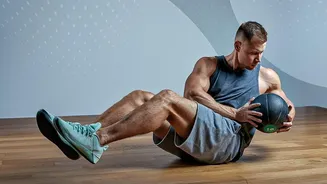
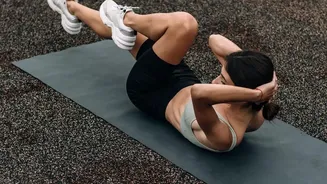
If an exercise feels uncomfortable or causes pain, the solution isn't to give up; it's to adapt. Many standard exercises can be modified to suit a larger body. For example, some people find that a wider stance makes squats more comfortable by creating more room. If floor exercises like crunches are uncomfortable, standing core exercises like oblique crunches can be just as effective. For those with joint concerns, especially in the knees or wrists, modifications are crucial. Instead of regular push-ups, try incline push-ups against a wall or a sturdy bench. For lunges, reverse lunges are often gentler on the knees than forward lunges, and holding onto a chair for support can help with balance. Using tools like resistance bands can also help build strength with low impact.
Choose Your Tools Wisely
The gym can seem overwhelming with its array of machines and free weights. As a beginner, you don't need complex equipment to get a great workout. Bodyweight exercises are a fantastic starting point. From there, resistance bands offer a versatile, low-cost way to add challenge. When you're ready for weights, consider starting with dumbbells, which are great for fundamental movements like goblet squats, chest presses, and rows. Weight machines can also be beneficial because they guide your movement and help you maintain proper form. The key is to choose a weight that allows you to complete about 12-15 repetitions with good form. A simple rule is the 'talk test': you should be able to speak a short sentence while performing the exercise. If you can't, the weight is likely too heavy.
Listen to Your Body and Prioritize Recovery
Learning the difference between the discomfort of muscle fatigue and the sharp signal of pain is one of the most important skills in strength training. It's normal to feel muscle soreness a day or two after a workout, but sharp, sudden, or persistent pain is a warning sign to stop and rest. Never be afraid to end a set early or reduce the weight if your form starts to suffer. Rest is not a sign of weakness; it's when your muscles actually repair and grow stronger. Experts recommend leaving 1-3 days of rest between strength training sessions. This recovery time is essential for preventing injury and ensuring you can come back to your next workout feeling strong and ready.