




The Robotic Vanguard
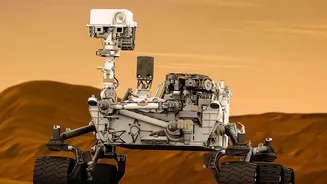
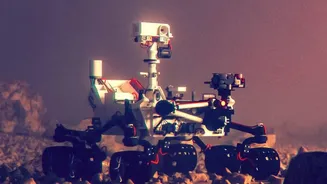
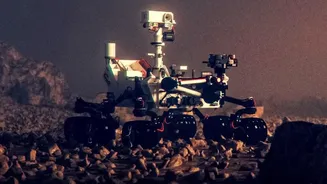
For decades, robots have been our eyes, ears, and hands on the Red Planet. From the long-serving Curiosity rover to the advanced Perseverance, these machines are marvels of engineering. They can endure extreme temperatures, operate for years, and conduct
detailed scientific analysis without needing food, water, or oxygen. A key advantage is cost. A robotic mission like Perseverance costs under $3 billion, a fraction of the estimated price tag for a human mission. A significant reason for this is that their mission is a one-way trip; they work until their power systems fail, becoming permanent Martian monuments to science.
The Human Advantage
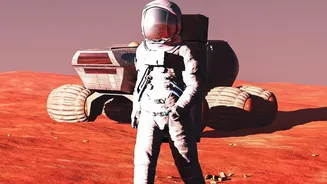
Despite the success of robotic explorers, there is a strong case for sending astronauts. Humans possess an unparalleled combination of intuition, adaptability, and problem-solving skills. While a rover might slowly navigate a pre-planned route, an astronaut can make on-the-spot decisions, traverse difficult terrain with ease, and handle unexpected scientific opportunities. A human geologist could accomplish in minutes what might take a rover days or weeks, like digging a trench or selecting the most promising rock samples with expert judgment. Furthermore, human missions have an inspirational power that robotic ones, for all their achievements, struggle to match, driving public engagement and inspiring future generations.
The Return-Trip Conundrum
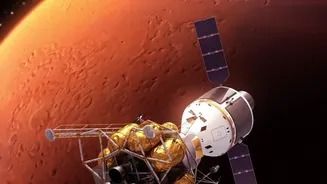
The single greatest challenge for a human Mars mission is bringing the crew home. Unlike a robot, a human crew requires a sophisticated, reliable, and incredibly powerful return vehicle. This vehicle essentially needs to launch a rocket from the surface of another planet—a feat never before attempted. The mass of the return vehicle, its fuel, and the initial fuel needed to get it all to Mars in the first place, compounds the mission's complexity and cost exponentially. This is a primary driver behind estimates that place the cost of a crewed Mars mission at hundreds of billions of dollars, dwarfing the expense of any robotic predecessor.
Life Support and The Human Factor
Beyond the return trip, a human mission must account for the fragility of the human body. A round trip to Mars would take roughly two to three years. Throughout this time, astronauts would need a constant supply of air, water, and food, all housed within a heavily shielded habitat to protect them from the intense radiation of deep space. Mars itself has a thin atmosphere and no global magnetic field, offering little protection from harmful cosmic rays. Furthermore, the psychological toll of long-duration isolation and confinement in a small space, far from Earth, is a major concern that NASA and other agencies are studying intensely through Earth-based simulations.
A Hybrid Future: Robots as Trailblazers
The future of Mars exploration isn't necessarily a choice between humans or robots, but rather a partnership. The current strategy for many space agencies, including NASA, involves using robots as precursors to human expeditions. Future robotic missions could be tasked with scouting the safest landing sites, testing technologies for generating oxygen or water from Martian resources, and even constructing habitats and infrastructure before the first humans arrive. This approach uses the strengths of both: the tireless endurance of robots to do the dangerous and repetitive groundwork, clearing the way for the efficient and adaptable work of human explorers once they land.