


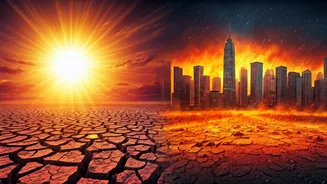



The Humidity Trap
The main culprit is humidity. Our bodies cool down when sweat evaporates from our skin. But when the air is already saturated with moisture, as it is during the monsoon, this process slows down dramatically. Sweat clings to the skin, unable to evaporate and
take body heat with it. This is why meteorologists use the 'heat index' or 'feels-like' temperature, which combines air temperature with relative humidity to give a more accurate sense of how hot it feels. Even with moderate temperatures, high humidity can make conditions feel oppressive and dangerous. In fact, scientists use a measure called wet-bulb temperature, which reflects the combined threat of heat and humidity; beyond a certain threshold, the human body simply cannot cool itself, posing serious health risks like heatstroke.
The Concrete Jungle Bakes
Our cities themselves are a huge part of the problem. This is due to the Urban Heat Island (UHI) effect, where metropolitan areas are significantly warmer than surrounding rural areas. Materials like concrete, asphalt, and steel, which dominate our urban landscapes, are excellent at absorbing and storing solar radiation during the day. After sunset, while natural landscapes cool down quickly, these materials slowly release the trapped heat back into the environment. This means our cities don't get a chance to cool down at night, leading to persistently warm nights. Studies show Indian cities are warming at an alarming rate, with a significant portion of that increase attributed directly to urbanization.
When Rain Isn't Relief
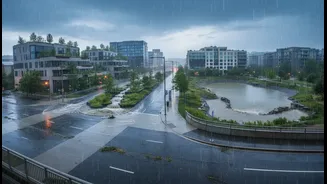
It seems counterintuitive, but a short burst of rain can actually make things worse. While a heavy, prolonged downpour might eventually cool the air, a brief shower on a hot day does little more than drench the hot concrete and asphalt. The water quickly evaporates, pumping even more moisture into the already humid atmosphere. This spike in humidity, combined with the heat still being radiated by urban surfaces, can make the post-rain environment feel even more sticky and uncomfortable than before the clouds burst. The result is a cycle where the very thing we expect to bring relief — rain — contributes to the oppressive, sauna-like conditions in our cities.
A Growing Health Hazard
This combination of high heat and humidity is more than just uncomfortable; it's a serious and growing public health threat. When the body can't cool itself effectively, the risk of heat exhaustion and heatstroke rises dramatically. This is especially dangerous for vulnerable populations such as outdoor labourers, the elderly, children, and those with pre-existing health conditions. The number of dangerously humid days in major Indian cities like Delhi, Mumbai, and Ahmedabad has been increasing steadily. This relentless heat stress puts a strain on public health systems and leads to a loss of productivity, as working outdoors becomes nearly impossible during peak hours.
Paving a Cooler Path Forward
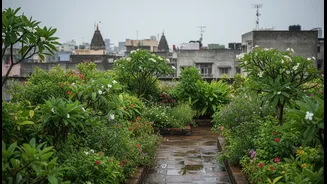
Tackling this complex problem requires a multi-pronged approach focused on smarter urban planning. One of the most effective strategies is increasing green cover. Parks, trees, and green roofs cool the air through shade and a process called evapotranspiration. Another key area is the use of 'cool' materials. This includes everything from light-coloured, reflective paints for roofs and walls to permeable concrete for pavements, which allows water to pass through and evaporate, providing a cooling effect. Nature-based solutions, such as creating and restoring urban water bodies like ponds and lakes, can also help regulate temperatures. By integrating these solutions, cities can begin to counteract the urban heat island effect and build more resilient, liveable environments.