





A Portrait of Stellar Youth
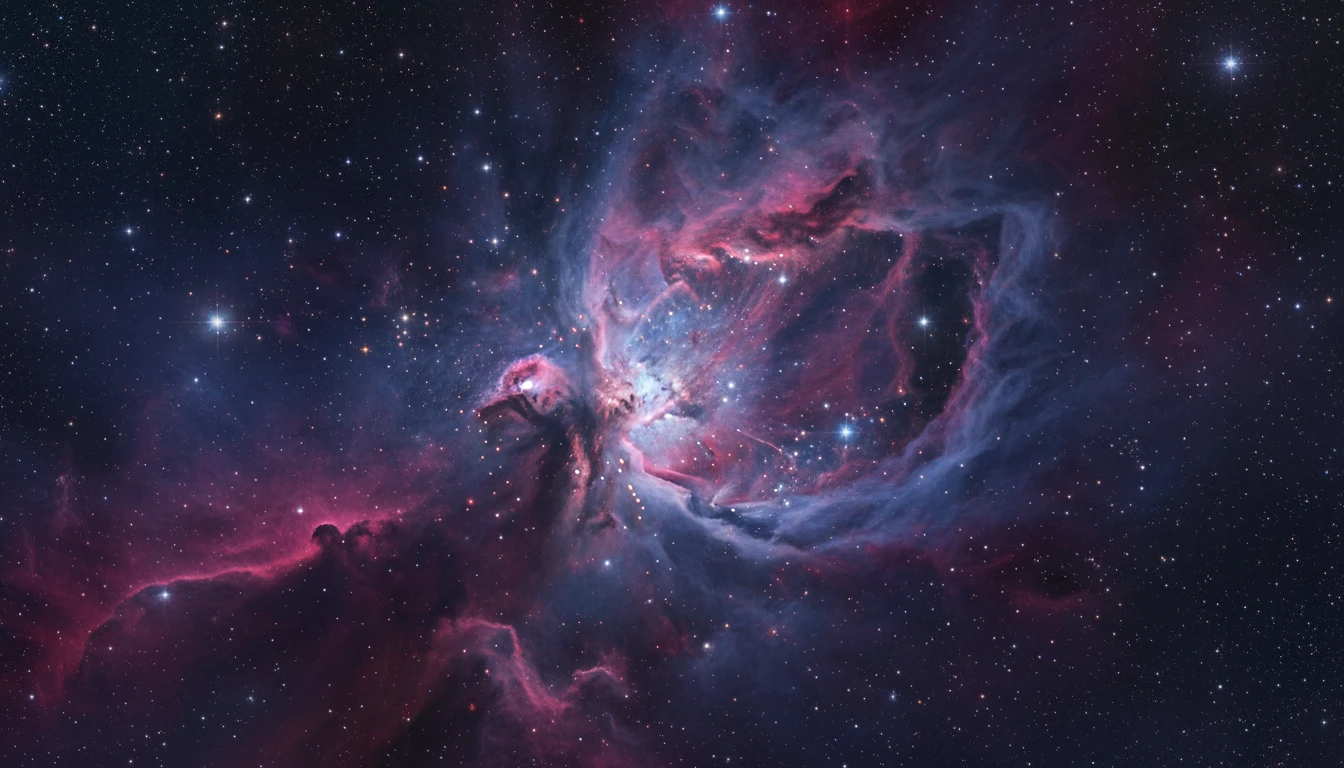
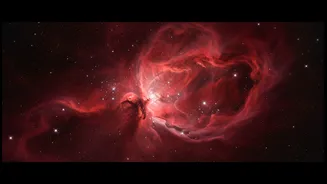
Hubble's latest subject is a stellar nursery known as LH 95, located in the Large Magellanic Cloud, a satellite galaxy of our own Milky Way about 163,000 light-years away. The image reveals a vibrant landscape where thousands of young stars are forming.
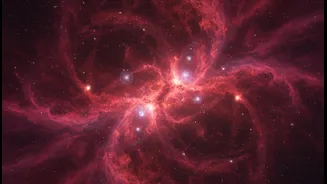
Brilliant, hot blue stars shine against a backdrop of glowing crimson clouds, which are made of hydrogen gas heated by the stars' intense radiation. Dark, thread-like filaments of dust crisscross the scene, marking denser regions that have so far resisted being blown away by the powerful stellar winds from the most massive newborn stars. It is a snapshot of creation on a galactic scale, capturing a region where multiple generations of stars exist side-by-side.
The Complex Chaos of Starbirth
Star formation is one of the most fundamental yet complex processes in the cosmos. It begins inside vast, cold clouds of gas and dust. Gravity pulls the densest clumps of this material together, causing them to collapse and heat up, forming a protostar at the center. As the protostar grows, it pulls in more material from a surrounding rotating disk of gas and dust. This entire process is messy and violent. Not all the material ends up in the star; a significant portion is often blasted back out into space in the form of powerful, narrow jets of plasma traveling at supersonic speeds. These jets are a key part of a star's birth announcement, but observing them clearly through the dense, dusty clouds where they form has always been a challenge for astronomers.
A Moment of Unprecedented Clarity
This new image of LH 95 simplifies our view of this chaotic process by providing an exceptionally clear look at the different stages of stellar development all in one place. By using specific filters, Hubble can peer through the gas to pinpoint the youngest stars. The image reveals approximately 2,500 pre-main-sequence stars—infant stars that are still gathering mass and have not yet ignited nuclear fusion in their cores. The observation helps confirm how stars mature, showing that the process of pulling in material from their surrounding disks can last for millions of years, longer than some previous models suggested. By capturing both the glowing gas being sculpted by massive stars and the large population of still-growing smaller stars, the image provides a single, detailed reference point that helps sequence the events of stellar evolution.
Why This Cosmic Snapshot Matters
Understanding how stars form in other parts of the universe is crucial to understanding our own cosmic origins. The processes seen in LH 95 are the same ones that formed our Sun about 4.5 billion years ago. By studying these stellar nurseries with the clarity Hubble provides, astronomers can refine their models of how planetary systems form and evolve. For instance, the powerful jets ejected by young stars play a vital role in clearing out the surrounding material, which in turn influences the formation of planets. This new, detailed view of a star-forming region helps piece together the timeline of how a chaotic cloud of gas and dust can eventually give rise to stable systems like our own solar system. Each new image adds another crucial piece to the puzzle of our galactic history and our place within it.