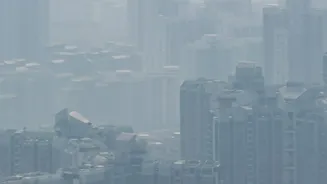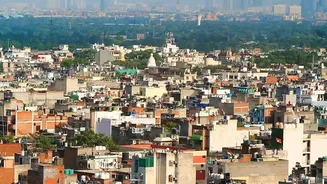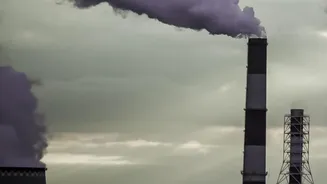





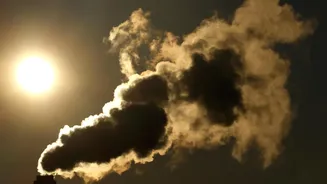
The grey haze that blankets Indian cities is a familiar and worrying sight, a clear sign of a public health emergency. But beyond the visible toll on health, a far less visible, yet equally staggering, economic crisis is unfolding.
The Soaring Bill for Sickness
The most direct economic
consequence of toxic air is the escalating cost of healthcare. Lost output from premature deaths and illnesses linked to air pollution cost India an estimated $36.8 billion in 2019 alone, a figure equivalent to 1.36% of the country's GDP. This includes everything from the recurring cost of inhalers and medication for chronic conditions like asthma to expensive hospitalisations for heart disease and strokes. For households, this translates into a crippling out-of-pocket budget problem, as families are forced to divert funds to manage pollution-driven illnesses. These aren't one-time costs; they are a persistent drain on both individual finances and the national healthcare system.
A Drain on Workforce Productivity
A healthy workforce is the engine of a growing economy, and air pollution is quietly seizing that engine. Indian businesses lose an estimated 1.3 billion workdays annually due to employees taking sick leave because of pollution's adverse health effects. This absenteeism alone accounts for billions in lost revenue. But the damage runs deeper, into a phenomenon known as 'presenteeism'—when employees show up to work but operate at a reduced capacity due to illness or the cognitive impacts of pollution. Studies show that on days with high pollution, worker efficiency can drop by 8% to 10%. For India's booming IT and knowledge sectors, which depend on high cognitive function, this invisible productivity loss is particularly damaging, costing the IT sector an estimated $1.3 billion annually.
Consumer Behaviour and Business Losses
The economic damage extends to the marketplace. When air quality plummets, people stay home. This behavioural change delivers a direct hit to consumer-facing businesses. Retailers report weaker footfall and flat sales during severe pollution spells, particularly in northern India. Restaurants see a decline in dine-in customers that isn't fully offset by a rise in delivery orders. One report estimated that reduced consumer footfall leads to a staggering $22 billion in lost revenue for businesses annually, as people avoid all but the most essential trips outdoors. This creates a chilling effect on the retail and hospitality sectors, turning environmental alerts into de facto economic lockdowns.
A Drag on National Growth and Investment
The cumulative effect of these hidden costs acts as a major drag on India's overall economic growth. One World Bank study found that a median annual increase in PM2.5 concentrations reduces a district's year-on-year GDP growth by 0.56 percentage points. Cumulatively, various reports have estimated the total economic burden of air pollution to be between 3% and 9.5% of India's GDP. This significant loss constrains the country's economic potential and affects its attractiveness for foreign investment. As one report from Dalberg Advisors and the Clean Air Fund puts it, the cost to Indian businesses was around $95 billion annually as of 2019 — a figure equal to 50% of all taxes collected.