






Understanding the New Mars Model
For decades, NASA designed, built, and operated its own missions, a model that put humans on the Moon. Today, facing tighter budgets and ambitious goals, the agency is increasingly turning to public-private partnerships (PPPs). Instead of managing every
detail, NASA acts more like a customer, buying services like launch or even full payload delivery from commercial partners like SpaceX, Blue Origin, or Relativity Space. This approach, proven successful for sending cargo and astronauts to the International Space Station, is now being applied to deeper space. The core idea is that competition and commercial incentives can lower costs and accelerate timelines, allowing NASA to focus its resources on building scientific instruments and analyzing the data they return. This shift means NASA shares both the risk and reward, moving away from traditional contracts where it shouldered all development costs.
Decoding the Cost Claims
Headlines often throw around billion-dollar figures that can be misleading. When you see a cost estimate, the first question to ask is what it includes. Is it just the launch, the spacecraft development, or the entire mission's operational life? The Mars Sample Return mission, for instance, has seen its estimated cost balloon from around $4.4 billion to as high as $11 billion, showing how initial figures can be unrealistic. Another key factor is the type of contract. Traditional “cost-plus” contracts meant NASA paid for all development expenses plus a fee, insulating the contractor from overruns. New fixed-price contracts, however, put the onus on the company to deliver for an agreed-upon amount. This incentivizes efficiency but can be risky for companies developing brand-new technology. When a company proposes a dramatically lower cost, it's worth asking if they are relying on unproven technology or if their price is subsidized by their own investment, hoping to create a new market.
Measuring the Scientific Return
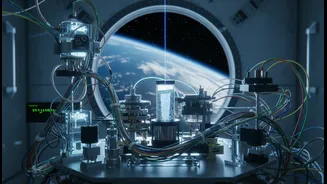
The “return” on a science mission isn’t measured in profit, but in knowledge. To evaluate this, look at the mission's specific goals. Is it a technology demonstration designed to test a new landing system, or is it a flagship-class science mission aiming to answer fundamental questions, like whether life ever existed on Mars? The quality of the scientific return often depends on the instruments on board. A mission like the proposed Aeolus payload, which features a suite of four instruments to study the Martian atmosphere, offers high scientific value by providing comprehensive data. This data not only advances science but also has practical applications, helping to plan for the safe landing of future human missions. However, there’s often a trade-off. Adding more or better instruments increases a mission's mass and complexity, which in turn drives up cost and can impact the choice of launch vehicle. Some critics of expensive missions argue they can cannibalize the budget for smaller, but also valuable, projects.
Assessing Mission Reliability
Space is inherently risky, and failures happen. Evaluating reliability in a public-private context involves looking at both the company's track record and the mission's design. A company like SpaceX has a high launch success rate, but landing a vehicle as large as Starship on Mars is an unprecedented challenge. Reliability isn't just about the rocket; it's about the entire system. Engineers use metrics like Safe Failure Fraction (SFF) to assess how well a system can handle component failures without mission loss. Does the spacecraft have redundant systems? How much testing has been done? NASA's standards are famously rigorous, and a key part of these new partnerships involves ensuring commercial systems meet the agency's requirements for safety and mission success. Sometimes, higher risk is accepted for a lower cost, especially on uncrewed or technology-demonstration missions. The key is whether the level of risk is appropriate for the mission's objectives and what is at stake.