



The Moon’s Most Valuable Resource
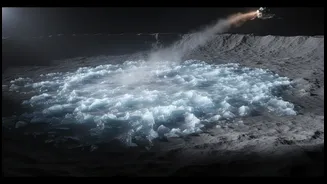
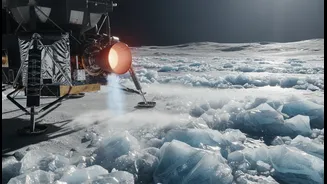
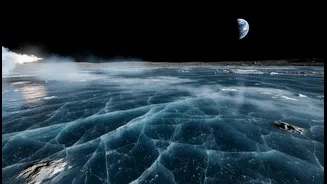
For decades, the Moon was considered a bone-dry desert. But a series of missions confirmed the presence of water ice, particularly in permanently shadowed craters at the lunar south pole. These regions, where sunlight has not reached for potentially billions
of years, are incredibly cold, allowing ice to remain frozen in time. This discovery is a game-changer for space exploration. Lunar ice can be harvested for drinking water and breathable oxygen for future astronauts. More importantly, it can be split into hydrogen and oxygen, the primary components of rocket fuel. Having a refueling station on the Moon would dramatically reduce the cost and complexity of missions to Mars and beyond, making a sustained human presence in space a real possibility.
The Problem with Progress
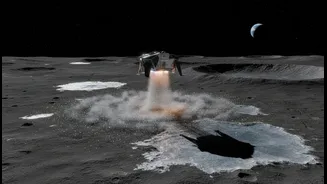
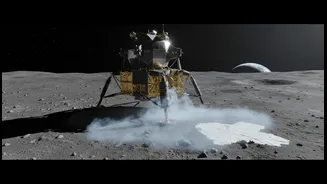
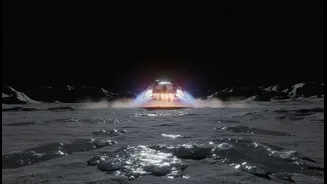
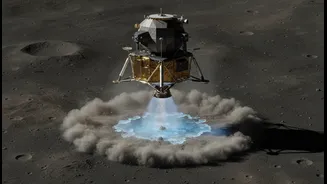
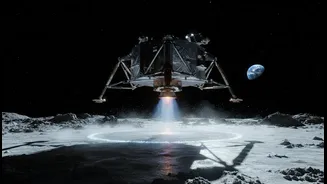
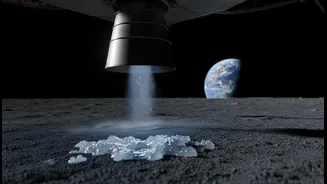
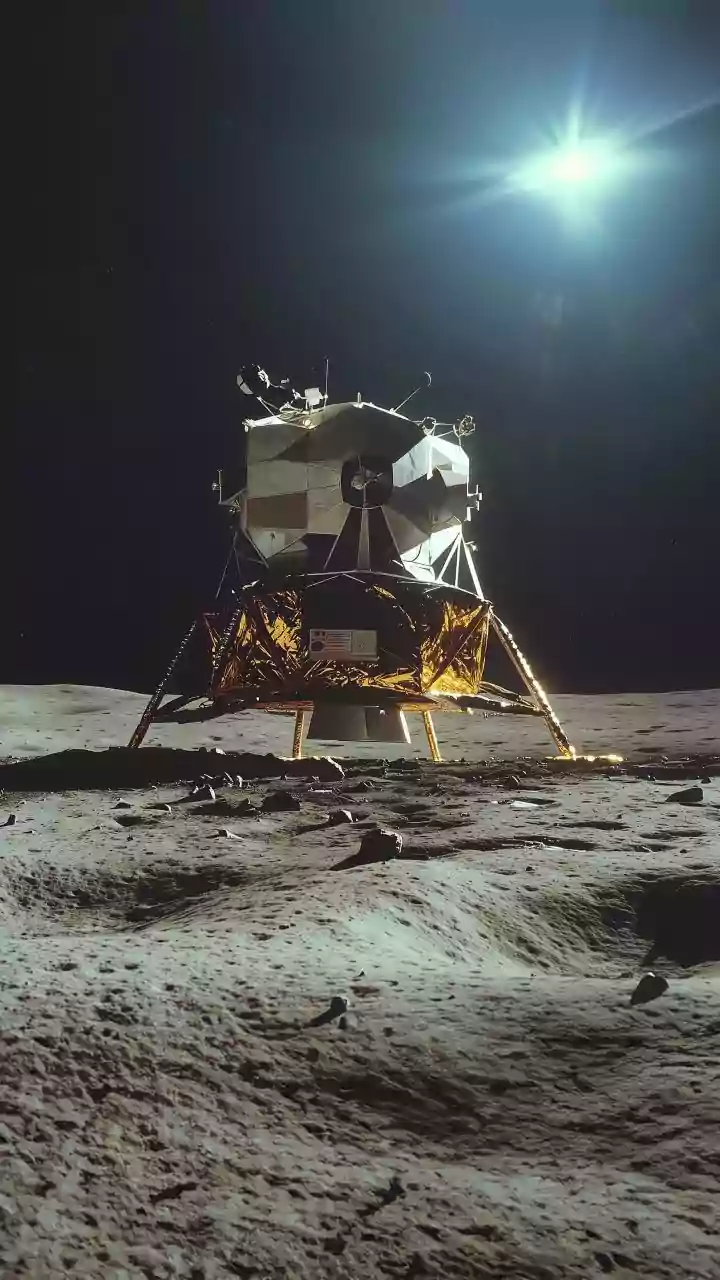
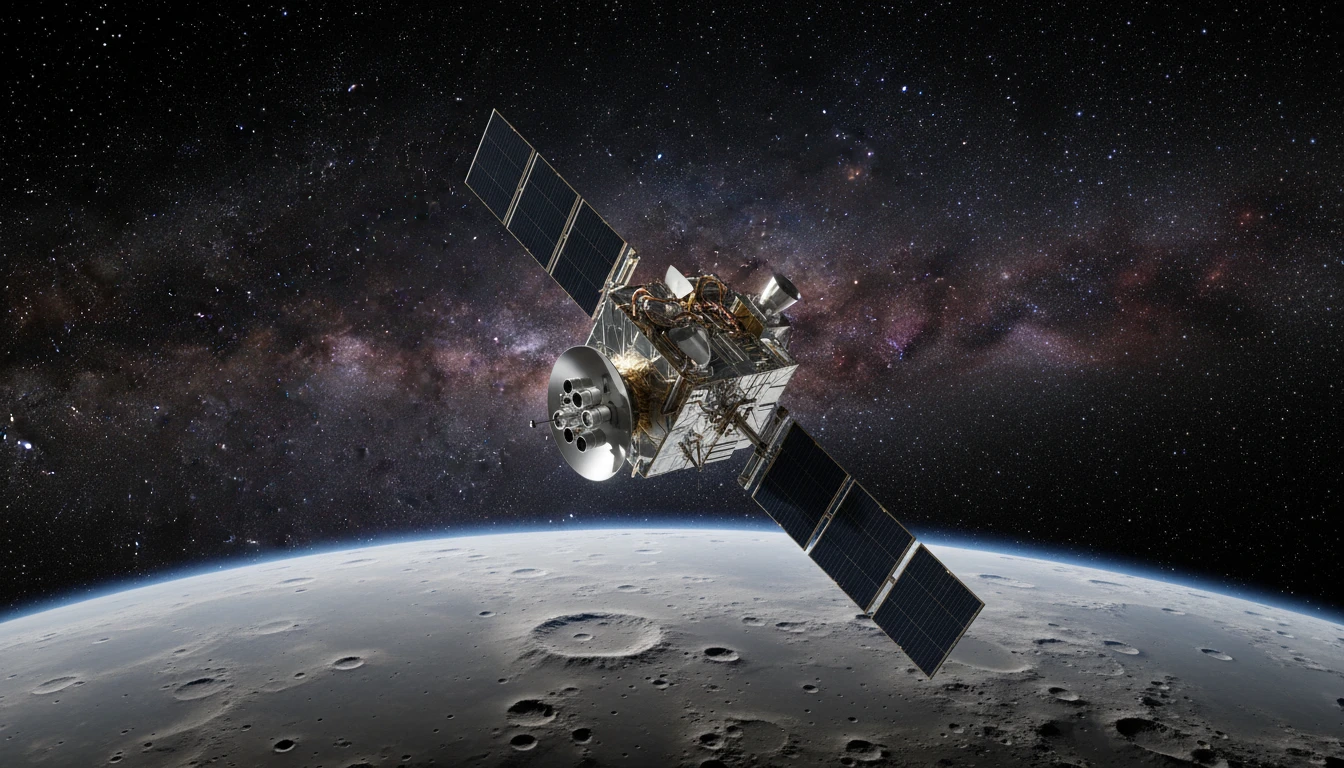
To land safely on the Moon's surface, spacecraft must fire powerful rocket engines to slow their descent. In the vacuum of space, the hot gases from this exhaust expand rapidly. These plumes contain various chemicals, including significant amounts of water vapor, carbon dioxide, and, depending on the fuel, compounds like methane. Scientists are concerned that these man-made substances will spread across the lunar surface and into the thin atmosphere, eventually settling in the same super-cold craters that hold the pristine, ancient ice. This contamination could make it incredibly difficult for scientific instruments to distinguish between the native lunar ice we want to study and the artificial ice from our own landers. It threatens to corrupt a priceless scientific record that could hold clues about the origin of water in our solar system and even the precursors to life on Earth.
A Global Contamination Cloud
The threat isn't just limited to the immediate landing zone. Recent computer simulations from institutions like the Johns Hopkins Applied Physics Laboratory have shown just how far-reaching the impact can be. The models predict that exhaust from a single, medium-sized lander near the south pole can disperse around the entire Moon in just a few hours. A significant percentage of this exhaust, between 30% and 40%, could linger in the atmosphere for months. Ultimately, a substantial amount would freeze and become trapped at the poles, mixing with the native ice. This means that even a landing site hundreds of kilometers away could compromise the scientific integrity of these unique, shadowed regions. As programs like NASA's Artemis plan for more frequent and larger landings, the cumulative effect of this contamination becomes a major concern.
Racing to Understand the Impact
To get ahead of the problem, scientists are working to precisely model and test these effects. At NASA's Marshall Space Flight Center, researchers are firing hybrid rocket motors at simulated lunar dust in large vacuum chambers to understand how exhaust plumes interact with the surface. These experiments, the first of their kind in decades, help predict how much dust is kicked up and how the exhaust gases spread. Supercomputer simulations are also playing a crucial role, modeling the journey of individual molecules like water and methane as they 'hop' across the lunar surface to find a final, frigid resting place. This research is vital for missions like NASA's now-canceled VIPER rover, which was designed to prospect for water ice. Understanding the background level of contamination is essential for any future mission to accurately measure the Moon's natural resources.
Finding a Cleaner Path Forward
The goal isn't to stop lunar exploration, but to do it more smartly. Several mitigation strategies are being considered. One approach involves carefully selecting landing sites, perhaps in colder areas where exhaust gases might not travel as far or as quickly. Another focus is on lander and engine design to minimize the plume's impact. Future missions might also incorporate instruments specifically designed to detect and account for lander-induced contamination. Ultimately, addressing this challenge is part of a broader conversation about planetary protection. Just as we have regulations to protect sensitive environments like Antarctica on Earth, many scientists argue that the Moon, with its unique and irreplaceable scientific value, deserves similar consideration.