




Nature’s Resilient Engineers
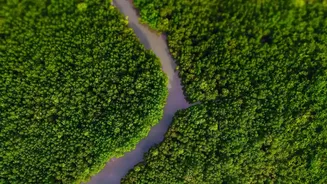
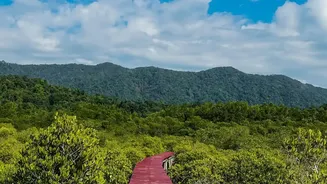
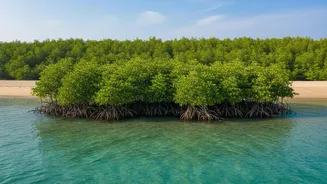
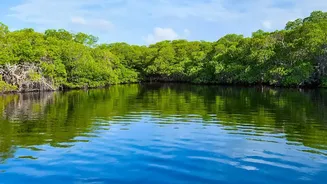
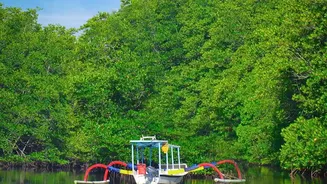
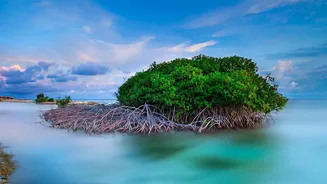
Mangrove forests are unique ecosystems that thrive in the harsh, brackish interface between land and sea. Unlike most trees, they are specially adapted to survive in saltwater and waterlogged soil. Their defining feature is a complex and dense network
of roots that extend both below the ground and above it. These tangled root systems, often called 'prop roots' or 'breathing roots' (pneumatophores), are the key to their defensive capabilities. This intricate web anchors the trees firmly in unstable, muddy soil, forming a natural barrier that is both strong and flexible.
The Science of a Living Shield
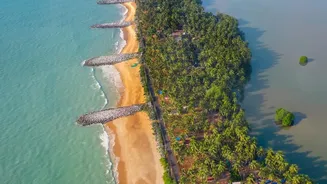
When a powerful storm surge approaches the coast, it carries immense destructive energy. A healthy mangrove forest acts as a natural breakwater. The dense thicket of trunks and roots absorbs the initial impact and slows the flow of water. Studies have shown that just 100 meters of mangrove forest can reduce wave energy by up to 66 percent. The roots trap and hold sediment, which not only prevents existing soil from washing away but also gradually builds up the shoreline over time. This process effectively counters erosion and can even help coastlines adapt to rising sea levels. During cyclones, this wave-buffering capacity significantly reduces the height and force of the surge that reaches inland areas, protecting homes and lives.
Success Stories from India's East Coast
The eastern states of West Bengal and Odisha have long understood the value of their mangrove shields. The Sundarbans, the world's largest mangrove forest, has repeatedly proven its worth by mitigating the impacts of cyclones like Amphan and Bulbul. Similarly, Odisha's Bhitarkanika mangrove ecosystem, the second-largest in India, has been instrumental in protecting coastal communities. Case studies following the 1999 Odisha super cyclone showed that villages sheltered by wide mangrove belts experienced significantly fewer deaths and less property damage than those without such protection. Recognizing this, government bodies and NGOs have initiated numerous community-based plantation and restoration projects in states like Andhra Pradesh, Odisha, and West Bengal to restore degraded mangrove habitats and create new ones.
More Than Just a Wall
The benefits of mangrove afforestation extend far beyond storm protection. These forests are biodiversity hotspots, acting as critical nursery grounds for a vast array of fish, crabs, and shrimp. This supports the livelihoods of local fishing communities. Mangroves are also incredibly effective carbon sinks, capturing and storing up to four times more carbon per hectare than tropical rainforests, making them a crucial tool in fighting climate change. They also filter pollutants from water flowing into the sea, improving overall water quality. Projects often involve local communities, providing training and employment, and ensuring the long-term success of the conservation efforts.