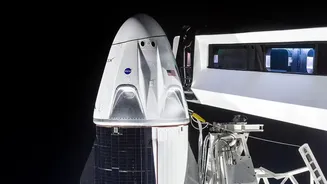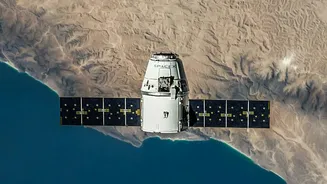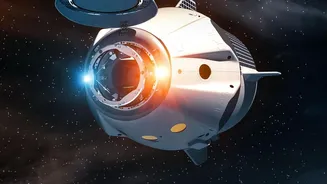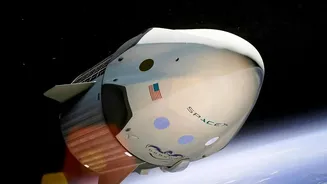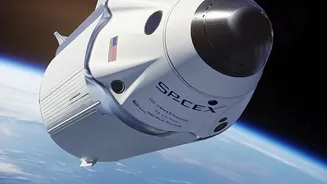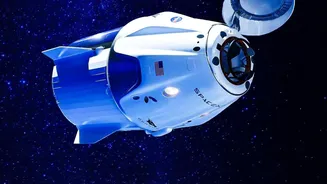

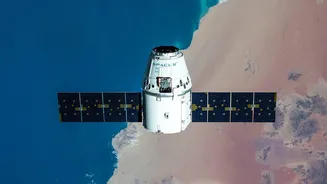
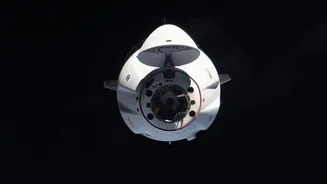
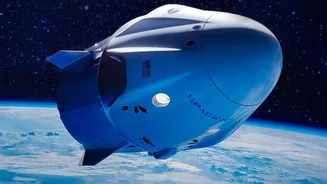
After a fiery plunge through the atmosphere, a SpaceX Dragon capsule successfully splashed down, marking the end of the company's 35th resupply mission. More than just a delivery run, this return voyage is a scientific goldmine for researchers on Earth.
A Successful Splashdown
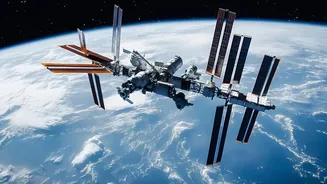
On Saturday, November 21, a SpaceX Dragon spacecraft parachuted into the Pacific Ocean off the coast of California, bringing its month-long journey to the International Space Station (ISS) to a successful close. The capsule, which launched on October 13, delivered over 6,300 pounds of supplies, station hardware, and new experiments to the orbiting laboratory. Its return was even more critical, as Dragon is currently the only commercial vehicle capable of bringing a significant volume of cargo back to Earth intact. Recovery ships were on standby to hoist the capsule from the ocean, beginning the final and most time-sensitive phase of the mission: rushing the scientific samples to laboratories for analysis.
More Than Just a Delivery Service
The CRS-35 mission is a key part of NASA's Commercial Resupply Services (CRS) program, a long-running partnership that has become the backbone of ISS logistics. Instead of building and operating its own cargo fleet, NASA acts as a customer, purchasing launch services from private companies like SpaceX. This model was designed to foster a competitive commercial space industry and allow NASA to focus its resources on deep-space exploration. Over more than a decade, these routine flights have become indispensable, ferrying everything from food and essentials for the crew to critical spare parts and, most importantly, the tools for groundbreaking science. This mission was the 35th such flight by SpaceX, demonstrating the maturity of a system that keeps the multi-billion dollar research platform operational.
Science From the Stars
The real treasure aboard the returned Dragon capsule lies in its temperature-controlled compartments, which protect priceless scientific samples. The unique microgravity environment of the ISS allows researchers to study biological and physical phenomena in ways that are impossible on Earth. Among the returned experiments from CRS-35 are studies that could have profound impacts back home. One investigation involves 3D-bioprinted blood vessel constructs, used to study cardiovascular disease and the aging process. Another returned frozen tumor organoids that were treated in orbit, which may help scientists develop more effective cancer treatments. Researchers also sent up lab-grown brain models to see how microgravity affects neural cells, potentially offering insights into neurodegenerative diseases like Parkinson's and Alzheimer's. By studying how things like bacteria, plants, and human cells behave without the influence of gravity, scientists gain fundamental knowledge that benefits medicine, agriculture, and materials science.
From Orbit to Laboratory
Once the Dragon capsule is secured on the recovery ship, the clock starts ticking. A helicopter is often used to fly the most time-sensitive experiments back to land immediately, ensuring they arrive at NASA's facilities with minimal delay. These samples, from studies on antibiotic-resistant bacteria to a lighting system designed to improve astronaut sleep, are then distributed to scientific teams across the country. The data collected from these returned experiments will be analyzed for months or even years, leading to scientific papers and potential breakthroughs. The success of the CRS-35 return ensures that the vital work conducted 250 miles above our heads continues to drive innovation and improve life on the ground.