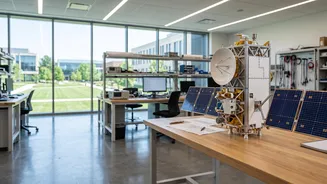




Engage with ISRO's Student Initiatives
The Indian Space Research Organisation (ISRO) is at the heart of the nation's space ambitions, and it actively encourages young minds. The most prominent initiative is the "Young Scientist Programme," also known as YUVIKA (YUva VIgyani KAryakram). This
two-week residential programme is designed for school students to give them a foundational understanding of space technology, science, and applications. Participants interact with eminent scientists, engage in hands-on activities like model rocketry and satellite-building workshops, and visit ISRO's state-of-the-art facilities. The programme, often described as a way to "catch them young," aims to inspire students to pursue careers in STEM fields. Beyond YUVIKA, ISRO regularly conducts outreach activities during World Space Week and National Science Day, opening its centres for exhibitions. You can even register to watch live rocket launches from the viewer's gallery at Sriharikota.
Enter Space-Themed Competitions
Competitions are a fantastic way to apply your knowledge and gain recognition. Several national-level Olympiads and challenges are specifically designed for space enthusiasts. The Indian Space Science Olympiad (ISSO) and Indian Space Olympiad (ISO) are annual competitions that test students from various classes on their knowledge of astronomy, astrophysics, and space technology. For those who prefer hands-on challenges, the IN-SPACe Model Rocketry Competition offers a platform for student teams to design, build, and launch their own model rockets. Another exciting event is the CANSAT India competition, where participants develop a can-sized satellite, simulating a complete mission from design to data recovery. These competitions not only build technical skills but also foster teamwork and problem-solving abilities.
Join a School Astronomy or Robotics Club
Your own school can be a launchpad for your space journey. Many schools have STEM, astronomy, or robotics clubs that provide a collaborative environment to explore your interests. Organisations like SPACE India help establish Astronomy and Space Science clubs in schools, offering curated educational programs that align with the National Education Policy. These clubs often organize workshops, stargazing nights, and sessions on topics like robotics and artificial intelligence. If your school doesn't have one, consider starting one. It’s a great way to find like-minded peers, work on projects together—like building a telescope or a small rover—and invite local experts for talks.
Leverage Online Courses and Resources
The digital world offers a universe of knowledge. ISRO itself maintains a STEM portal with online courses, interactive sessions with scientists, and a wealth of information about its missions. Platforms like Space Academy India offer free, age-specific learning modules on everything from orbital mechanics to the history of ISRO's missions like Chandrayaan and Mangalyaan. Additionally, private organisations like Space Kidz India, known for helping students build the world's lightest satellite, provide workshops and learning opportunities that demystify space technology. These resources are perfect for building a strong theoretical foundation at your own pace.
Visit Planetariums and Science Museums
For an immersive and inspiring experience, nothing beats a trip to a planetarium. Major cities across India host world-class facilities like the Nehru Planetarium in Mumbai and Delhi, and the Birla Planetarium in Kolkata, Hyderabad, and Chennai. These centres offer breathtaking sky shows, 3D presentations on celestial events, and exhibits detailing India's space missions. Many, like the Nehru Planetarium in Mumbai, have introduced portable dome planetariums to bring the experience directly to schools. These visits can transform abstract concepts from textbooks into tangible, awe-inspiring visuals, sparking curiosity and a deeper appreciation for the cosmos.
Follow India's Private Space Sector
While ISRO has long been the flag-bearer, India's private space industry is now a hotbed of innovation. Companies like Skyroot Aerospace, Agnikul Cosmos, and Pixxel are making significant strides in launch vehicles and satellite technology. Following these companies on social media and their websites is an excellent way to stay updated on the latest developments. Some organisations, like Space Zone India, focus on bridging the gap between academia and industry by offering workshops and courses for students. As the private sector grows, so will opportunities for internships and entry-level roles, making it crucial for aspiring space professionals to track their progress early on.