



The New 30-Day Visa-Free Rule
In a move set to boost tourism and cultural ties, Uzbekistan now permits certain Indian citizens to enter the country and stay for up to 30 days without needing an Uzbek visa. The new rule, confirmed by the Embassy of India in Tashkent, is a significant
change aimed at simplifying travel. However, this policy is conditional and does not apply to all Indian passport holders. To be eligible, a traveller must hold a valid, multiple-entry tourist or business visa from a select group of countries. These include the United States, the United Kingdom, Canada, Australia, New Zealand, Japan, South Korea, or any of the Schengen Agreement member states. Additionally, travellers must hold a confirmed return air ticket or a ticket to a third country upon entry. Those who do not meet these specific criteria are still required to obtain a visa through the standard process.
A Strategic Welcome Mat
The policy change follows high-level discussions between the leaders of India and Uzbekistan, aimed at strengthening their strategic partnership. Uzbek President Shavkat Mirziyoyev highlighted the move as a way to significantly boost people-to-people contacts, tourism, and business exchanges. This initiative is part of a broader effort to grow Uzbekistan's tourism sector and deepen economic ties. Bilateral trade between the two nations has already crossed the one-billion-dollar mark, and the number of joint ventures has seen a sevenfold increase in recent years. With 14 direct flights now operating weekly between the two countries, the logistical framework is in place to support an influx of visitors inspired by the new, more accessible travel rules.
Making the Most of a Month in Uzbekistan
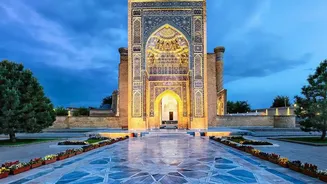
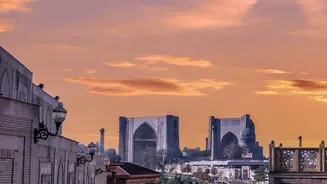
A 30-day window transforms a trip to Uzbekistan from a brief tour into a deep dive. A longer stay allows visitors to move beyond the essential Silk Road trio of Samarkand, Bukhara, and Khiva. You can explore the modern capital, Tashkent, with its blend of Soviet-era architecture and bustling Chorsu Bazaar. In Samarkand, a longer itinerary means you can spend unhurried hours at the magnificent Registan Square, visit the Shah-i-Zinda necropolis, and explore the Ulugh Beg Observatory. In Bukhara, you can get lost in the labyrinthine old city, a UNESCO World Heritage site, discovering mosques, madrassas, and covered markets at a relaxed pace. The ancient walled city of Khiva, often described as an open-air museum, also rewards a slower visit.
Beyond the Golden Triangle
With a month to spare, the rest of Uzbekistan opens up. Travellers can venture into the Fergana Valley, the country's agricultural heartland, known for its pottery workshops in Rishton and silk factories in Margilan. For those seeking nature and adventure, the Nuratau Mountains offer yurt stays and hiking opportunities. A trip to the Savitsky Museum in Nukus, home to a world-renowned collection of avant-garde art, becomes feasible. This extended timeframe allows for a more immersive experience, enabling you to connect with local culture, savour the diverse cuisine, and truly appreciate the country's rich history without the pressure of a tight schedule.
Planning Your Extended Journey
For Indian travellers who qualify for the 30-day visa-free entry, planning a longer trip is now much simpler. The best times to visit are during the spring (April to May) and autumn (September to October), when the weather is pleasant for sightseeing. While major cities are well-connected by high-speed rail, a longer trip might involve domestic flights or shared taxis to reach more remote areas. It is important to remember the key requirements for this visa-free facility: you must possess a valid multiple-entry visa from one of the specified countries and a confirmed onward or return flight ticket. Those who do not qualify can still apply for an e-visa through the official government portal. This new rule primarily benefits frequent international travellers, making a side trip to Uzbekistan more appealing than ever.