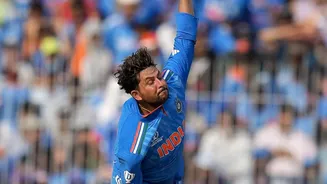




A White-Ball Phenomenon
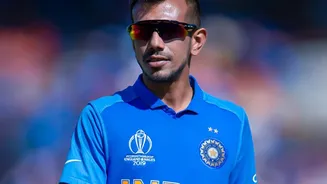
For nearly a decade, Yuzvendra Chahal has been a pivotal figure in India's limited-overs setup. Since his international debut in 2016, he has bamboozled the world's best batters with his clever leg-spin, flight, and googly. His impressive record boasts
121 wickets in 72 One-Day Internationals and 96 wickets in 80 T20 Internationals, making him one of India's most successful bowlers in the shorter formats. Partnered with Kuldeep Yadav, the 'Kul-Cha' duo became a formidable force, dominating the middle overs and shaping many of India’s victories. Chahal also holds the distinction of being the first Indian bowler to take a six-wicket haul in T20I history and is the all-time leading wicket-taker in the Indian Premier League, cementing his legacy as a modern-day great of the white-ball game.
The Elusive Red-Ball Dream
Despite his overwhelming success in coloured clothing, the coveted Test cap remained tantalisingly out of reach. Chahal’s first-class career, while respectable, never quite hit the extraordinary heights required to force his way into an already packed Test side. He concluded his red-ball journey with 148 wickets in 49 matches. There was a time when the team management, including then-India A coach Rahul Dravid, encouraged him to play more red-ball cricket to gain experience and push for a spot. However, his continuous involvement in India's white-ball assignments meant he had limited opportunities to build a compelling case in the domestic Ranji Trophy.
An Era of Unshakeable Spin Twins
Perhaps the biggest roadblock in Chahal’s path was the sheer dominance of Ravichandran Ashwin and Ravindra Jadeja. The duo established themselves as arguably India's greatest-ever spin pairing in Test history, particularly in home conditions. Their relentless accuracy, subtle variations, and, crucially, their significant contributions with the bat, made them indispensable. Breaking into a team with two world-class spinners who offered exceptional all-round ability was a near-impossible task for any aspiring spinner. The selectors consistently backed Ashwin and Jadeja, and their performances justified that faith, leaving little room for a specialist wrist-spinner.
The All-Rounder Equation and a Crowded Field
In modern Test cricket, the ability to contribute with the bat from the lower order is a massive advantage. This is where Chahal fell behind his competitors. While Ashwin and Jadeja are proven Test batters with centuries to their names, the next spinner in line, Axar Patel, also boasts a strong first-class batting record. This preference for all-rounders tilted the selection scales firmly away from Chahal. Even when selectors looked for a wrist-spin option, Kuldeep Yadav was often preferred due to having a more robust red-ball record and being seen as a slightly more versatile bowler for the longest format. The presence of these multi-skilled players meant that a specialist bowler like Chahal, who offered very little with the bat, was considered a luxury the team couldn't afford.
A Style More Suited to Attack
There is also a technical argument to be made. Chahal's primary strength in white-ball cricket is deceiving batters who are forced to attack him under scoring pressure. His flatter trajectory and use of width are designed to induce mistakes from aggressive players. In Test cricket, however, batsmen can afford to be patient. Former Australian bowler Brad Hogg noted that a Test spinner needs a consistent, attacking stock ball that targets the stumps, and the ability to maintain pressure over long spells. He argued that Chahal, much like Adam Zampa, sometimes struggled with this requirement, making him less of a threat when the pressure to score was off. Chahal himself admitted that adjusting to the patience of red-ball cricket, where you have to earn wickets through skill rather than scoreboard pressure, was a challenge.