




The 'Healthy Food' Halo Effect
Many of us operate under a common misconception: if it’s vegetarian, it must be healthy. We happily reach for a second helping of dal makhani, an extra roti, or a bowl of vegetable pulao, confident in our virtuous food choices. This is known as the 'health
halo' effect, where we perceive a food as being universally good for us, causing us to pay less attention to quantity. However, calories are calories, whether they come from a plant or an animal. A diet rich in fried vegetarian snacks, ghee-laden parathas, and sugary sweets can easily lead to weight gain and other health issues, despite being 100% vegetarian.
The Great Indian Carb Overload
Take a moment to picture a typical Indian vegetarian thali. What dominates the plate? Often, it's carbohydrates. We have rice, roti, or both, frequently accompanied by potato-based sabzis. While carbs are essential for energy, Indian vegetarian meals can become disproportionately heavy on them. An excess of refined carbohydrates (like white rice and white flour) can lead to rapid spikes and crashes in blood sugar, leaving you feeling hungry again soon after a meal. This cycle promotes overeating and can contribute to insulin resistance over time. Portion control here isn't about eliminating carbs, but about balancing them. Limiting your grain serving to about a quarter of your plate is a simple but powerful first step.
The Protein and Fibre Gap
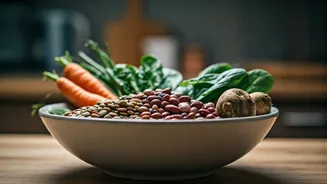
When a meal is carb-heavy, it often means other crucial macronutrients are being crowded out. Protein is vital for muscle repair, hormone function, and, importantly, satiety—the feeling of fullness. While dals, legumes, paneer, and tofu are excellent vegetarian protein sources, their portion sizes are often too small in a standard meal. A single small katori of dal may not be enough to meet your protein needs or keep you full. Similarly, non-starchy vegetables are packed with fibre and micronutrients, which also contribute to satiety and gut health. If your plate is mostly rice and potatoes, you're missing out on the fibre from a generous serving of greens, gourds, or beans, making you more likely to snack between meals.
A Simple Guide to Plate Portions
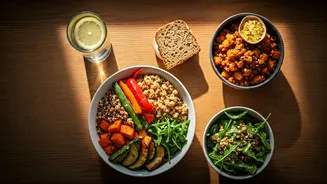
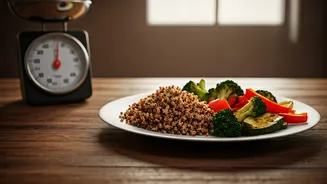
You don't need a weighing scale to get started. A simple method is the 'Healthy Eating Plate' model. Imagine your plate is divided into four quarters.
- **Half Your Plate (Two Quarters):** Fill this with non-starchy vegetables. Think sabzis made from bhindi, lauki, tori, cabbage, bell peppers, or a large salad.
- **One Quarter:** Dedicate this to your protein source. This means a generous katori of dal, chickpeas, rajma, or a solid portion of paneer or tofu.
- **One Quarter:** This is for your carbohydrates. That means one or two rotis (not four), or a single katori of rice (not a mountain).
This simple visual guide ensures you get a balanced intake of fibre, protein, and carbs, keeping you fuller for longer and providing a wider range of nutrients.
Beyond the Meal: Snacks and Drinks
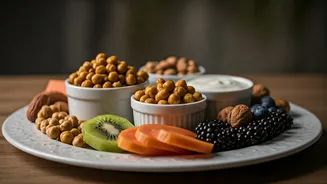
Portion control extends beyond your main meals. That mid-morning biscuit with chai, the evening samosa, or the handfuls of bhujia while watching TV can add hundreds of calories to your day. These snacks are often low in nutrients and high in refined carbs, salt, and unhealthy fats. Instead of mindless munching, opt for a planned, portion-controlled snack like a piece of fruit, a handful of nuts (about what fits in your palm), a bowl of curd, or roasted chana. Even healthy snacks require portion awareness; a whole bag of almonds is not a single serving. Similarly, be mindful of sugary drinks, including sweetened lassi and packaged fruit juices, which are sources of empty calories.