





A New Frontier for Indian Careers
For decades, a career in India’s space sector meant one thing: a coveted position at the Indian Space Research Organisation (ISRO). But the landscape has dramatically shifted. Following the government's decision in 2020 to open the sector to private enterprise,
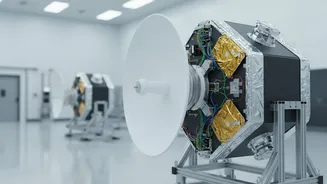
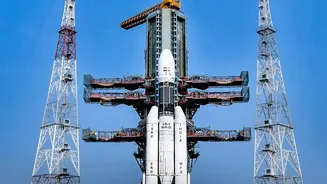
India is now home to over 400 space startups. Companies like Skyroot Aerospace, Agnikul Cosmos, and Pixxel are not just launching rockets and building satellites; they are building businesses. This commercial drive is creating a demand for a workforce with a surprisingly diverse set of skills. While rocket scientists remain crucial, the talent search has expanded far beyond traditional engineering disciplines.
Beyond the Rocket Scientist
As startups move from research and development to commercial operations, their hiring needs have evolved. Building a launch vehicle is one part of the equation; selling launch services, managing finances, navigating complex regulations, and marketing to a global audience are entirely different challenges. Consequently, these companies are actively recruiting professionals from varied academic fields. Startups are bringing on board chief financial officers from consumer-facing companies to manage finances and scalability. They are hiring for strategic roles in business development, program management, and vendor coordination. The Hyderabad-based launch provider Dhruva Space explicitly states it is looking for engineers, communicators, and those passionate about the business of space. This signifies a maturing ecosystem where building a sustainable business is as important as building the technology itself.
The In-Demand Skillsets of the New Space Age
The diversification of roles is creating opportunities for graduates and professionals who may never have considered a career in the space industry. A significant driver is the growth of the downstream market—companies that use satellite data to provide services. Bengaluru-based startup SatSure, for instance, uses satellite imagery for agricultural and infrastructure analysis, hiring data scientists, GIS analysts, and machine learning engineers. Similarly, Pixxel, which is building a constellation of hyperspectral imaging satellites, needs computer vision scientists and solutions engineers to help clients in agriculture and mining make sense of their data. Across the sector, there is a rising demand for software developers, particularly for ground systems and mission design. There's also a need for specialists in cybersecurity, telecommunications, and even law and policy to manage contracts and international compliance.
From Allied Industries to Outer Space
While India produces around 8,000 aerospace engineers annually, startups often find a shortage of specific niche skills like propulsion technology and photonics. To bridge this gap, they are increasingly hiring from allied industries and investing in training. Skyroot Aerospace, for example, recruits about 70% of its talent from sectors like the automotive industry, providing them with six to twelve months of specialised training. Bellatrix Aerospace hires chemical and metallurgical engineers and trains them to work on advanced rocket propulsion. This pragmatic approach widens the talent pool, allowing mechanical engineers, electronics specialists, and software developers from various backgrounds to transition into the space sector. It sends a clear message: a passion for space, coupled with a strong technical foundation in any relevant field, can be a launchpad for a career in this booming industry.