



The Sun’s Hidden Temper
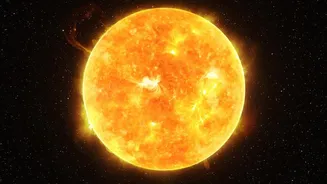
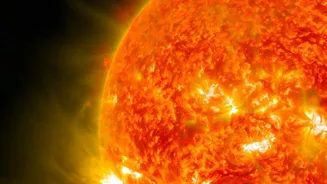
Space weather refers to the changing conditions in space, driven by the sun. The main events that concern us on Earth are solar flares and coronal mass ejections (CMEs). A solar flare is an intense burst of radiation, while a CME is a massive eruption
of plasma and magnetic fields from the sun's outer atmosphere. When these events are directed at Earth, they can interact with our planet's magnetic field and atmosphere, creating phenomena that are both beautiful, like the aurora, and potentially hazardous to our technological infrastructure.
Our Twin Vulnerabilities: Grids and Satellites
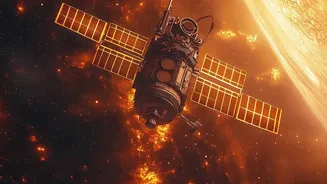
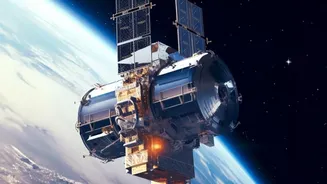
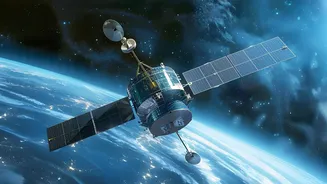
On the ground, the primary threat is to our electrical power grids. A powerful CME can cause rapid changes in Earth's magnetic field, which in turn creates geomagnetically induced currents (GICs) in long conductors like power lines. These uncontrolled, quasi-DC currents can flow into high-voltage transformers, causing them to overheat, saturate, and potentially fail, leading to widespread blackouts. A stark example is the 1989 storm that caused a nine-hour blackout across Quebec. In orbit, satellites are even more exposed. Charged particles can damage sensitive electronics, degrade solar panels, and cause phantom commands. Furthermore, intense solar activity heats and expands Earth's upper atmosphere, increasing drag on satellites in low-Earth orbit, which can alter their trajectory and even cause them to de-orbit if not corrected.
The First Line of Defense: Forecasting
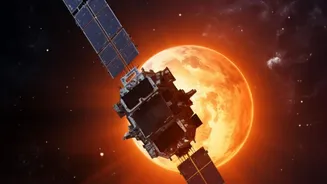
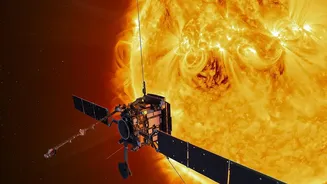
You can't stop a solar storm, but you can prepare for one. This is where forecasting comes in. The primary civilian agency for this in the United States is NOAA's Space Weather Prediction Center (SWPC), which operates 24/7. Working with partners like NASA and the U.S. Air Force, the SWPC uses a network of space-based and ground-based observatories to monitor the sun for signs of trouble, like complex sunspot groups that often precede solar flares. Satellites like the Deep Space Climate Observatory (DSCOVR) are positioned between the sun and Earth, acting as an early-warning buoy. Depending on the speed of the solar wind, it can provide a critical 15 to 60-minute warning before a storm hits, allowing operators to take protective measures. Advanced computer models like WSA-Enlil help forecast the arrival time and intensity of CMEs.
Shielding Infrastructure on the Ground
With a forecast in hand, power grid operators are not helpless. They can take several actions to mitigate the impact of GICs. These measures can include temporarily reducing the load on the grid, discontinuing maintenance to bring all lines online, or strategically re-dispatching power generation to manage voltage fluctuations. Some companies are also investing in hardware solutions. This includes installing devices known as neutral blocking devices (NBDs) or capacitor banks, which are designed to block or absorb the harmful induced currents before they can damage transformers. These initiatives are crucial for strengthening the resilience of the grid against a severe event.
Protecting Assets in Orbit
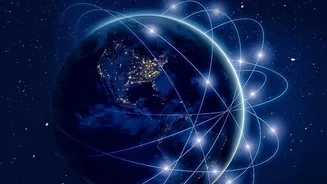
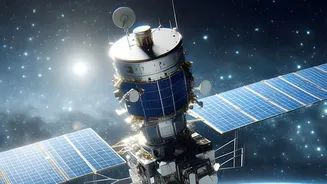
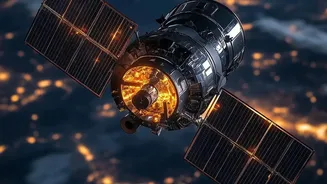
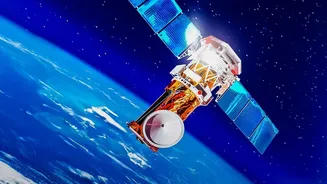
Satellite operators also use space weather forecasts to protect their multi-million dollar assets. When a significant solar radiation storm is predicted, they can command satellites to enter a protective 'safe mode'. This involves shutting down non-essential and sensitive electronics and orienting the spacecraft to better shield its vital components. For satellites in low-Earth orbit, warnings about increased atmospheric drag allow operators to plan corrective thruster firings to maintain their correct altitude. Looking to the future, scientists are exploring even more advanced protective measures. One concept, known as StormWall, proposes using a fleet of spacecraft to release vaporized materials into Earth's magnetosphere to temporarily reinforce our planet's natural magnetic shield during a major storm.