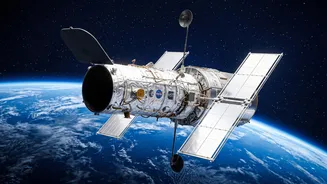



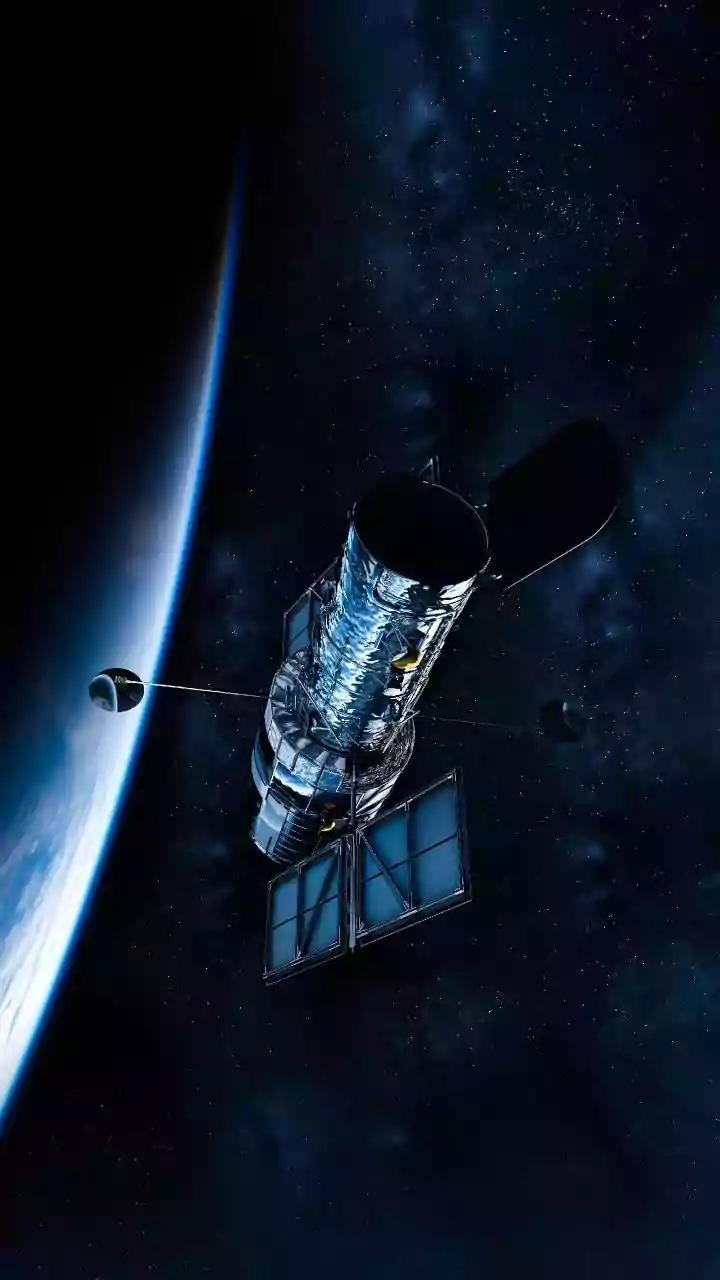
For over 36 years, the Hubble Space Telescope has been humanity's eye on the cosmos. But its orbit is decaying. Now, NASA is formally considering a groundbreaking new path to save it: partnering with the commercial space industry.
An Icon's Slow Descent
Since its launch in 1990,
the Hubble Space Telescope has made over 1.7 million observations, fundamentally changing our understanding of the universe. It helped scientists confirm the universe's accelerating expansion and captured iconic images like the 'Pillars of Creation'. But Hubble has a problem: it lacks its own propulsion. Like all satellites in low-Earth orbit, it is subject to atmospheric drag, which is slowly pulling it down. Without intervention, NASA projects it will make an uncontrolled reentry into Earth's atmosphere sometime between 2033 and 2034. In the past, Space Shuttle missions serviced Hubble five times, boosting its orbit and upgrading its instruments, but the shuttle program was retired in 2011, leaving the telescope without its lifeline.
A Formal Call to Industry
Recognizing the looming deadline, NASA issued a formal Request for Information (RFI) on October 29, 2026. This isn't a contract, but rather a way for the agency to gauge the capabilities and feasibility of what the private sector can offer. The RFI asks companies to propose concepts for one of three main objectives: boost Hubble to a higher, more stable orbit to extend its life; service the telescope with new technology to enhance its capabilities; or, as a final option, perform a safe, controlled de-orbit to dispose of it safely. Responses are due by November 30, 2026, giving NASA a chance to review a range of potential commercial solutions for the aging observatory.
The Rise of Commercial Partners
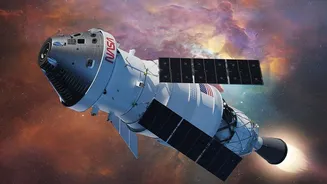
This move builds on earlier, informal discussions. In 2022, SpaceX and the Polaris Program—a private human spaceflight initiative funded by billionaire Jared Isaacman—proposed a study to see if a SpaceX Dragon capsule could rendezvous with and reboost Hubble. At the time, NASA was hesitant to pursue the privately funded idea, citing risks to the healthy observatory. However, the landscape has changed. The new RFI officially opens the door for SpaceX, as well as other potential players like Astroscale and Momentus who have previously expressed interest, to submit detailed concepts. The key difference now is that a commercial provider would be expected to supply the launch vehicle, spacecraft, and operations, potentially at no direct cost to the US taxpayer.
A New Business Model for Space
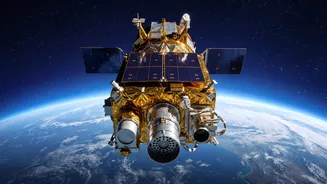
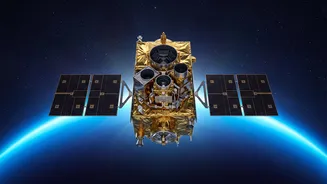
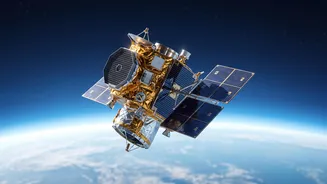
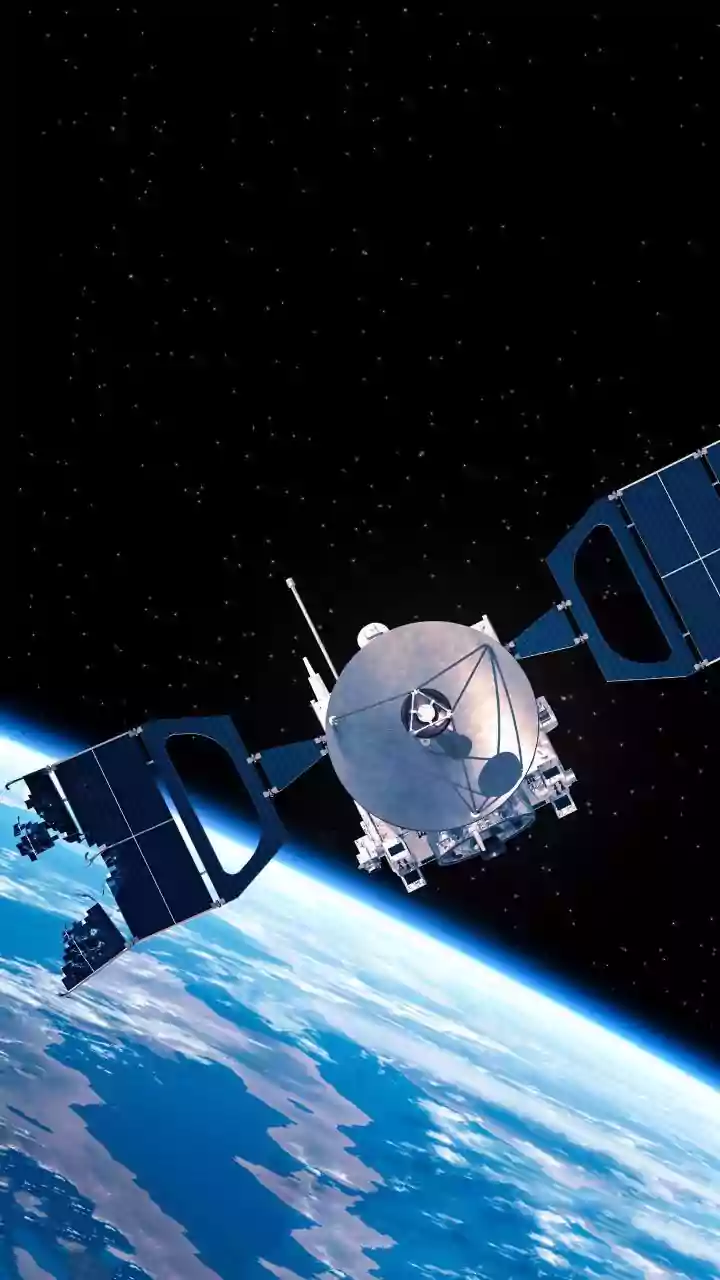
Saving Hubble is about more than just one telescope. A successful commercial servicing mission would pioneer a new market for 'in-space servicing'. This could involve extending the lives of other valuable government and commercial satellites, repositioning them, or safely removing space debris. The Hubble mission is a high-profile test case. While a robotic 'tug' is one possible architecture, a crewed mission, such as the one previously studied by SpaceX, remains a possibility. The technical challenges are immense, including capturing a large, non-cooperative spacecraft without causing damage. But the potential reward is the creation of a sustainable business model for stewarding assets in orbit.
What Happens Next?
After the November 30 deadline, NASA will review the submissions to understand the costs, risks, and technical readiness of the proposals. The agency has not yet allocated any funding for a mission, so the viability will depend heavily on the 'cost-effective' solutions industry can provide. Any mission would need to take place by 2032 to be effective. The scientific community is watching closely; researchers have already outlined ambitious projects for Hubble into the 2030s, contingent on it remaining operational. For now, the future of one of history's most important scientific instruments rests on whether a viable partnership between public science and private enterprise can take flight.