



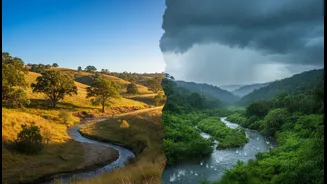


The Planet's Powerful Climate Engine
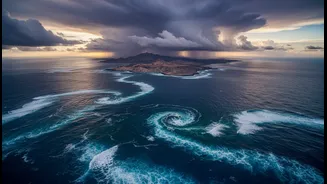
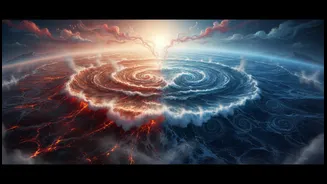
El Niño and La Niña are the warm and cool phases of a recurring natural climate pattern called the El Niño-Southern Oscillation (ENSO). Think of ENSO as a giant, slow-moving engine in the tropical Pacific Ocean that switches between warm (El Niño), cool (La
Niña), and neutral phases every two to seven years. This cycle involves a complex dance between the ocean's surface temperature and the atmosphere above it. Even though it happens in the Pacific, its effects ripple outwards, influencing weather patterns, rainfall, and temperatures across the globe, including having a significant impact on India's monsoon.
El Niño: The Warm Phase
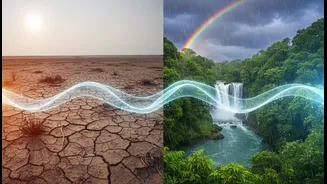
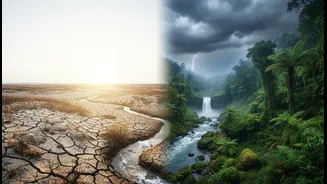
El Niño, which means "the little boy" in Spanish, occurs when the surface waters in the central and eastern tropical Pacific Ocean become unusually warm. Normally, strong trade winds blow from east to west, pushing warm surface water towards Asia and Australia. During an El Niño, these trade winds weaken. As a result, the large pool of warm water that is normally in the western Pacific spreads eastward, towards the coast of South America. This shift in ocean heat changes atmospheric pressure and disrupts the normal path of jet streams and storms. For India, El Niño is often bad news. It is strongly associated with weaker monsoon rains and higher chances of drought, which can impact agriculture and water supplies.
La Niña: The Cool Counterpart
La Niña, meaning "the little girl," is essentially the opposite of El Niño. During a La Niña event, the trade winds become even stronger than usual, pushing more warm water toward Asia and piling it up in the western Pacific. In the eastern Pacific, off the coast of South America, this allows deep, cold water to rise to the surface, a process called upwelling. This results in a large patch of cooler-than-average water. The atmospheric effects are the reverse of El Niño's. For India, La Niña is typically beneficial. It is often linked to stronger monsoon rainfall, sometimes leading to above-average precipitation and even floods in certain areas.
The Impact on India's Monsoon
The Indian monsoon is a lifeline for the country's agriculture-driven economy. The ENSO cycle is one of the most significant factors influencing its performance. A strong El Niño can suppress monsoon rainfall by altering the temperature and pressure gradients that drive the seasonal winds. Historically, many of India’s severe droughts have occurred during El Niño years. Conversely, La Niña conditions tend to strengthen the monsoon, bringing plentiful rain. However, this relationship isn't perfect. Other factors, like the Indian Ocean Dipole (a similar phenomenon in the Indian Ocean), can sometimes counteract or amplify ENSO's effects.
What's Happening Now?
As of mid-2026, the world is experiencing El Niño conditions. According to forecasters at the World Meteorological Organization and other climate centers, this El Niño developed in the tropical Pacific and is expected to strengthen significantly. Forecast models show a high probability of a strong event persisting through the end of 2026, which could lead to record global temperatures and various extreme weather events worldwide. For India, this raises concerns about the monsoon's performance and could lead to increased electricity demand for cooling, potentially straining the power grid.