



The AI Co-Pilot: Making Space Smarter
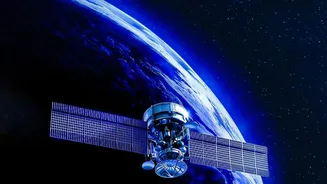
Artificial Intelligence is rapidly moving from a theoretical concept to a practical tool in India's space endeavours. Instead of beaming massive amounts of raw data back to Earth, a process that consumes time and bandwidth, satellites are becoming intelligent
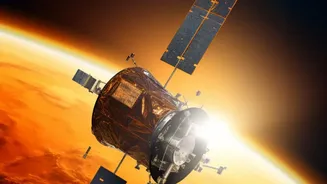
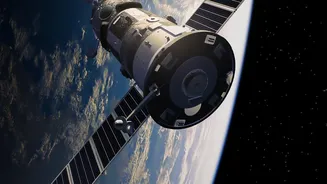
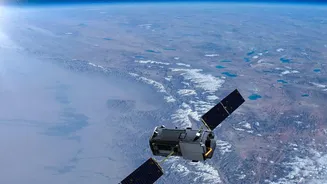
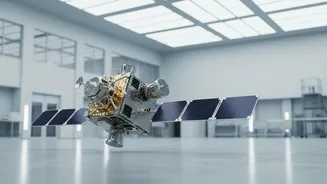
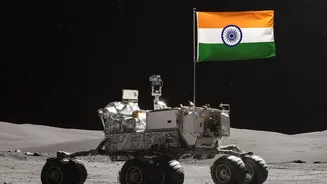
nodes that can process information in orbit. Startups like Pixxel, SatSure, and Digantara are pioneering this shift. For example, Pixxel is building constellations of hyperspectral satellites that use AI-powered analytics to provide insights for agriculture and climate research. At the same time, ISRO has been integrating AI into its missions for years, using it for tasks like terrain recognition and hazard avoidance during the Chandrayaan moon landings. This 'edge computing' in space allows for faster decision-making in critical areas like disaster management and national security. Another key application is managing the growing threat of space debris, where AI algorithms are used to track over a million objects and predict potential collisions with operational satellites.
The Quantum Leap: Securing the Final Frontier
While AI focuses on making space systems smarter, quantum technology promises to make them more secure and powerful. A primary application is in communications. Quantum Key Distribution (QKD) is a technology that uses the principles of quantum mechanics to create virtually unhackable communication channels. ISRO has already successfully demonstrated free-space QKD over a distance of 300 metres, a significant step towards creating secure satellite-based communication networks for military and strategic applications. This is crucial for protecting sensitive data from cyber threats. Beyond security, quantum computing is expected to solve complex problems that are currently impossible for classical computers. This includes optimizing spacecraft trajectories, designing new materials for rockets and satellites, and running advanced simulations for mission planning. As part of its National Quantum Mission, India is making significant strides in developing these capabilities to secure its place as a leader in this futuristic technology.
Building the Future: Challenges and Opportunities
Harnessing the power of AI and quantum requires more than just technology; it requires talent. Recognizing this, the Indian government has launched ambitious skilling initiatives. Prime Minister Narendra Modi recently announced a plan to provide AI skills training to one crore youth within a year, preparing a workforce for an AI-driven economy. The government has also established IN-SPACe (Indian National Space Promotion and Authorisation Centre) to act as a single-window agency to promote and regulate private sector participation. This body, along with policy reforms like liberalising Foreign Direct Investment (FDI), is designed to create a thriving ecosystem for space-tech startups. Investment is flowing in, with the private space sector attracting hundreds of millions of dollars in recent years. However, the sector remains capital-intensive, and challenges in developing a domestic supply chain for high-tech components persist.
A New Economic Trajectory
The integration of AI and quantum skills is set to redefine India's role in the global space economy, which is projected to grow substantially. India's own space economy is forecast to reach $44 billion by 2033. The focus is shifting from being a provider of cost-effective launch services to a hub for high-value, technology-driven space solutions. Startups are no longer just vendors to ISRO but are developing end-to-end capabilities, from building AI-powered satellites to developing propulsion systems. This shift is creating new commercial pathways in areas like satellite data analytics, autonomous systems, and secure communications. As ISRO concentrates on advanced research and development for deep space missions, the private sector, empowered by these new skills, is positioned to drive innovation and commercialisation in Earth's orbit and beyond. This synergy is crucial for India to achieve its ambition of becoming a true global space power.