



Peering Beneath the Dust
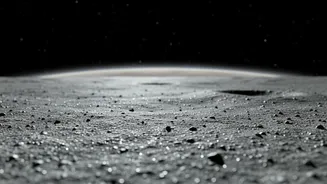
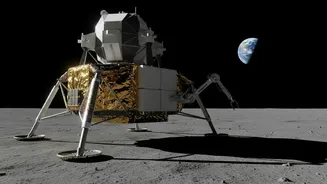
Before humanity can build on the Moon, we need to understand what we're building on. ISRO's Chandrayaan-3 mission, which famously touched down near the lunar south pole, did exactly that by deploying unique instruments to study the moon's soil, or regolith.
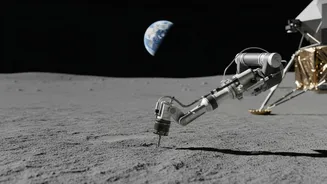
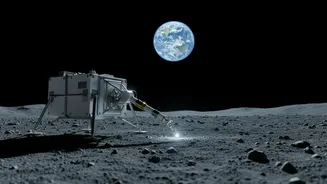
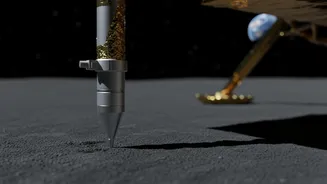
For the first time, an in-situ thermal probe called ChaSTE (Chandra’s Surface Thermophysical Experiment) was inserted ten centimetres into the polar surface. It revealed a surprisingly large temperature difference—as much as 50-80°C between the surface and that shallow depth—confirming that the lunar soil is an incredibly effective insulator. This loose top layer, often called 'fluff', traps heat poorly, leading to extreme temperature swings that any future equipment must endure. These direct measurements are far more accurate than what orbiters could previously infer and provide a vital ground truth for future exploration.
The Tools for the Job
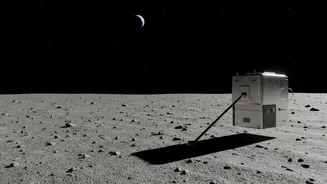
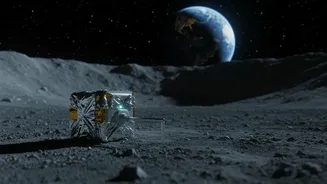
Two key instruments from the Vikram lander are providing this crucial data. The first is ChaSTE, a probe equipped with ten temperature sensors and a heater. By gently pushing into the regolith, it measured the temperature profile. It then used its heater to warm the soil, allowing scientists to calculate the material's thermal conductivity and infer its density and strength—key factors for construction. The second instrument, the Instrument for Lunar Seismic Activity (ILSA), is an incredibly sensitive seismometer. It listens for 'moonquakes' caused by tidal forces or meteoroid impacts. ILSA successfully detected vibrations from the Pragyan rover's movements and even recorded a likely natural seismic event. This data is fundamental for assessing the geological stability of any potential site for a lunar base, a task that hasn't been possible with this precision since the Apollo missions of the 1970s.
Engineering Safer Landings and Structures
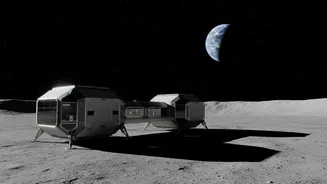
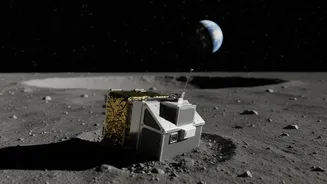
Understanding the properties of lunar soil is not just an academic exercise; it's a critical safety requirement. The bearing capacity of the soil—its ability to support weight—is a primary concern for designing the foundations of landers and habitats. ISRO’s data helps refine our models of this, ensuring that future, heavier spacecraft don't sink into the loose regolith upon landing. Furthermore, the thermal data from ChaSTE informs how to design rovers and structures that can survive the extreme temperature gradients. The soil’s low thermal conductivity means surface equipment can get extremely hot while just centimetres below, the temperature remains more stable. This knowledge is crucial for building structures, laying cables, and protecting sensitive electronics from thermal stress. The data on moonquakes from ILSA also helps engineers assess seismic risks, ensuring any long-term habitat is built to withstand the Moon's subtle but present geological activity.
A Blueprint for Finding Lunar Water
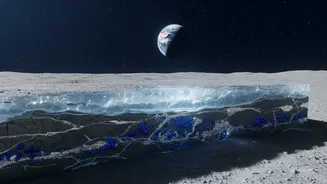
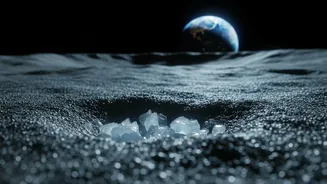
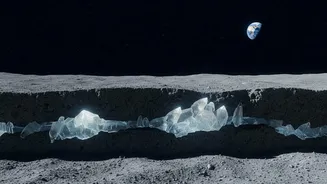
The ultimate prize at the lunar poles is water ice, a resource that could provide drinking water, breathable oxygen, and rocket fuel for future explorers. ISRO's soil measurements are a direct guide in this search. ChaSTE's thermal data helps scientists understand how heat from the sun penetrates the surface, which in turn helps predict where ice could remain stable just below the surface. The research suggests that areas with specific terrain slopes, even outside permanently shadowed regions, might be cold enough to harbour shallow ice deposits. In addition, seismic data from instruments like ILSA can be used to prospect for this ice. Just as on Earth, seismic waves travel at different speeds through different materials; they move faster through dense ice than through loose, dry dust. By analyzing these signals, future missions can map out the depth and concentration of buried ice reserves without having to drill extensively, making the hunt for this vital resource more efficient.