







The Magic of Compounding
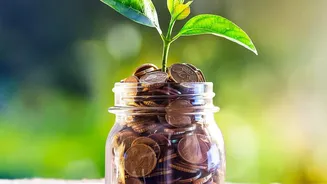
At the heart of this principle is the concept of compounding, a force so powerful it's often called the 'eighth wonder of the world'. In simple terms, compounding is the process where your investment returns begin to generate their own returns. It’s not
just your initial investment that grows, but the accumulated interest or gains also start earning money. This creates a snowball effect that, over a long period, can turn even modest savings into a substantial corpus. Think of it like a small sapling. With enough time, it can grow into a massive tree, but you can't speed up the process by simply pouring more water on it later in its life. It needs years to mature and grow. Your money works the same way.
A Tale of Two Investors
To see this in action, let’s consider two friends, Priya and Rohan. Priya gets her first job at 25 and decides to start a Systematic Investment Plan (SIP) of just ₹5,000 per month. She does this consistently for 10 years and then stops investing completely at age 35, having invested a total of ₹6 lakhs. Her money, however, remains invested. Rohan, on the other hand, waits until he is 35 and has a higher salary. He decides to invest ₹10,000 per month, double Priya's amount, and continues until he is 60. Rohan invests a total of ₹30 lakhs over 25 years. Assuming a conservative 11% annual return for both, who has more money at age 60? Despite investing five times less capital, Priya’s final corpus would be significantly larger than Rohan’s. This happens because her initial investment had an extra decade to compound and grow exponentially, an advantage that Rohan’s larger, later contributions could never overcome.
Time Is Your Greatest Asset
Priya's story proves that the duration of your investment is far more critical than the amount. Every year you delay investing is a year of lost compounding growth, and this loss becomes more pronounced over time. The growth in the later years of an investment journey is often explosive, with returns earned on past returns sometimes exceeding the total initial contributions. By starting early, you give your money the maximum possible time to work for you. This long runway allows your investments to weather market fluctuations and fully benefit from the upward trajectory of long-term growth. It shifts the focus from 'timing the market' to 'time in the market,' which is a much more reliable strategy for wealth creation.
Overcoming the 'Not Enough' Hurdle
One of the biggest psychological barriers that prevents people from investing early is the belief that they don't have enough money to start. Many wait for a significant lump sum, a promotion, or a 'perfect time' that rarely arrives. This mindset is the enemy of compounding. In India, investment tools like SIPs have made it incredibly accessible to begin with small amounts, sometimes as low as ₹500 a month. The goal isn't to invest a huge amount from day one, but to build a habit of disciplined, regular investing. Automating a small monthly investment removes the emotional decision-making and ensures you are consistently adding to your corpus, no matter how small the amount feels at the start.
Your First Step to a Wealthier Future
Instead of feeling pressured to become a financial expert overnight, focus on taking one small, manageable step. Research beginner-friendly mutual funds that allow SIPs and start with an amount that doesn't strain your budget. The act of starting is more important than the amount. This disciplined approach has another built-in benefit called rupee-cost averaging. By investing a fixed amount regularly, you automatically buy more units when the market is low and fewer when it is high, averaging out your purchase cost over time and reducing the impact of market volatility. It is a simple yet powerful mechanism that rewards consistency over attempts to predict market movements.