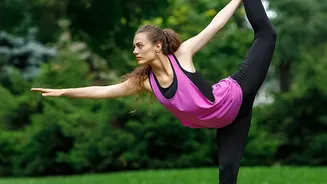






The Core Philosophy: Stillness vs. Expression
At its heart, yoga is a mind-body practice focused on harmonising internal systems through postures (asanas), controlled breathing (pranayama), and meditation. The goal is often to cultivate mindfulness, achieve mental calm, and connect with your inner
self. It encourages self-reflection and a focus on internal sensations. Dance, on the other hand, is primarily about external expression. It's a series of rhythmic movements, usually performed to music, that engages the mind and body in a coordinated, often social, act of joy and release. While both heighten body awareness, yoga's energy is directed inward, promoting stillness, while dance's energy flows outward in expressive, dynamic movement.
Cardiovascular Health: High-Energy vs. Low-Impact
When it comes to heart health, dance often has the edge as a powerful cardiovascular workout. High-energy forms like Zumba, salsa, or aerobic dance get your heart rate up, improve circulation, and strengthen the heart muscle. In contrast, most forms of yoga are lower-impact and less aerobically demanding than a dance class. However, yoga contributes to heart health in other significant ways. Its proven ability to lower stress, reduce blood pressure, and improve cholesterol levels provides substantial cardiovascular benefits. Studies have shown that yoga can be particularly effective in managing hypertension, sometimes more so than energetic workouts.
Strength and Flexibility: A Shared Goal
Both yoga and dance are excellent for building strength and flexibility, though they achieve it differently. Yoga is renowned for its ability to improve flexibility by moving joints and muscles through their full range of motion. Holding poses builds isometric strength, toning muscles and enhancing core stability. Dance also improves flexibility and strength, engaging multiple muscle groups to support posture and perform precise movements. While yoga may provide a deeper, more focused stretch, dance builds functional strength through dynamic, full-body motions, improving balance and coordination simultaneously.
Mental Wellness: Calm vs. Joyful Release
Both disciplines offer profound mental health benefits. Yoga's emphasis on deep breathing and mindfulness is a powerful tool for stress management, helping to calm the nervous system and reduce anxiety. Regular practice can improve mental clarity and emotional stability. Dance provides a different kind of mental boost, often described as a 'dancer's high'. The combination of music, movement, and social interaction releases endorphins, which elevate mood and act as a natural stress reliever. Studies have shown dance is effective at alleviating symptoms of depression and anxiety, largely due to its joyful and social nature.
Calorie Burn and Weight Management
If burning calories is a primary goal, high-energy dance is generally more effective. A session of Zumba can burn over 9 calories a minute, while styles like salsa or ballet can burn between 380 and 480 calories per hour. Gentle forms of yoga burn significantly fewer calories. However, yoga supports weight management in a different way. By promoting mindfulness and healthier eating habits, it encourages long-term lifestyle changes that contribute to weight loss and improved body composition over time. Vigorous styles like Ashtanga or 'power yoga' are more physically challenging and offer a greater calorie burn than more restorative practices.