




The Tyranny of Distance
Exploring Mars has always been a slow, methodical process. For decades, the biggest hurdle wasn't the rugged terrain, but the vast distance between Earth and Mars. A radio signal can take anywhere from 5 to 20 minutes to travel one way. This delay means
rover drivers at NASA's Jet Propulsion Laboratory (JPL) can't just joystick a rover around obstacles in real time. Instead, they must operate like meticulous choreographers, analyzing 3D images from the previous day, plotting a short, safe path, and sending the instructions up. The rover then executes that drive and waits for the next set of commands. This cautious approach has kept rovers safe, but it has severely limited the amount of ground they can cover, and thus the amount of science they can do.
A Rover That Thinks for Itself
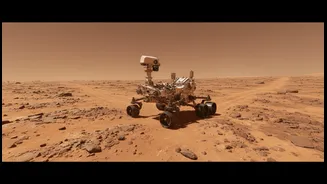
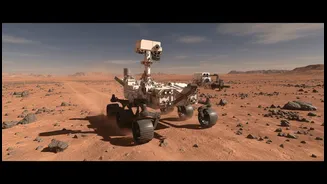
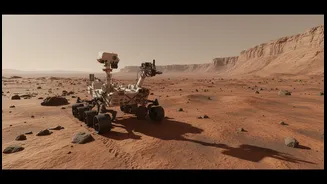
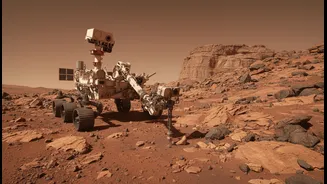
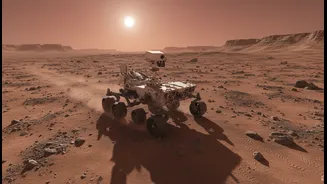
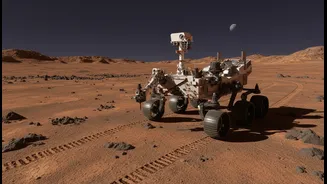
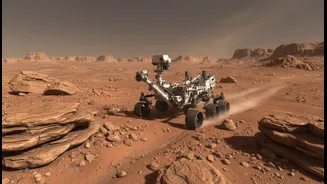
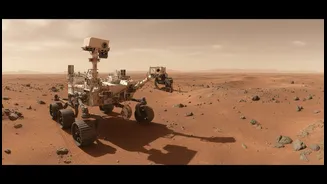
Perseverance represents a monumental leap forward in overcoming this challenge. It is equipped with a highly advanced autonomous navigation system called AutoNav. While previous rovers like Curiosity had a similar system, Perseverance's is significantly more powerful. It can create 3D maps of the terrain ahead, identify potential hazards like sharp rocks or sand traps, and plot its own course around them without waiting for instructions from Earth. The key upgrade is what engineers call a 'thinking while driving' capability. Unlike older rovers that had to stop, take images, process them, and then move, Perseverance processes its surroundings on the fly. This allows it to drive continuously and at a much higher speed, effectively taking the wheel for large portions of its journey.
A Marathon Pace on Another World
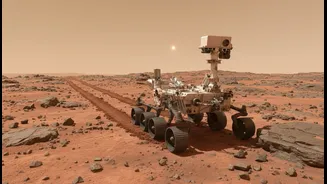
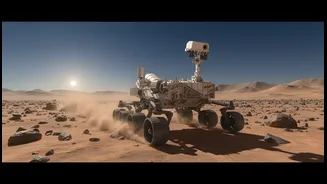
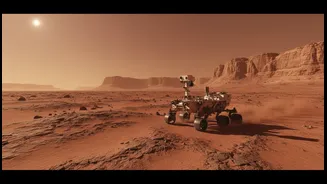
The results of this newfound independence are staggering. On June 14, 2026, Perseverance officially completed the distance of a full marathon—42.195 kilometers—across the Martian surface. It became only the second rover to do so, following the legendary Opportunity rover. But while Opportunity took over 11 years to reach that milestone, Perseverance did it in just over five years, less than half the time. This record-breaking pace isn't just a vanity metric; it demonstrates a dramatic increase in operational efficiency. The rover can now travel farther in a single Martian day than previous rovers could in weeks, allowing scientists to investigate the ancient river delta in Jezero Crater much more quickly and thoroughly than ever imagined.
More Than Just Driving
This autonomy isn't just about covering distance; it's about enabling better science. The rover's AI extends to other systems, like the Autonomous Exploration for Gathering Increased Science (AEGIS) instrument. After a long, self-guided drive, AEGIS can use its own analysis of the surrounding geology to identify and zap scientifically interesting rock targets with its SuperCam laser for preliminary analysis, all without human intervention. This means that when scientists and engineers log on in the morning, the rover has not only driven to a new location but may have already completed an initial scientific survey of its surroundings. This efficiency allows the human team to focus on bigger-picture decisions and deeper analysis rather than micromanaging the rover's every move.
A Blueprint for Exploring the Solar System
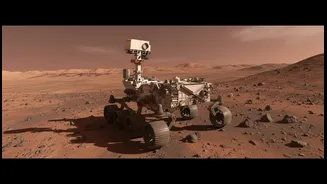
Perseverance's success provides a crucial, practical blueprint for the future of surface exploration. The technologies tested and proven on Mars are essential for upcoming missions to even more distant and challenging destinations. Future rovers targeting the icy moons of Jupiter or Saturn, like Europa or Titan, will face communication delays measured in hours, not minutes. For these missions, a high degree of autonomy won't just be helpful; it will be non-negotiable. By proving that a rover can navigate complex landscapes and make its own scientific decisions safely and effectively, Perseverance has paved the way for a new generation of robotic explorers that can venture farther into the unknown, pushing the boundaries of what we can discover in our solar system.