



The Ultimate Insurance Policy
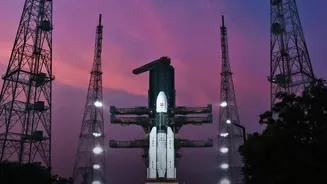
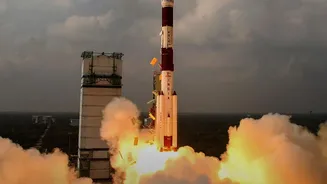
Sending humans to space is an inherently risky endeavour. The most perilous moments of any mission are the launch and ascent, when the spacecraft is balanced atop a controlled explosion of immense power. To safeguard the crew during this phase, ISRO has developed
a critical piece of hardware: the Crew Escape System (CES). Think of it as a highly advanced ejector seat, not for a single pilot, but for the entire crew capsule. This system is designed to detect a problem with the launch vehicle, fire its own powerful solid-fuel motors, and pull the crew module away from the malfunctioning rocket to a safe distance, all within milliseconds. This ensures that no matter what happens on the launchpad or during the climb to orbit, the crew has a reliable way out.
Simulating Every Possible Failure
To guarantee the Crew Escape System works flawlessly when needed, ISRO is conducting a series of exhaustive trials called abort tests. These are not just theoretical simulations; they are real-world demonstrations using specially designed test vehicles. The tests cover various failure scenarios. The first, a Pad Abort Test (PAT) conducted successfully in 2018, simulated an emergency on the launch pad itself, proving the CES could lift the crew module to a safe altitude and distance. The next series of tests involves in-flight aborts. The Test Vehicle Abort Mission-1 (TV-D1), successfully completed in October 2023, tested an abort scenario at high altitude and transonic speeds—the point of maximum aerodynamic stress on the rocket. Future tests will continue to validate the system under different conditions before any astronaut boards the rocket.
Anatomy of a High-Speed Escape
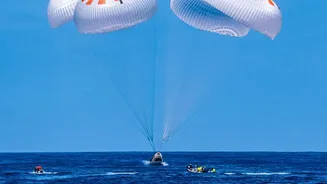
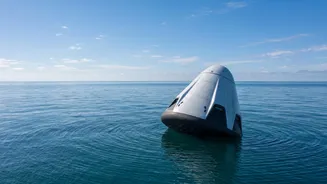
The Crew Escape System is a marvel of engineering. It's a tower-like structure mounted on top of the crew module, equipped with several sets of quick-acting solid motors. These include a Low-altitude Escape Motor (LEM) and a High-altitude Escape Motor (HEM), which provide the powerful pull needed to separate from the main rocket. Once the CES has pulled the crew module clear, it detaches, and a complex sequence of parachutes begins to deploy. The successful TV-D1 test demonstrated this perfectly: after the abort, a series of parachutes unfurled to stabilize and slow the module's descent, leading to a gentle splashdown in the Bay of Bengal. The module was then successfully recovered by the Indian Navy, proving the end-to-end viability of the escape and recovery procedure.
A Culture of Redundancy and Safety
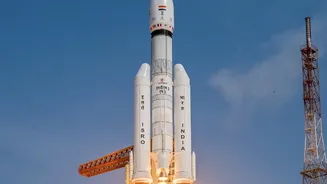
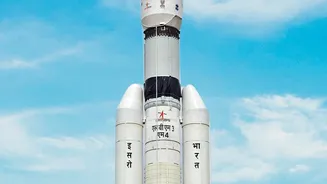
Beyond the dramatic abort tests, ISRO's entire approach to the Gaganyaan mission is built on a foundation of safety and redundancy. The launch vehicle itself, the LVM3, is being 'human-rated', a meticulous process of testing and modification to certify it as safe for carrying people. Every component, from the propulsion systems to the life support inside the crew module, is undergoing thousands of hours of qualification tests to ensure reliability even in off-nominal conditions. This philosophy extends to the recovery phase, with systems designed to upright the capsule after splashdown and extensive coordination with military teams for swift retrieval. This painstaking attention to detail ensures that multiple layers of safety are in place. The abort tests are the most visible part of this commitment, a clear signal that for ISRO, crew survival is the absolute highest priority.