




The Urban Heat Challenge
If you've ever felt that your city is significantly warmer than surrounding rural areas, you're not imagining things. This is the 'urban heat island' effect. Dark surfaces like traditional asphalt roads and conventional roofs absorb a huge amount of sunlight,
storing that energy and radiating it back as heat long after the sun has set. This makes our buildings hotter, forcing air conditioners to work overtime and driving up energy consumption across entire neighbourhoods. This cycle not only strains our wallets but also increases greenhouse gas emissions and can worsen air quality.
A Cool Solution Above
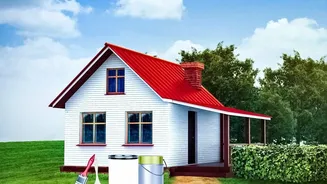
For years, the simplest answer has been the 'cool roof'—a roof designed to reflect more sunlight and absorb less heat than a standard roof. This is typically achieved with reflective paints or coatings, often white or light in colour, that can be applied over an existing roof structure. These coatings work by increasing the roof's solar reflectance (also known as albedo), bouncing the sun's energy back into the atmosphere instead of letting it heat up the building. The benefits are immediate: a cooler building interior, which can reduce the need for air conditioning by a significant margin.
The Bio-Engineered Breakthrough
The term 'bio-engineered' points to the next generation of cooling paints that often take inspiration from nature. While not always made from living organisms, they use advanced material science and nanotechnology to mimic or enhance natural cooling processes. Recent innovations have focused on materials like cellulose, a naturally abundant polymer. For example, researchers have developed films from cellulose nanocrystals (CNCs) that are exceptional at reflecting sunlight while also being highly effective at radiating heat away. These CNCs can be engineered to create films that not only cool passively but can also produce vibrant colours without using heat-absorbing pigments. Other advancements include creating porous nano-structures within the paint that scatter sunlight far more effectively than traditional pigments like titanium dioxide.
The Science of Reflection and Radiation
These advanced paints work through a dual-action process. First, they have exceptionally high solar reflectance, meaning they bounce back a huge percentage of the sun's energy across the entire solar spectrum—including invisible ultraviolet (UV) and infrared (IR) rays. Some experimental coatings reflect up to 97% of sunlight. Second, and just as important, they have high thermal emittance. This means they are very efficient at releasing any heat they do absorb back into the atmosphere as thermal infrared radiation, a process known as passive radiative cooling. Some of these advanced coatings are so effective they can cool a surface to below the surrounding air temperature, even in direct sunlight.
Cooler Homes, Lower Bills
The practical benefits of applying these coatings are compelling. For buildings without air conditioning, a cool roof can lower maximum indoor temperatures by several degrees, making living conditions much more comfortable and reducing heat-related health risks. In homes with AC, the energy savings are substantial. By reducing the amount of heat entering the building, air conditioning systems don't have to work as hard or run as long, leading to a direct reduction in electricity bills, with some estimates suggesting savings of 10% to 30%. Furthermore, these coatings protect the roof itself from UV damage and extreme temperature fluctuations, which can extend its lifespan and reduce maintenance costs.
Is It Right for You?
While some of the most advanced bio-engineered paints are still in development or early commercial stages, high-performance reflective coatings are widely available. They can be applied to most common roof types, including concrete, metal, and tiles. Application is often as straightforward as using a roller or sprayer. When choosing a product, look for its Solar Reflectance Index (SRI), a measure of its ability to reject solar heat—the higher the better. While the initial cost may be more than standard paint, the investment often pays for itself over a few years through energy savings, especially in India's hot climate. Many of these modern coatings are also water-based and have low VOCs (volatile organic compounds), making them an environmentally friendlier choice.