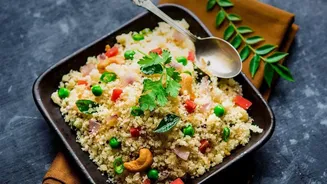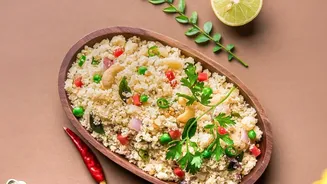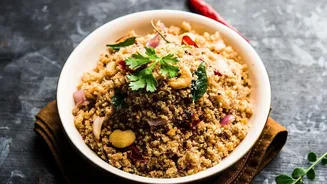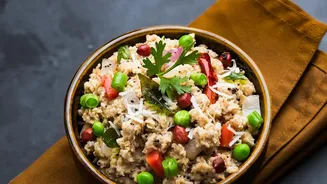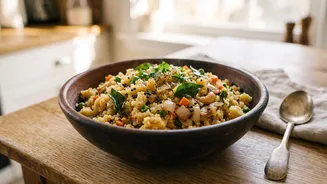

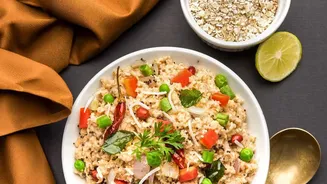

It’s the humble, quick-fix breakfast that graces countless Indian tables. But to dismiss upma as simple is to miss the magic entirely. That magic, a symphony of aroma and taste, comes from one crucial step: the art of tempering.
The Soul of a Simple Dish
Upma, in its many forms,
is a testament to culinary ingenuity. Made from dry-roasted semolina (rava/suji) or other grains, it's a dish born of convenience and comfort. Yet, it often sparks debate; for some, it is the ultimate comfort food, while for others, it can be bland and uninspiring. The difference between a forgettable, mushy bowl and a fluffy, flavour-packed delight almost always lies in the 'tadka' or tempering. This initial step, where spices meet hot fat, is not just a preliminary flourish but the very foundation upon which the entire flavour of the dish is built. It’s what transforms a simple grain porridge into a beloved breakfast classic.
The Science of Sizzle and Scent
Tempering, known as 'tadka', 'oggarane', or 'chaunk' across India, is a rapid and powerful flavour-infusion technique. When whole spices are added to hot oil or ghee, the heat works to break down their cellular walls, releasing volatile essential oils. These aromatic compounds are fat-soluble, meaning they dissolve in oil, which then acts as a perfect carrier to distribute the flavour evenly throughout the entire dish. A few seconds in the hot fat is all it takes for mustard seeds to pop, for lentils to turn nutty and crisp, and for curry leaves to release their unique perfume, creating layers of flavour and aroma that simply boiling in water could never achieve.
The Karnataka Classic: Khara Bath
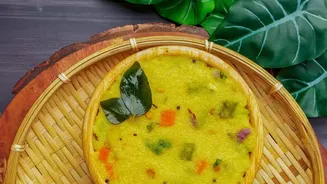
In Karnataka, upma is often known as 'Khara Bath', a spicier and more robust version of the dish. The tempering here is a complex affair that sets the stage for a deeply savoury experience. It typically begins with mustard seeds, urad dal (split black gram), and chana dal (split chickpeas), which are fried until golden to provide a delightful crunch. Curry leaves, asafoetida (hing), and green chillies follow, building the aromatic base. What truly distinguishes Khara Bath is the addition of a special spice blend, often a 'vangi bath' or sambar powder, along with turmeric, giving the final dish its characteristic flavour and golden hue. Mixed vegetables like carrots, beans, and capsicum are also commonly added to the tempering, making it a wholesome meal.
The Tamil Nadu Touch: Simplicity and Flavour
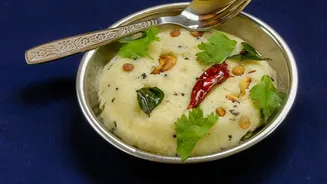
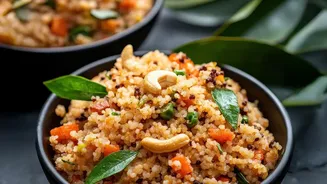
Travel to Tamil Nadu, and you’ll find that the approach to upma can be subtly different, often celebrating a simpler, cleaner flavour profile. While the core tempering ingredients of mustard seeds, urad dal, and curry leaves remain, the focus is often on highlighting the fragrance of ginger and the sharpness of green chillies. Cashews are a very common addition, fried in the ghee or oil until golden to add a rich, buttery crunch to the finished dish. Unlike the heavily spiced Khara Bath, the Tamil Nadu style often omits turmeric and other spice powders, resulting in a paler but no less delicious upma where the individual flavours of the tempering shine through.
The Maharashtrian Way: Upit with Peanuts
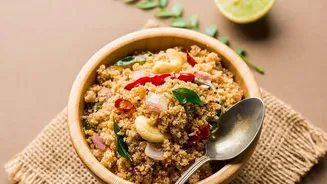
In Maharashtra, the dish is known as 'Upit' or 'Sanza'. A key player in the Maharashtrian tempering for upit is the peanut. Added to the hot oil along with mustard seeds, cumin seeds, and curry leaves, the peanuts are fried until crisp, lending a wonderful texture and nutty taste. Onions are almost always essential, sautéed until soft and translucent to provide a sweet undertone that balances the entire dish. Some variations also use different flours like whole wheat or gram flour (besan), creating rustic versions called 'ukadpindi' or 'pithla', each with its own unique tempering style but all rooted in the same flavour-building principles.
The Final Flourish
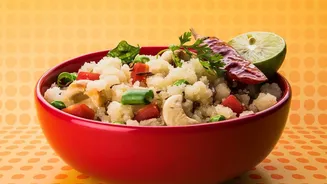
While the tempering lays the groundwork, the final touches are what elevate upma from good to great. A generous squeeze of lemon or lime juice at the end cuts through the richness and adds a bright, fresh note that lifts all the other flavours. A garnish of freshly chopped coriander leaves contributes a final layer of herbaceous aroma. In some regions, a spoonful of ghee is drizzled over the hot upma just before serving, or a sprinkle of freshly grated coconut is added, particularly in coastal states like Kerala and Karnataka, adding more richness and texture. Each addition is a regional signature, a final brushstroke on the flavourful canvas created by the tempering.