





The Show That Never Ends
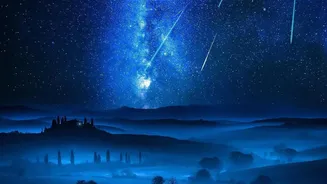
While meteor showers like the Perseids grab headlines, they are merely an opening act. As the monsoon clouds retreat, India’s skies transition into a period of exceptional clarity, especially from October through March. This is the prime season for stargazing,
when the air is stable and the nights are long. The constellations you see will shift, with the bright star fields of the summer Milky Way giving way to the brilliant gems of the winter sky. This seasonal change brings new targets and fresh wonders for everyone, from casual observers to dedicated astrophotographers.
Celestial Calendar: What to Watch for in Late 2026
The remainder of 2026 is packed with events. In mid-October, look for the Orionid meteor shower, which is born from the debris of Halley's Comet. November brings two exciting events: on the night of the 16th and 17th, the Leonid meteor shower will grace the sky, known for its incredibly fast meteors that can leave glowing trails. A day earlier, a beautiful conjunction will see Mars and Jupiter appear very close together. The year's grand finale is the Geminid meteor shower on December 13th and 14th. It is considered the most reliable shower of the year, and in 2026, it peaks during a near-new moon, promising exceptionally dark skies and the potential to see up to 120 meteors per hour.
India's Premier Dark Sky Sanctuaries
To truly appreciate the night sky, you need to escape the city lights. India is blessed with several world-class stargazing locations. For the most pristine skies, head to the high-altitude deserts. Hanle in Ladakh is India’s first official Dark Sky Reserve, offering some of the clearest skies in Asia. Nearby Spiti Valley in Himachal Pradesh is another Himalayan paradise for astronomers. If you prefer staying closer to the plains, the vast, flat expanse of the Rann of Kutch in Gujarat provides an otherworldly setting, especially during the winter months. In the south, the coffee plantations of Coorg, Karnataka, offer dark, tranquil skies from October through May, perfect for observing the winter constellations.
Your Winter Star Map
Winter is the best season for learning constellations. The undisputed king of the winter sky is Orion, the Hunter, easily identified by the three bright stars forming his belt. This celestial landmark is your guidepost. Follow the line of the belt downwards to find Sirius, the brightest star in the entire night sky. Follow the belt upwards to locate the reddish star Aldebaran in the constellation Taurus, which also hosts the beautiful Pleiades star cluster, known as the Seven Sisters. And in the autumn sky, from a dark location, you can even spot a faint, fuzzy patch of light—that’s the Andromeda Galaxy, the most distant object visible to the naked eye.
The Beginner's Stargazing Toolkit
You don’t need expensive equipment to start. The most important tool is patience. Find a dark spot and give your eyes at least 20-30 minutes to fully adapt to the darkness. To preserve your night vision, use a red flashlight or cover a regular torch with red cellophane. Instead of a telescope, start with a pair of binoculars, which are perfect for scanning the Milky Way and getting a closer look at star clusters like the Pleiades. Finally, download a stargazing app on your phone, like Star Walk or SkyView. These apps use your location to create a real-time map of the sky, helping you identify stars, planets, and constellations with ease.