







The General Rule: Yes, You Can Carry Food
Indian Railways generally permits passengers to carry their own food and non-alcoholic beverages on board. This has long been a tradition for families undertaking long-distance journeys. There is no official limit on the quantity of most everyday food items
like rotis, sabzi, rice, and snacks, as long as they are for personal consumption and not for commercial purposes. The primary goal of the rules is to ensure safety, hygiene, and the comfort of all passengers. So, while your favourite homemade dishes are welcome, certain items are restricted or banned outright to prevent fire hazards, spillage, and strong odours that may inconvenience others. For second-class passengers in particular, food for the journey is listed as a free allowance item that is not weighed as part of your luggage limit.
Prohibited and Restricted Items
Safety is paramount on trains, which is why certain items are strictly prohibited. This list includes obviously dangerous goods like explosives, flammable chemicals, acids, and gas cylinders. However, some everyday items also fall into this category. For instance, carrying large quantities of oily items is restricted because of the risk of spillage, which can make floors slippery and create a fire hazard. While passengers can carry up to 20 kg of ghee, it must be securely packed in a tin container. One surprising prohibition is dried coconut (copra), which is considered highly flammable and is banned under the Railways Act. Furthermore, consuming alcohol or travelling while intoxicated is strictly forbidden and can lead to penalties. While carrying a sealed bottle or two may be permissible depending on state excise laws, drinking on the train is not allowed.
Finding the Official Rules
For the most accurate and up-to-date information, it's always best to consult official sources. The Indian Railways and IRCTC websites are the primary resources. You can look for the 'Passenger Information' or 'Rules' section, which often contains details about luggage and prohibited items. For instance, the West Central Railway website explicitly lists articles not accepted as luggage, including oily items (with the exception of ghee), dry leaves, and corrosive substances. These rules are often detailed in the IRCA Coaching Tariff documents. While these documents can be dense, the key takeaways are usually summarised in passenger-facing guidelines on the website. For specific food-related services, like e-catering options and menus, the IRCTC eCatering portal and the 'Food on Track' app are the official platforms to use.
Smart Packing for a Smooth Journey
How you pack is as important as what you pack. To avoid spills and ensure your food stays fresh, use leak-proof containers. This is especially crucial for curries or anything with gravy. Consider packing dry items like parathas, theplas, sandwiches, and dry sabzis, which are less likely to create a mess. It's also a good practice to bring your own cutlery and napkins. To be considerate of fellow travellers, try to avoid foods with very strong or pungent odours. Remember that train compartments are shared spaces, and a pervasive smell, even if delicious to you, might be unpleasant for others. Properly disposing of waste in designated bins is also a key part of travel etiquette.
Special Rules on Certain Trains
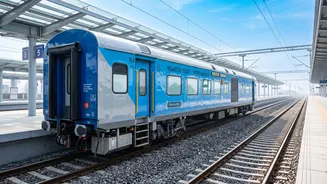
It's worth noting that some specific trains may have unique food policies. For example, the Vande Bharat Express running between Delhi and Katra, a popular pilgrimage route, is certified as a 'Sattvik' or purely vegetarian train. On this service, not only is the food served exclusively vegetarian, but passengers are also prohibited from bringing non-vegetarian food on board to maintain the train's 100% vegetarian environment. As Indian Railways continues to innovate and introduce new types of services, it's always a good idea to check for any special conditions that might apply to your specific train at the time of booking, especially on premium or thematic routes.