




The Psychology of Slowing Down
Modern travel often prioritises speed over experience, leaving us stressed and exhausted. Train travel offers a powerful antidote. It's a key part of the 'slow travel' philosophy, which encourages a deeper connection with the journey. The rhythmic clatter
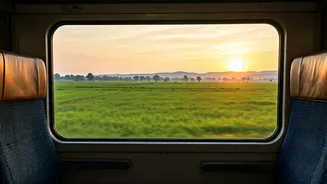
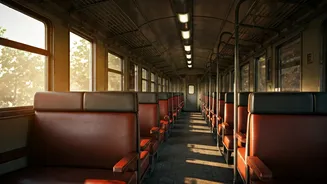
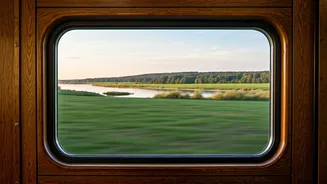
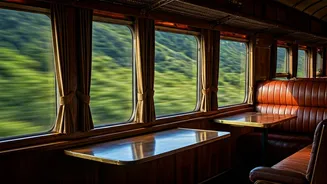
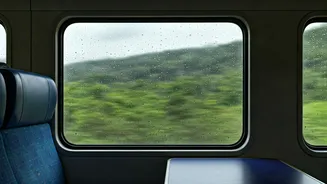
of the wheels, the unhurried pace, and the freedom to simply watch the world go by create a meditative state, reducing stress and promoting mindfulness. Unlike the confines of a plane, a train offers space to walk, think, and disconnect from the triggers of daily life. It forces you to be present, transforming travel from a stressful necessity into a rejuvenating experience. The journey itself becomes a destination for mental well-being.
The Himalayan Queen: Kalka to Shimla
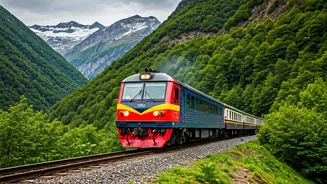
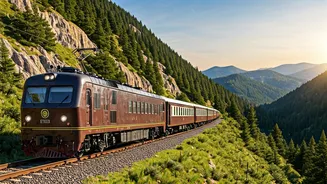
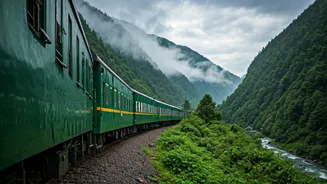
A journey on the Kalka-Shimla Railway is like stepping back in time. This UNESCO World Heritage Site, affectionately known as the 'Himalayan Queen', is an engineering marvel built in 1903. The narrow-gauge 'toy train' covers 96 kilometres as it climbs from the Shivalik foothills to the former summer capital of British India. The five-hour journey takes you through more than 100 tunnels, over 800 bridges, and around 900 curves, offering breathtaking views of pine forests, deep valleys, and quaint hillside villages. For the most photogenic experience, consider the Him Darshan Express, which features Vistadome coaches with glass roofs, allowing sunlight to stream in as you gaze at the mountains.
The Darjeeling Himalayan Railway: New Jalpaiguri to Darjeeling
Another UNESCO-listed icon, the Darjeeling 'Toy Train' has been capturing hearts since 1881. This narrow-gauge railway chugs its way up from the plains to the hill station of Darjeeling, offering spectacular views of tea gardens and, on a clear day, the snow-capped peak of Kanchenjunga. The journey is famous for its ingenious engineering solutions to the steep gradient, including loops and zig-zags. The most famous of these is the Batasia Loop, which offers a panoramic view of Darjeeling town against the backdrop of the mighty Himalayas. The slow pace allows you to absorb the life of the bustling bazaars the train passes right through, making it an immersive cultural experience.
The Nilgiri Mountain Railway: Mettupalayam to Ooty
Descending into South India, the Nilgiri Mountain Railway offers a unique journey to the popular hill station of Ooty. Recognised as a UNESCO World Heritage site, it is the only rack-and-pinion railway in India, a system required to navigate the steepest track in Asia. The train ascends from the plains at Mettupalayam, pulled by a classic steam locomotive for the most scenic part of the journey to Coonoor. Spanning nearly five hours, the 46-km route passes through dense forests, 16 tunnels, and across more than 250 bridges, offering ever-changing vistas of the verdant Nilgiri Hills, also known as the 'Blue Mountains'.
The Konkan Railway: Mumbai to Goa
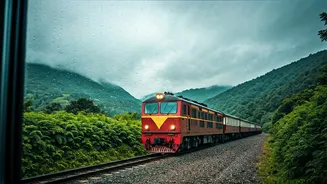
For those who prefer coastlines to clouds, the journey from Mumbai to Goa on the Konkan Railway is a visual feast. This modern engineering marvel stretches along India's western coastline, flanked by the Sahyadri mountains and the Arabian Sea. The route is particularly magical during the monsoon season when the landscape transforms into a vibrant green paradise, with countless waterfalls cascading down the hillsides. The train navigates over 2,000 bridges and through more than 90 tunnels on its way south, offering a dynamic and dramatic view of India's coastal beauty. It’s a journey where the views from the window seat are an attraction in themselves.