









A New Space Era Begins
For decades, India's journey to the stars was piloted almost exclusively by the Indian Space Research Organisation (ISRO). This state-led model achieved incredible feats, but the launch of Vikram-1, scheduled for July 18, 2026, marks the country’s first
private orbital launch attempt. Developed by Hyderabad-based startup Skyroot Aerospace, this mission, named 'Aagaman' (Arrival), represents the tangible result of space sector reforms initiated in 2020. These reforms, facilitated by the regulatory body IN-SPACe, were designed to unlock private innovation and position India as a major player in the global commercial space market. A successful flight would make Skyroot the first Indian private company to place satellites into orbit, a milestone that moves beyond the suborbital flight it achieved with Vikram-S in 2022.
More Than Just a Rocket
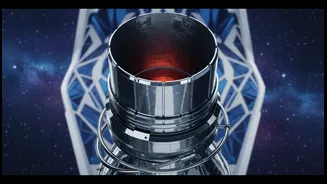
Vikram-1 is a seven-storey-tall, multi-stage vehicle designed specifically for the booming small satellite market. It is engineered to deliver payloads of up to 350 kg into Low Earth Orbit. The rocket itself is a showcase of indigenous innovation, featuring an all-carbon composite structure, 3D-printed engines, and in-house propulsion systems. The key distinction of this mission is its 'orbital' nature. Unlike a suborbital rocket that briefly enters space and returns, an orbital launch vehicle must achieve a velocity of nearly 8 kilometres per second to keep its payload circling the Earth. Demonstrating this capability with a privately built rocket is a complex challenge that, if met, validates the country's entire private space ecosystem and its capacity for advanced, end-to-end engineering.
An Engine for Job Creation
The success of companies like Skyroot is a powerful catalyst for job creation that extends far beyond a single company. The growth of India's private space sector is projected to create over 200,000 new jobs by 2033, transforming a once state-dominated field into a dynamic commercial employment engine. A successful Vikram-1 launch will fuel this growth by boosting investor confidence, which in turn leads to more funding for the over 400 space startups now registered in India. This creates direct employment for aerospace, propulsion, and avionics engineers. It also generates a massive ripple effect, creating jobs in ancillary sectors like advanced materials, software development, data analytics, and high-precision manufacturing.
A New Career Trajectory
For young aerospace professionals in India, the career path has historically been a singular one: join a prestigious government organisation like ISRO or DRDO. While these institutions offer incredible opportunities, the rise of the private space sector introduces a vibrant alternative. Startups like Skyroot, Agnikul, and Pixxel offer a different environment—one characterised by faster innovation cycles, cross-functional teams, and a direct line to market demands. This new landscape requires a broader skill set, drawing talent from automotive engineering, electronics, and AI. Early-to-mid-career engineers in private space companies can expect competitive salaries, often supplemented with equity, making it an attractive proposition for top talent.
The Inspiration Effect
Beyond the economic and industrial impact, the Vikram-1 launch serves as a powerful source of inspiration. Just as the Chandrayaan-3 lunar landing caused a massive spike in interest for aerospace careers, seeing a private Indian company launch an orbital rocket built from the ground up makes a career in space feel more accessible than ever. It tells students and young engineers that they don’t just have to work for a large agency to be part of India’s space journey; they can join a startup or even found their own. This demonstration of entrepreneurial success in a high-stakes, deep-tech field reinforces the idea that Indian innovation can compete on a global scale, encouraging a new generation to pursue ambitious goals in science and technology.