




The Problem with the Desk Chair
Our bodies are designed for movement. When we sit for extended periods, several negative changes occur. The muscles at the front of your hips, known as the hip flexors, are held in a shortened position, causing them to become tight and stiff. This tightness
can pull the pelvis forward, increasing the curve and pressure in your lower back. Meanwhile, the powerful glute muscles in your buttocks become inactive and weak, a condition sometimes called "glute inhibition." This forces other muscles, like those in your lower back, to compensate and overwork. Your spine also suffers, as sitting, especially with poor posture, increases pressure on the spinal discs and can lead to stiffness and discomfort. Over time, this combination of tight hips, weak glutes, and a compressed spine can lead to chronic aches and limited mobility.
1. Kneeling Hip Flexor Stretch
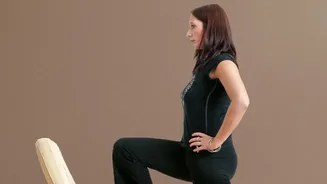
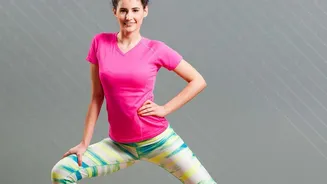
This is the classic counter-move to sitting. By opening up the front of your hips, you directly combat the shortening that happens in a chair. Start in a kneeling lunge position, with your right knee on the floor (use a cushion for comfort) and your left foot flat on the ground in front of you, knee bent at 90 degrees. Keeping your back straight, gently tuck your tailbone and shift your hips forward until you feel a stretch in the front of your right hip and thigh. Avoid arching your back. Hold for 30-45 seconds, focusing on your breath, then switch sides. This stretch is crucial for restoring hip extension and relieving strain on the lower back.
2. Glute Bridge
The Glute Bridge reactivates the muscles that your chair deactivates. Lie on your back with your knees bent, feet flat on the floor hip-width apart, and your arms by your sides. Squeeze your glutes and lift your hips off the floor until your body forms a straight line from your shoulders to your knees. Hold for a few seconds at the top, focusing on the glute contraction, then slowly lower your hips back down. Perform 12-15 repetitions. This exercise not only strengthens your glutes but also helps to open up the hips and improve pelvic stability.
3. Cat-Cow Pose
A gentle and effective way to improve spinal mobility, Cat-Cow helps reverse the static, slumped posture of sitting. Start on your hands and knees with your wrists under your shoulders and knees under your hips. As you inhale, drop your belly, lift your chest, and look forward (Cow Pose). As you exhale, round your spine toward the ceiling, tucking your chin to your chest (Cat Pose). Flow between these two positions for 60 seconds. This movement helps to lubricate the spinal discs, relieve tension, and promote flexibility through the entire back.
4. Seated Figure-Four Stretch
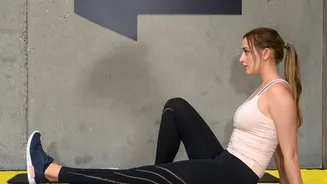
This stretch targets the glutes and the piriformis muscle, a common source of hip tightness that can be aggravated by sitting. While sitting tall in a chair, place your right ankle on your left knee, creating a "figure four" shape. Keeping your spine straight, gently lean forward at your hips until you feel a stretch in your right glute and hip. You can apply gentle pressure to your right knee to deepen the stretch. Hold for 30 seconds, then repeat on the other side. This is an excellent stretch to do even during short breaks at your desk.
5. Thoracic Spine Rotation
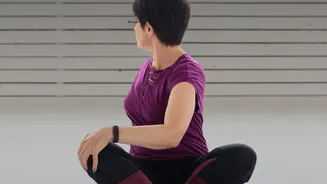
Sitting often leads to stiffness in the upper and middle back (the thoracic spine). Restoring rotation here can alleviate shoulder and neck tension. Start on your hands and knees. Place your right hand behind your head, with your elbow pointing out to the side. Keeping your hips stable, rotate your torso to the right, allowing your elbow to point toward the ceiling. Then, reverse the motion, bringing your right elbow toward your left wrist. Repeat for 10-12 repetitions before switching to the other side. This helps undo the hunched-forward posture and restores vital rotational movement.