
The Life and Death of a Star
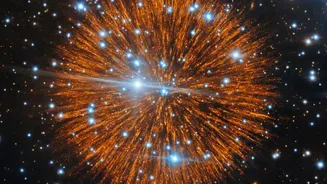
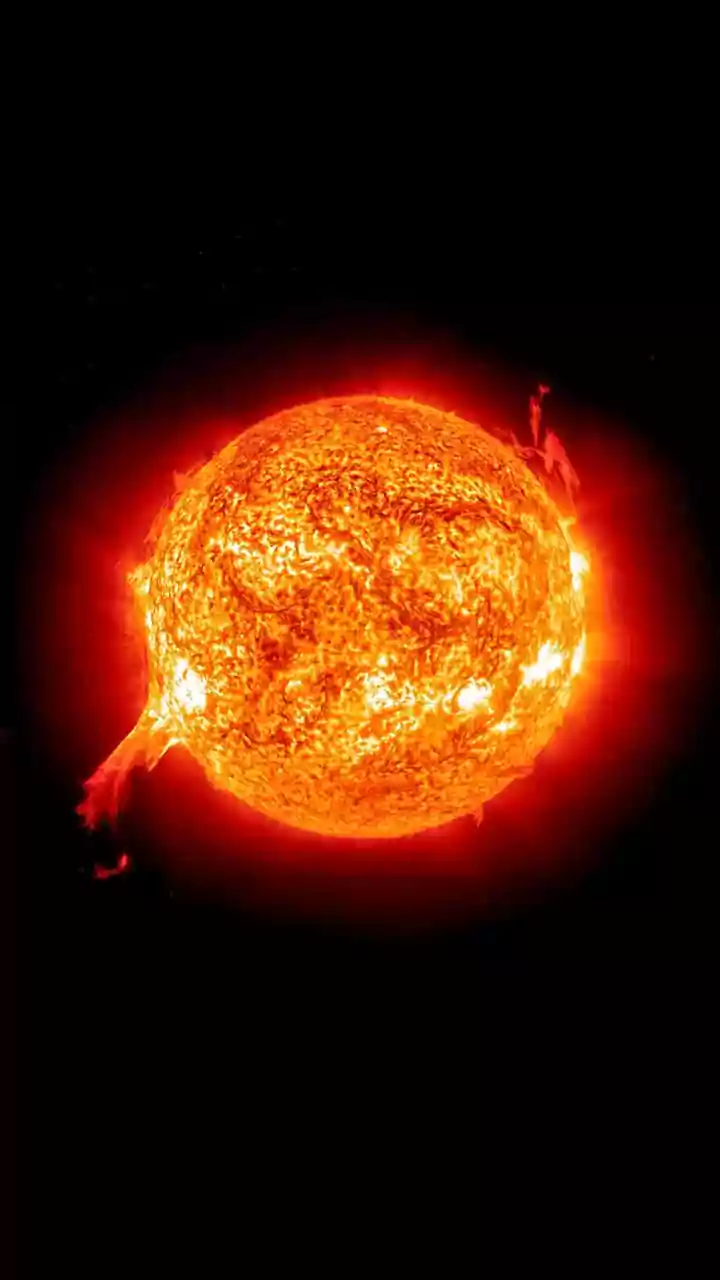
Most stars in the universe, including our own Sun, are destined to end their lives not with a bang, but with a whimper. After exhausting their nuclear fuel, they will swell up into massive 'red giants', a phase that is catastrophic for any nearby planets.
For our own solar system, this means Mercury, Venus, and likely Earth will be swallowed by the expanding Sun. After shedding its outer layers, all that remains is a small, incredibly dense, and hot core called a white dwarf. This stellar remnant is roughly the size of Earth but can contain more than half the mass of the Sun. For a long time, this was considered the final, quiet epilogue to a star's story.
A Celestial Phoenix?
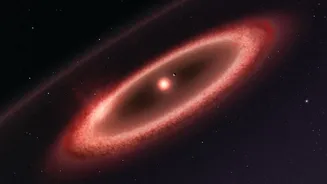
The idea of a planet surviving the red giant phase is already remarkable, especially one orbiting closely. But astronomers are now grappling with an even more radical concept: a 'second-generation' planet. This isn't a survivor from the star's original family but a new world formed from the cloud of gas and dust the star ejected as it died. For years, scientists have speculated that this might be possible, that the debris from a star's death could coalesce into a new disk and, eventually, new planets. Finding one, however, remained purely theoretical until now. Such a world would be a true phoenix, rising from the ashes of its parent star.
The Case of HS 0209+0832
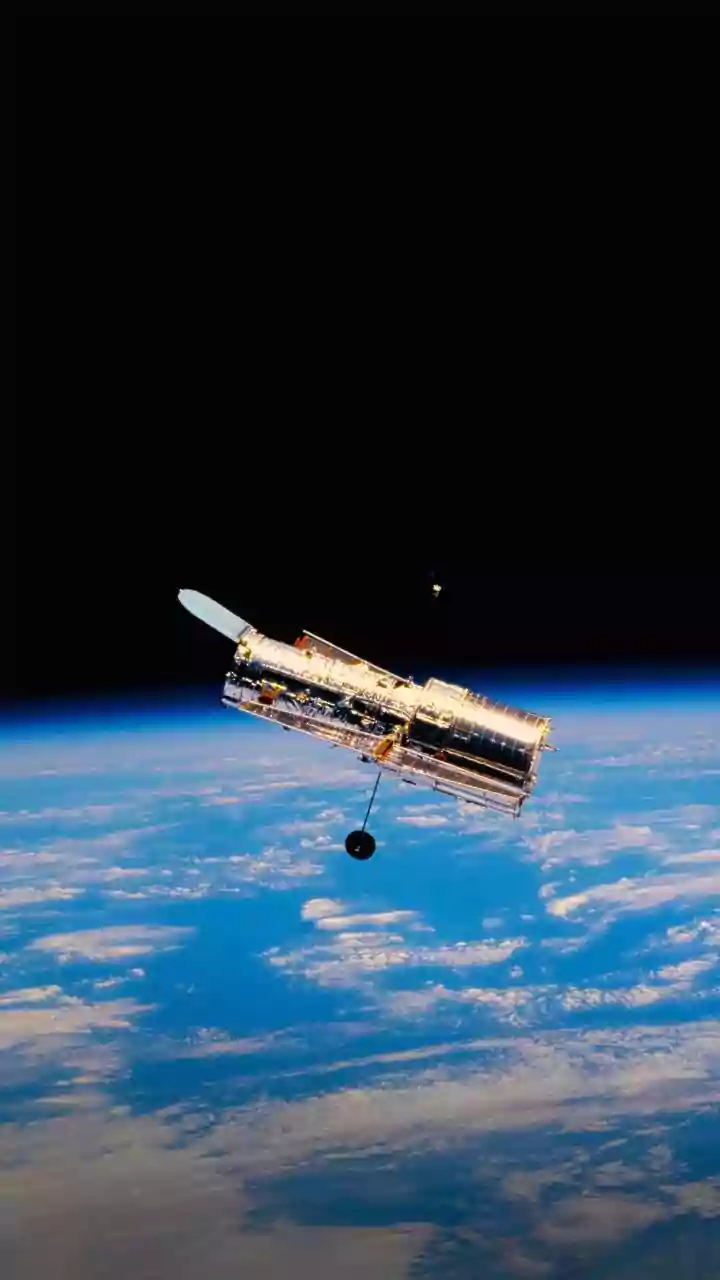
The candidate at the center of this excitement is a system named HS 0209+0832, located about 270 light-years away. For over two decades, data from the Hubble Space Telescope showed about 100 mysterious chemical signatures in this white dwarf's atmosphere that couldn't be identified. A recent re-analysis, led by researchers from the University of Warwick, cracked the case. Many of the mystery signals pointed to an element called niobium. What makes this so crucial is that niobium, along with other heavy elements detected like zinc and copper, isn't typically formed in a star's core. It's synthesized during the violent 'death throes' of a star as it becomes a red giant.
A Chemical Fingerprint
The atmosphere of HS 0209+0832 contains over 1,000 times more niobium than our Sun. This chemical fingerprint is the smoking gun. A 'first-generation' planet, formed alongside the original star, wouldn't have this composition. The evidence suggests that the white dwarf is 'polluting' its own atmosphere by pulling in material from a nearby object. That material is rich in elements forged during the star's death, pointing strongly to the object being a second-generation planet that formed from that very stellar debris. The object appears to be a Jupiter-sized gas giant, orbiting so closely that its atmosphere is being stripped away by the hot white dwarf, which is how these elements are ending up in the star's atmosphere.
Not Confirmed, But Compelling
It is critical to note, as the headline says, that this planet is not yet directly confirmed. Astronomers have not seen the world itself. The evidence is indirect, based on the white dwarf's chemical composition and a repeating 4.4-day variation in brightness detected by the TESS satellite, which could be the planet's day-night cycle. While this is a strong case, alternative explanations, though less likely, must be ruled out. However, if confirmed, it would be the first discovery of its kind. While second-generation planets have been theorized around different stellar remnants like pulsars, finding one around a far more common white dwarf would be a game-changer.
What It Means for the Universe
The discovery would prove that planetary systems can have a 'second act'. It suggests that the end of a star's life might just be the beginning of a new chapter of planet formation. It opens up fascinating possibilities, including whether such worlds could one day become habitable. As the white dwarf cools over billions of years, a planet in a stable, close orbit could potentially enter a habitable zone for an incredibly long time. This finding encourages astronomers to look for more of these systems, potentially revealing that the universe is even more capable of creating worlds than we ever imagined, long after a star's light has seemingly gone out.