





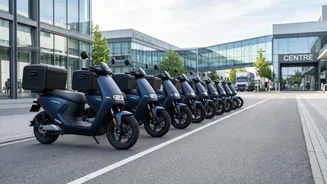
What Exactly Is a 'Dark Store'?
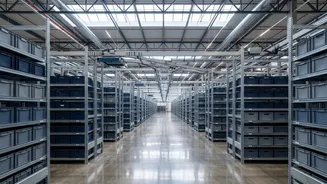
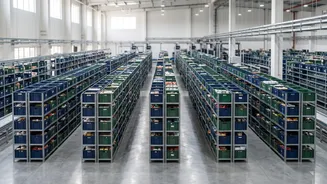
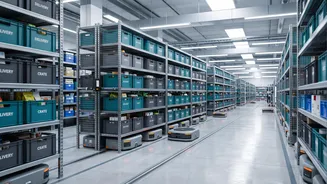
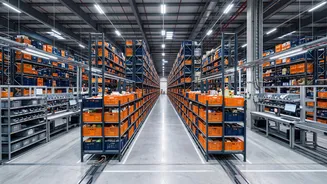
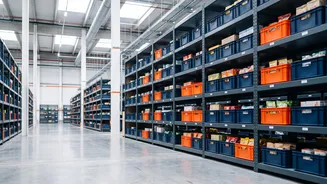
Unlike a traditional kirana store or supermarket, a 'dark store' is not open to the public. It is a small, hyperlocal fulfilment centre designed exclusively for processing online orders. Strategically located deep within residential areas to minimise
delivery times, these facilities are the backbone of the quick-commerce (q-commerce) industry. Platforms like Blinkit, Zepto, and Swiggy Instamart rely on a dense network of these stores to meet their lightning-fast delivery promises. Bengaluru has emerged as the undisputed capital of this model in India, with data from mid-2026 showing it has more dark stores than any other city, boasting over 629 locations and accounting for more than 11% of the national total. This high concentration underscores the city's role as the primary battleground for the q-commerce boom.
The Congestion Conundrum
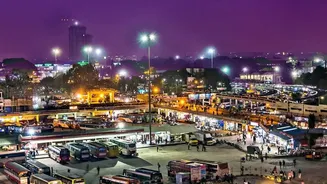
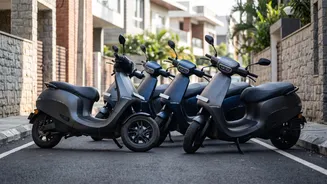
For many Bengaluru residents, the most visible impact of dark stores is on the streets. The constant churn of delivery executives rushing to meet tight deadlines adds a new layer of chaos to the city's already legendary traffic. Resident complaints frequently cite unruly driving, with riders often resorting to speeding, driving on footpaths, or taking risky shortcuts through narrow residential lanes not designed for sustained commercial traffic. This frantic activity is not just a nuisance; it's a safety concern. Residents in areas like Domlur and Indiranagar report difficulties for pedestrians, while others worry about the safety of children and the elderly with bikes speeding through their neighbourhoods at all hours. The pressure to be quick is immense, and while companies may not explicitly tell riders to break rules, delayed orders can lead to penalties, creating an environment where speed often trumps safety.
A Regulatory Grey Area
A significant part of the problem lies in a legal and regulatory vacuum. Dark stores defy easy classification: are they retail shops, warehouses, or logistics hubs?. This ambiguity allows them to operate in a grey area, often setting up in residential zones where traditional warehousing is explicitly prohibited under Bengaluru's planning laws. The city's Revised Master Plan (RMP) 2031 forbids warehousing in core residential zones (R1 and R2), but these mini-hubs often fly under the radar by leasing spaces intended for commercial shops. This blatant violation of zoning laws is a source of constant conflict with resident welfare associations, who complain about noise from late-night operations and traffic from replenishing trucks. While municipal bodies like the Bruhat Bengaluru Mahanagara Palike (BBMP) require various licences, the lack of a specific policy for dark stores creates uncertainty in enforcement and allows many to operate without proper approvals.
Beyond Traffic Jams
The infrastructure strain extends beyond traffic. The 24/7 nature of some dark stores contributes to noise pollution in otherwise quiet neighbourhoods. There have also been growing concerns about safety and hygiene within the stores themselves. Recent inspections in several cities, including a Zepto warehouse near Bengaluru, have revealed unhygienic conditions, improper food storage, and pest infestations. This has prompted calls for stricter regulations, with distributor federations urging the Food Safety and Standards Authority of India (FSSAI) to mandate minimum space requirements based on the number of products handled to prevent unsafe and unsanitary conditions in congested premises.
The Search for a Sustainable Path
The rapid expansion of q-commerce is undeniable, creating thousands of gig-work jobs and offering unparalleled convenience to consumers. However, its unchecked growth is placing a significant burden on Bengaluru's urban fabric. Urban planners and legal experts suggest that the solution is not to ban dark stores but to properly regulate them. This involves creating a clear legal classification for these facilities, enforcing zoning laws to prevent them from encroaching on purely residential areas, and holding q-commerce companies accountable for the 'negative externalities' they create, from traffic chaos to public nuisance. Finding a balance between the convenience of instant delivery and the long-term health of the city's infrastructure is the critical challenge facing Bengaluru's policymakers today.