



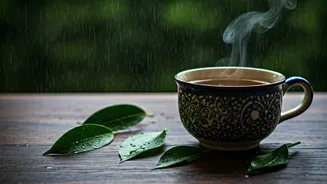



The Trusted Monsoon Companion
In countless Indian households, this trusted companion is kadha. More than just a tea, it's a traditional Ayurvedic decoction, a potent, aromatic brew that has been passed down through generations. While masala chai holds a firm place in our hearts, kadha occupies
a space of deeper trust, especially when the humidity rises and the sniffles begin. It’s not a drink of leisure as much as it is a potion of wellness, a warm hug in a cup prepared by a mother or grandmother at the first sign of a cough or a chill. This isn't just a beverage; it’s an heirloom, a liquid manifestation of care that smells like safety and tastes like home.
Anatomy of a Healing Brew
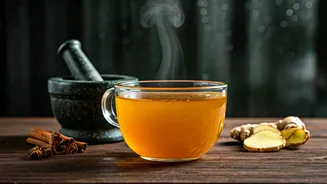
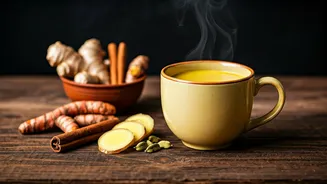
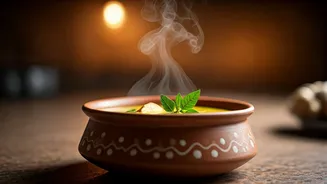
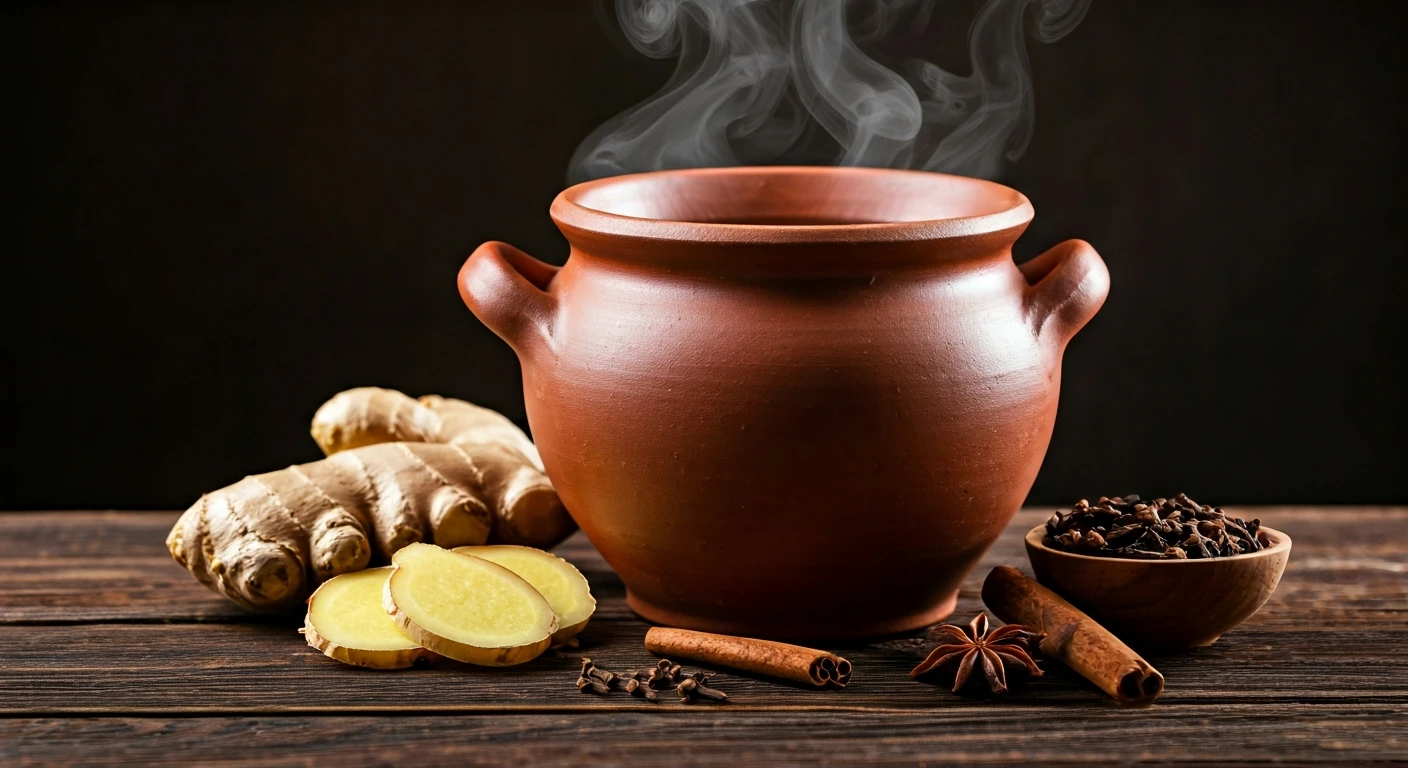
The magic of kadha lies in its symphony of spices, each playing a specific role. While recipes vary from one kitchen to another, a few core ingredients form its backbone. Tulsi (Holy Basil) is often the star, revered in Ayurveda for its immunity-boosting properties. It’s joined by fresh ginger, a powerful anti-inflammatory that helps soothe sore throats. A generous pinch of black pepper is added not just for its heat, but because it helps the body absorb the benefits of other ingredients, particularly turmeric, another common addition known for its antiseptic qualities. Cloves and cinnamon lend their warmth and antimicrobial properties, while honey is often stirred in at the end—not only for sweetness, but for its own throat-coating, antibacterial effects. Each ingredient is a pillar of traditional wisdom, contributing to a brew designed for resilience.
More Than Just a Remedy
To call kadha just a remedy, however, would be to miss its deeper cultural significance. The act of preparing it is a ritual. It’s the gentle pounding of ginger and peppercorns in a mortar and pestle, the fragrant steam that fills the kitchen, and the patient simmering that coaxes the goodness out of every spice. This process is woven into the fabric of Indian family life. It’s a language of love, an unspoken way of saying, “I’m here to take care of you.” For many, the taste of kadha is inextricably linked to memories of being nurtured back to health, of a comforting presence during a feverish night. This deep-seated emotional connection is why the trust in kadha transcends generations. It’s not just about what’s in the cup, but the love with which it’s made.
When Tradition Meets Modern Science
Interestingly, modern science is beginning to validate the age-old trust placed in kadha's core components. Studies have confirmed the potent anti-inflammatory effects of gingerol in ginger and curcumin in turmeric. The active compound in black pepper, piperine, is now known to enhance the bioavailability of curcumin, proving the traditional pairing was remarkably astute. The antiviral and antibacterial properties of tulsi, cloves, and cinnamon are also well-documented. This is not to say kadha is a substitute for modern medicine, but it does suggest that the generations of empirical knowledge condensed into this simple drink are built on a solid foundation. The trust isn't misplaced; it's a testament to a system of wellness that observed nature closely and learned its lessons well.
A Personal Touch in Every Cup
Perhaps the most beautiful aspect of kadha is its adaptability. There is no single, rigid recipe. Some families add ajwain (carom seeds) for digestive issues, while others might include mulethi (liquorice root) for persistent coughs. Some prefer it fiercely spicy; others temper it with more honey or jaggery. This flexibility allows it to be a personal, living tradition rather than a fossilised one. It’s a folk remedy in the truest sense, shaped by community wisdom and tailored to individual needs. Every household has its own ‘secret’ version, a slight tweak that makes it uniquely theirs—a flavour that truly defines the comfort of home during the grey, wet days of monsoon.