





The Art of Growing a Bridge
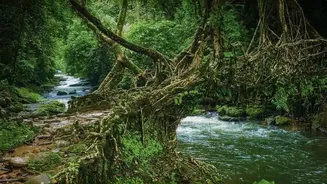
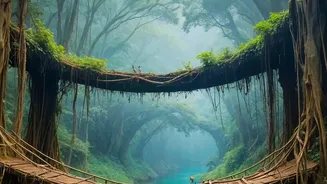
Deep in the lush, rain-soaked hills of Meghalaya, the Khasi and Jaintia communities have mastered a unique form of bio-engineering that feels like it’s straight out of a fantasy novel. For centuries, they have guided the aerial roots of the rubber fig
tree (Ficus elastica) across rivers and gorges. Instead of building with wood or steel that would rot and rust in one of the wettest places on Earth, they cultivate living, breathing structures. The process is a lesson in patience, taking 15 to 25 years for a bridge to become fully functional. Villagers use hollowed-out tree trunks to guide the young, pliable roots in the right direction until they take hold on the opposite bank. Over decades, these roots thicken, intertwine, and graft onto each other, creating a structure that grows stronger with time and can last for hundreds of years. This remarkable tradition, connecting over 75 remote villages, is now on the path to becoming a UNESCO World Heritage site.
The Backpacker's Dream Destination
For budget backpackers, Meghalaya is a treasure trove. The main attraction—the breathtaking natural landscape and the treks to see it—is either free or requires only a small community fee, which helps with the upkeep of the trails. The real magic for budget travel lies in the accommodation. Instead of expensive hotels, the region is dotted with affordable homestays run by local families, particularly in the areas around Cherrapunji (Sohra). For as little as ₹500 to ₹2000 a night, you can get a clean room, a warm welcome, and delicious, home-cooked Khasi meals. This not only keeps costs down but also offers an authentic cultural exchange. The journey itself is an adventure, with shared taxis being a common and inexpensive way to travel from the main hub of Shillong to the trek's starting points. The entire experience is built around nature and community, not commercial tourism, making it perfect for those who want to spend their money on experiences rather than amenities.
The Legendary Nongriat Trek
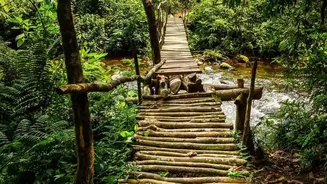
The most famous of these natural wonders is the Umshiang Double-Decker Root Bridge in Nongriat village. Reaching it is an adventure in itself. The journey begins from Tyrna village, a short drive from Cherrapunji, and involves a descent of approximately 3,500 steps. The trek down takes about 90 minutes to two hours, leading you through dense forests, past small villages, and across swaying suspension bridges. While physically demanding, the path is well-maintained by the local community. Many travellers choose to stay overnight in Nongriat. The guesthouses are basic and incredibly cheap, often around ₹300-₹500 a night. Staying overnight allows you to experience the bridges in the quiet of the early morning or late afternoon, without the daytime crowds, and to explore further to stunning sites like the Rainbow Falls.
How to Plan Your Trip
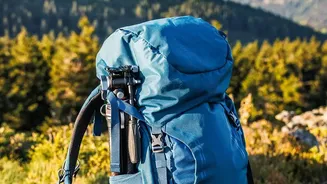
The best time to visit and trek is during the dry season, from October to April, when the paths are less slippery. To start your journey, fly or take a train to Guwahati in Assam, the nearest major transport hub. From there, it’s a scenic 3-4 hour drive to Shillong, Meghalaya's capital. Use Shillong as your base to acclimatise before heading to the Cherrapunji region. When packing, think light. You'll need sturdy hiking shoes, a raincoat for unexpected showers, a quick-dry towel, and insect repellent. Crucially, carry enough cash (INR 2,000-3,000) for your time in the villages, as there are no ATMs and digital payments are not an option. A small first-aid kit is also a wise addition. Porters are available at the start of the Nongriat trek if you find your bag too heavy.
Travel with Respect
These bridges are not just tourist attractions; they are a vital part of the local infrastructure and a testament to a deep cultural heritage that reveres nature. They are a living heritage, reflecting a harmonious relationship between humans and their environment. When you visit, remember that you are a guest in these communities. Stick to the designated paths, do not litter, and pay the small entry fees with a good attitude, as this money goes directly to maintaining the paths and supporting the villages. Hiring a local guide is highly recommended. They can share stories and knowledge about the flora, fauna, and Khasi traditions that you would otherwise miss, turning a simple trek into a rich cultural immersion. By travelling responsibly, you help ensure this incredible symbiosis of nature and culture continues to thrive for generations to come.