



The Dress Rehearsal for Space
Before the historic launch of India's first crewed mission, the Indian Space Research Organisation (ISRO) is leaving no stone unturned to ensure astronaut safety. The upcoming phase of the Gaganyaan programme involves a series of uncrewed flights designed
to test the systems in real-world conditions. These missions are essentially full dress rehearsals, simulating every phase from launch to splashdown, but without a human crew. The first of these, the G1 mission, is targeted for the end of 2026. This will be followed by at least one more uncrewed flight before the final crewed launch, which is anticipated in 2027. One of these initial flights will even feature 'Vyommitra', a humanoid robot developed by ISRO, to mimic human functions and test the life support systems inside the crew module.
Mastering the Art of the Abort
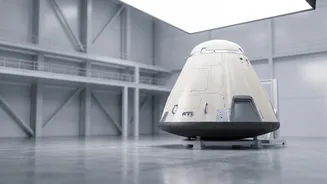
Human spaceflight is inherently risky, and a significant portion of that risk occurs during the first few minutes of launch. To counter this, ISRO has developed a sophisticated Crew Escape System (CES). The purpose of the CES is to act like a high-tech ejection seat for the entire crew capsule, pulling it away from the main rocket in case of an emergency. ISRO has already conducted several successful tests of this system. In July 2018, it performed a Pad Abort Test, where the system fired while the rocket was still on the launchpad, successfully lifting the capsule to a safe distance. In October 2023, it executed the Test Vehicle Abort Mission-1 (TV-D1), which simulated an in-flight emergency at high altitude, proving the system could work under extreme aerodynamic stress. Upcoming tests, like the TV-D2 mission, will further validate these critical abort scenarios under different conditions, ensuring there is a plan for anything that might go wrong.
Inside the Gaganyaan Mission
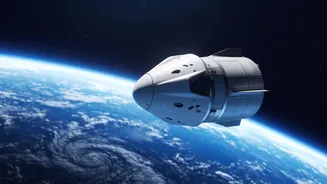
The Gaganyaan mission is India's ambitious endeavour to send a crew of three astronauts into a Low Earth Orbit of 400 kilometres for a mission lasting up to three days. The successful completion of this mission will make India only the fourth country in the world—after Russia, the United States, and China—to have an independent capability for human spaceflight. The programme is not just about a single launch; it's about building an entire ecosystem from the ground up. This includes developing a human-rated LVM3 rocket, a habitable crew module, robust life support systems, and the complex procedures for communication and recovery. The four astronaut-designates, all from the Indian Air Force, have undergone extensive training, both in Russia and in India, preparing for the physical and mental rigours of space travel.
Patience Is a Virtue in Spaceflight
While the nation waits eagerly for the final launch, those closest to the mission emphasize the need for patience. Group Captain Angad Pratap, one of the selected astronauts, recently noted that delays are a natural part of developing a prototype programme of this magnitude. When the safety of human lives is the absolute top priority, every component and every line of code must be tested and re-tested. ISRO Chairman V Narayanan has confirmed that work is proceeding vigorously and systematically. The teams are focused on completing thousands of ground tests and multiple parachute drop tests to qualify every system. This meticulous, safety-first approach ensures that when India does launch its Gaganyatris, it will be a moment of triumph built on a foundation of absolute confidence.