





The Moon’s Temperature Problem
Surviving on the Moon is not for the faint of heart, or for the ill-equipped. During the day, temperatures can soar to over 100°C, while the long lunar night, which lasts for about 14 Earth days, sees temperatures plummet to as low as -200°C in some regions.
These violent temperature swings pose a massive challenge for the batteries needed to power rovers, landers, and future habitats. Conventional lithium-ion batteries, like the ones in your phone or laptop, rely on liquid electrolytes. In the lunar cold, this liquid freezes, which can cause permanent damage and stop the battery from working. To prevent this, missions must carry bulky and heavy thermal control systems—essentially, dedicated heaters and insulation just to keep the batteries in a comfortable operating range of about -20°C to 40°C. These systems consume precious power and, more importantly, add significant mass to the spacecraft. In space exploration, weight is everything; every extra kilogram requires exponentially more fuel to launch from Earth, a principle often called the 'tyranny of the rocket equation'.
A Breakthrough in Solid-State Technology
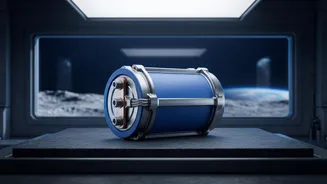
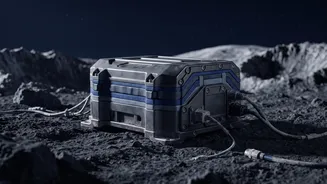
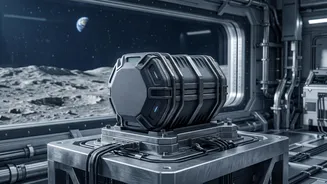
NASA is tackling this challenge head-on with a project called SPEARS (Solid Power for Extreme Environment Adaptability and Resilience in Space). The goal is to create a new generation of solid-state batteries specifically for the harsh lunar environment. Instead of a liquid electrolyte that can freeze, evaporate in a vacuum, or pose a fire risk, SPEARS batteries use a solid material, such as a ceramic or polymer. This fundamental change in chemistry makes them far more resilient. Recent tests have shown remarkable results. In a thermal vacuum chamber simulating lunar conditions, prototype cells continued to operate at temperatures as low as -80°C, albeit with slightly reduced performance. Even more impressively, the batteries survived exposure to a temperature range from 100°C all the way down to -170°C without sustaining any physical damage. This means that while they don't produce power at the absolute coldest temperatures, they don't break. They can be safely dormant during the coldest parts of the lunar night and be ready to work once warmed up.
Lighter, Cheaper, and More Capable
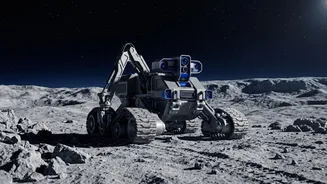
The key advantage of this technology is that it changes the entire approach to thermal management. Instead of a heavy system that constantly runs to keep batteries warm, future lunar hardware could be equipped with small, efficient heaters that only turn on to bring the batteries up to operating temperature when power is needed. This 'heat on demand' approach could drastically reduce the mass and volume allocated to thermal control systems. The weight savings are significant, freeing up room and mass for more scientific instruments, communications equipment, or other critical payloads. This could lead to lighter and cheaper missions, allowing space agencies like NASA—and potentially ISRO with its future lunar ambitions—to do more science for less cost. Furthermore, a more efficient power system could enable longer mission durations, especially for rovers hoping to explore the permanently shadowed craters at the Moon's South Pole, which are of immense scientific interest but are also among the coldest places in the solar system.
The Future of Lunar Exploration
While the SPEARS technology is still in the development and testing phase, it represents a crucial enabling technology for the next era of lunar exploration, including NASA's Artemis program, which aims to establish a sustained human presence on the Moon. Reliable power is the backbone of any long-term outpost. These solid-state batteries could power everything from astronaut emergency kits and scientific drills to rovers and habitats. The robust nature of the technology also enhances safety by removing flammable liquid electrolytes. The benefits may not be limited to the Moon, either. The research could eventually trickle down to commercial applications on Earth. Imagine electric vehicles with batteries that don't lose significant range in the dead of winter, or electronics that can function reliably in extreme industrial or polar environments. This research, born from the need to conquer the Moon's hostile climate, could one day improve the technology we use every day.