

Our Nearest Galactic Neighbor
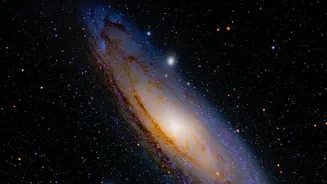
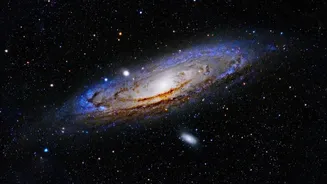
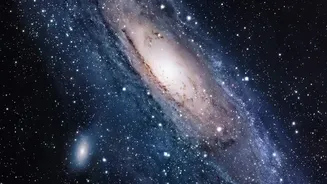
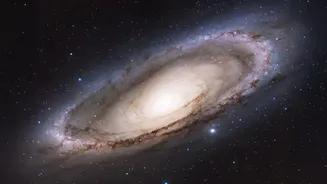
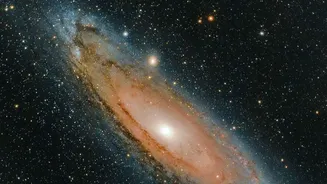
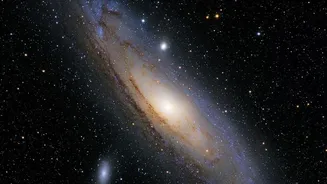
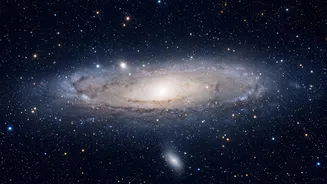
The Andromeda galaxy, also known as M31, is the closest major galaxy to our own Milky Way. While it's our cosmic next-door neighbor, that's a relative term; it's a staggering 2.5 million light-years away. This means the light reaching your eyes tonight
started its journey around the time early human ancestors were first appearing on Earth. Containing an estimated one trillion stars, it's significantly larger than the Milky Way. Despite its immense distance, Andromeda is the farthest object a person can see with the naked eye, though it requires a very dark sky free of light pollution. But with a simple pair of binoculars, this celestial wonder becomes much more accessible.
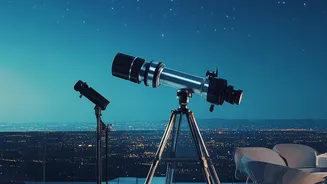
Choosing Your 'Telescope'
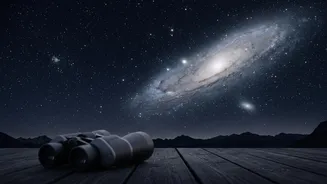
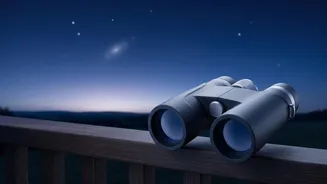
You don't need a powerful or expensive telescope to get a meaningful view of Andromeda. In fact, a good pair of binoculars is often better for beginners because they offer a wider field of view, making it easier to locate faint objects. Standard astronomy binoculars, such as 7x50 or 10x50 models, are perfect for the task. The first number refers to the magnification (7x or 10x), while the second refers to the diameter of the front lenses in millimeters. Larger lenses gather more light, which is crucial for viewing faint, distant objects like galaxies. Any decent pair will reveal Andromeda as more than just a pinprick of light.
How to Find Andromeda
The best time to view Andromeda in the Northern Hemisphere is during autumn evenings when it rises high in the sky. The key is to find a location away from city lights, ideally during a new moon when the sky is darkest. Let your eyes adjust to the darkness for about 20-30 minutes. The easiest way to locate Andromeda is to use the constellation Cassiopeia as a guide. Look for its distinctive 'W' shape in the northeastern sky. The deeper of the two 'V' shapes in the 'W' acts as an arrow, pointing directly toward the area where Andromeda is located. Scan that region slowly with your binoculars, and you'll soon spot it.
What You'll Actually See
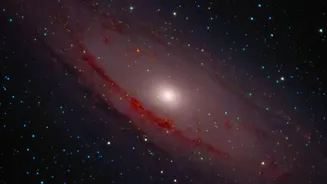
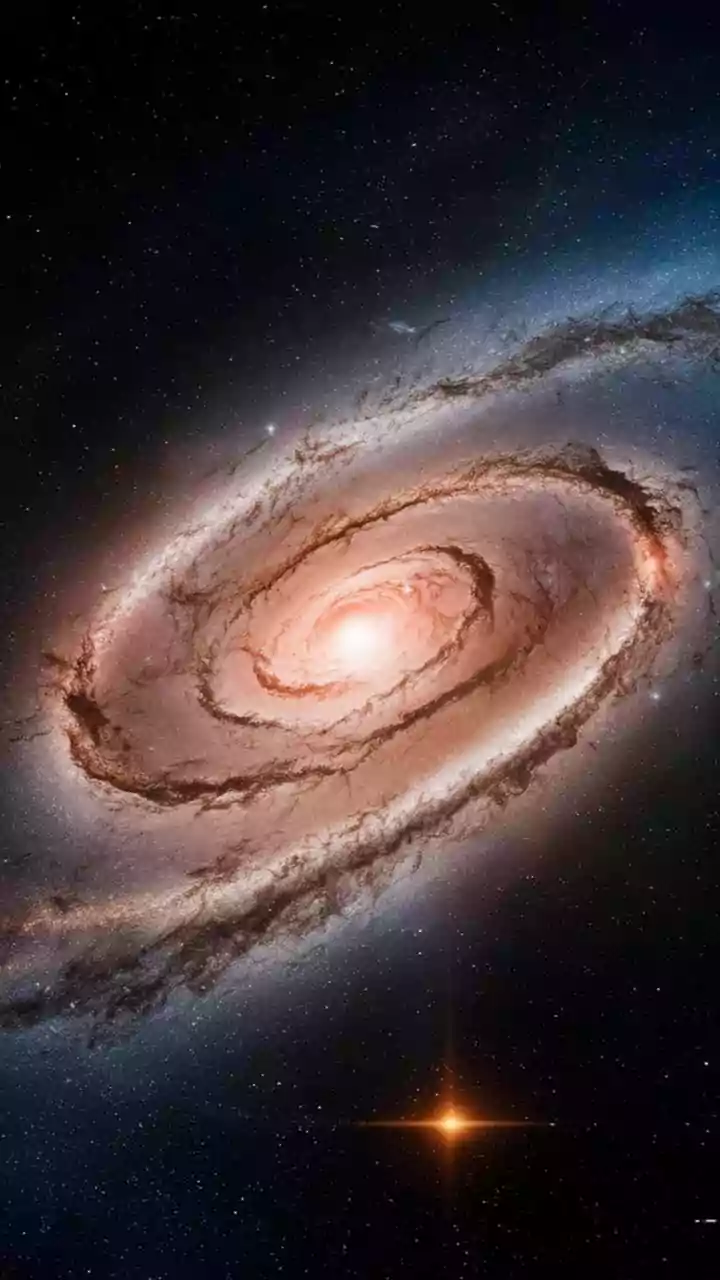
It's important to manage expectations. You won't see the crisp, swirling spiral arms made famous by the Hubble Space Telescope. Through binoculars, Andromeda will appear as a faint, fuzzy patch of light, often described as an elliptical or oval-shaped smudge. This hazy glow is the galaxy's bright central core, where billions of stars are densely packed together. Even under moderately light-polluted skies, this core is visible. In darker conditions, you'll be able to discern more of its elongated shape. It may not sound spectacular, but the significance of what you are seeing is where the true awe lies.
The Awe of Ancient Light
That faint, ghostly patch of light is not just an object; it's a time capsule. The photons hitting your retina have been traveling across intergalactic space for 2.5 million years. When that light began its journey, modern humans did not exist. You are, quite literally, looking back in time. Contemplating this reality while staring at the galaxy is what makes the experience so profound. You are connecting with a river of ancient light from an entirely different star system, all with a device you can hold in your hands. It’s a humbling reminder of the immense scale of the cosmos and our small, but connected, place within it.
A Glimpse into Our Cosmic Future
Observing Andromeda also offers a preview of our own galaxy's distant future. The Andromeda galaxy is currently hurtling toward the Milky Way at a speed of about 110 kilometers per second. Astronomers predict that in about 4.5 billion years, the two galaxies will collide and merge to form a new, giant elliptical galaxy. This future cosmic dance adds another layer of significance to your viewing. You're not just looking at a neighbor, but a future partner in a galactic merger. It's a serene, yet powerful, thought to hold as you gaze at that faint smudge of light in the night sky.