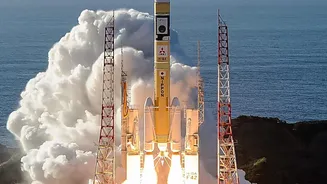







A Strategic Shift in the Skies
Until recently, the Indian Space Research Organisation (ISRO) held a near-monopoly on all space activities, from building rockets to launching satellites. This state-led model earned India a place among the world's top space-faring nations. However, the global
space economy is booming, projected to be worth trillions in the coming decades, and India is positioning itself for a larger slice of the pie. The government's Indian Space Policy 2023 and the formation of the Indian National Space Promotion and Authorisation Centre (IN-SPACe) in 2020 marked a pivotal change. These reforms were designed to open the sector to Non-Governmental Entities (NGEs), allowing private firms to build, own, and operate everything from launch vehicles to satellites. The goal is to transform India from a government-led space power to a thriving ecosystem of public and private innovation.
Meet the New Private Astronauts
The policy shift has unleashed a wave of entrepreneurial energy, with the number of space startups soaring to around 440 by August 2026. Two names that have consistently made headlines are Skyroot Aerospace and Agnikul Cosmos. Hyderabad-based Skyroot Aerospace became the first Indian private company to achieve an orbital launch in July 2026 with its Vikram-1 rocket. This historic mission demonstrated that private Indian firms have the capability to not just build, but successfully fly, their own rockets. Meanwhile, Chennai-based Agnikul Cosmos, operating out of IIT Madras, is pioneering innovation with its 3D-printed rocket engines. The company successfully launched a suborbital test flight in May 2024, which was notable for being the world's first flight with a single-piece 3D-printed engine and India's first from a private launchpad. These companies are no longer just suppliers to ISRO; they are emerging as independent players.
More Launches, Lower Costs
So, what does this privatization mean for launches? The most significant impact is the expected increase in launch frequency and a decrease in costs. With private players entering the market, a competitive environment is fostered, driving innovation and efficiency. This allows commercial satellite operators, both domestic and international, to have more options for sending their payloads to space, potentially leading to on-demand launches. For ISRO, this change is strategic. By handing over routine manufacturing and operational launches of vehicles like the PSLV to the private sector, the national agency can redirect its resources and formidable expertise towards cutting-edge research and development. This includes deep-space exploration missions, human spaceflight programs like Gaganyaan, and developing next-generation technologies that private firms may not have the resources to pursue.
Aiming for a Bigger Piece of the Global Pie
The move is also about economic ambition. India's space economy, currently valued at around $8-9 billion, accounts for only about 2% of the global market. With the global space economy projected to soar, the government aims to increase India's share significantly, with projections suggesting the domestic sector could reach nearly $44 billion by 2033. By fostering a robust private sector, India can become a globally competitive launch hub, offering cost-effective and reliable services to the world. Liberalised Foreign Direct Investment (FDI) policies, allowing up to 74% automatic investment for satellite manufacturing, are designed to attract global capital and expertise, further fueling this growth. The end game is to create a self-sustaining ecosystem that generates high-skilled jobs and drives technological advancement across the board.
Navigating the Challenges Ahead
The path forward is not without turbulence. Space ventures are incredibly capital-intensive, and access to sustained funding remains a major hurdle for startups. There is also the challenge of competing with established international giants like SpaceX, which have a significant head start. Furthermore, some veterans of India's space program have voiced concerns, cautioning against excessive privatization that could potentially weaken ISRO or hand over critical national infrastructure to private entities without a robust, time-tested framework. Striking the right balance between encouraging commercial growth and maintaining ISRO's strategic role will be crucial. Creating a clear and stable regulatory environment under IN-SPACe is vital to give investors the confidence needed for long-term success.