





You may never get to soar over the organic sands and liquid methane lakes of Saturn's largest moon, but your name can. NASA has launched a public campaign inviting people to send their names on a historic journey to the mysterious moon, Titan.
Your Ticket to the Outer Solar System
Becoming
a symbolic passenger on one of NASA’s most ambitious missions is surprisingly simple. The agency has set up a dedicated website, go.nasa.gov/dragonfly-names, where you can submit your first and last name. In return, you receive a personalized, souvenir boarding pass that you can save or share. Your name will be etched onto a microchip that will be attached to the Dragonfly rotorcraft before it begins its long voyage. The deadline for submissions is currently set for January 15, 2027. This initiative follows a popular NASA tradition of carrying millions of public names on missions like the Perseverance rover on Mars, allowing the public to feel a personal connection to the wonders of space exploration.
Meet Dragonfly, The Nuclear-Powered Drone
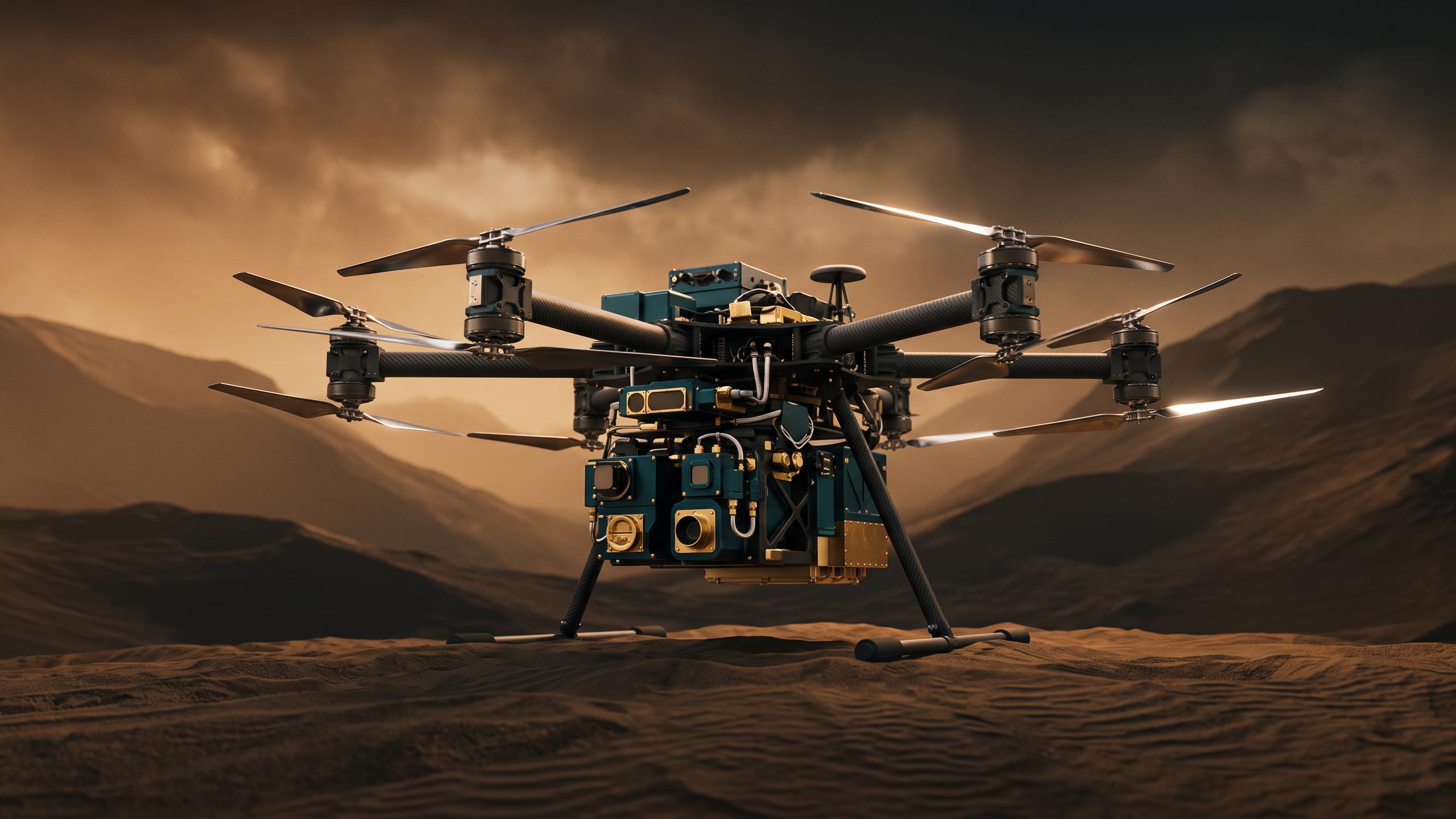
The vehicle carrying these names is no ordinary spacecraft. Dragonfly is a car-sized, eight-rotored drone, often called a rotorcraft, designed to fly through Titan's dense atmosphere. Scheduled to launch in 2028, it will undertake a long journey, arriving at Titan in 2034. Unlike stationary landers, Dragonfly is a mobile laboratory. Taking advantage of Titan's low gravity and thick atmosphere, it will be able to fly from one site to another, covering miles in a single trip. During its planned mission of over three years, it will land in diverse locations, from organic-rich dunes to the floor of an impact crater, to sample and analyze the surface. This will be the first time NASA flies a science-focused multi-rotor vehicle on another world, making it a pioneering mission in planetary exploration.
Why Titan? A World Stranger Than Fiction
Saturn's largest moon is one of the most compelling destinations in our solar system. Larger than the planet Mercury, Titan is the only moon known to have a dense atmosphere, which is primarily nitrogen, much like Earth's. But there, the similarities take a strange turn. The temperature hovers around a frigid -179 degrees Celsius, and its 'water' cycle is based on methane. Liquid methane and ethane rain from the sky, carve river channels, and fill vast lakes and seas, making Titan the only other body in the solar system with stable liquid on its surface. Beneath its icy crust, scientists also believe there is a massive ocean of liquid water. This unique combination of complex organic materials, a dense atmosphere, and varied environments makes it a prime target in the search for answers about how life began.
The Search for Life's Building Blocks
Dragonfly is not a mission to find existing life, but rather to hunt for what scientists call 'prebiotic chemistry'—the chemical steps that occurred on Earth before life emerged. Titan is considered a natural laboratory for these processes, a kind of frozen version of early Earth. By studying the complex organic molecules that litter its surface, scientists hope to understand the ingredients necessary for life to arise. The mission will investigate the habitability of Titan's environment and explore how far its prebiotic chemistry has progressed. As Nicky Fox, an associate administrator at NASA, explained, Dragonfly will help search for signs of habitability on a distant world that is remarkably similar to our own. By sending your name, you are participating in a quest to unlock some of the deepest secrets of the universe and our own origins.