







India's Silent Epidemic: Hidden Hunger
On the surface, hunger means an empty stomach. But a more insidious form, 'hidden hunger', affects a vast portion of the Indian population who may get enough calories but lack essential micronutrients. This is a deficiency of vital vitamins and minerals
like iron, iodine, zinc, and Vitamins A, B12, and D. The consequences are severe, contributing to anaemia, stunting, weakened immune systems, and impaired cognitive development. According to the National Family Health Survey (NFHS-5), 67.1% of children under five and 57% of women in their reproductive years are anaemic. This isn't just a health statistic; it represents a staggering loss of human potential, affecting everything from a child's ability to learn to an adult's productivity. With nearly half of the world's micronutrient-deficient population living in India, the scale of the challenge is immense.
Fortification: A Public Health Intervention
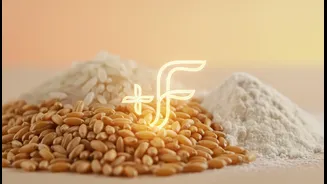
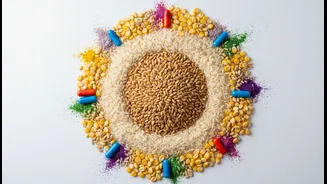
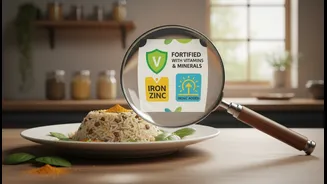
Enter food fortification. It's the practice of deliberately adding essential micronutrients to staple foods to improve their nutritional quality. In India, this strategy is spearheaded by the Food Safety and Standards Authority of India (FSSAI), which has set standards for fortifying key staples like salt (with iodine and iron), edible oil and milk (with Vitamins A and D), and wheat flour and rice (with iron, folic acid, and Vitamin B12). You can identify these products by the blue '+F' logo. The logic is straightforward and powerful: by enriching foods that are already consumed by a majority of the population, it's possible to deliver vital nutrients to millions at a low cost, without requiring major changes in dietary habits. It's considered a scientifically proven and scalable global intervention to address micronutrient deficiencies on a massive scale.
A Supplement, Not a Substitute
However, experts and activists caution that fortification should not be viewed as a silver bullet. A primary concern is that it may overshadow the importance of a naturally diverse diet. Critics argue that promoting fortified processed foods could devalue traditional, nutrient-rich foods like millets, pulses, and a wide variety of local vegetables. A healthy diet is a complex matrix where nutrients work synergistically. Relying on a few added synthetic vitamins cannot fully compensate for a monotonous, cereal-based diet that lacks adequate protein, fibre, and other essential compounds found in whole foods. The consensus among many nutritionists is clear: fortification is a valuable complementary strategy, but it is not a replacement for improving access to and consumption of a balanced and diverse plate of food.
The Challenge of Label Literacy
The effectiveness of fortification also hinges on a crucial factor: consumer awareness and understanding. Do people know what the '+F' logo means? Can they read and comprehend nutritional labels to make informed choices? Studies across India suggest a significant gap in 'label literacy'. Awareness about fortified foods and their benefits is often low, particularly in rural areas. One study in Delhi found that while over half of urban women were aware of the term 'food fortification', only 48% knew about the specific logo. This highlights a major hurdle. For a voluntary fortification program to succeed, consumers must not only be aware of the products but also understand their value and trust the information provided. Without effective public education campaigns, the potential public health impact of fortified foods remains limited.
The Future of Public Nutrition
Food fortification has undeniably placed a much-needed spotlight on India's hidden hunger crisis. Yet, its implementation raises broader questions about the country's nutritional strategy. There are ongoing debates about mandatory versus voluntary fortification, with some experts raising concerns about potential overconsumption of certain nutrients and conflicts of interest when industry players are involved in policymaking. Ultimately, tackling malnutrition requires a multi-pronged approach. While fortification serves as a vital tool to address immediate deficiencies, the long-term, sustainable solution lies in a holistic strategy that promotes dietary diversity, supports local farmers, improves post-harvest infrastructure to reduce food waste, and invests heavily in public education about nutrition. The goal must be to create a system where a healthy, balanced diet is the easy and accessible choice for every Indian.