



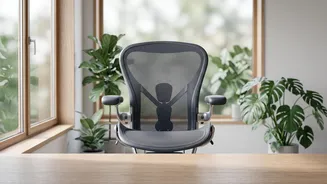


That familiar stiffness in your neck, back, and hips after a long day at your desk is more than just a minor annoyance. It's a sign that a sedentary work style is taking a toll on your joint health. But the solution doesn't require a gym membership.
Why Sitting Causes Stiffness
Our
joints are designed for movement. This motion helps circulate synovial fluid, a natural lubricant that keeps cartilage healthy and allows bones to glide smoothly. When you sit for extended periods, this process slows down. Your hip flexors tighten, your shoulders may round forward, and the muscles that support your spine become less active. This inactivity can lead to weakened muscles, increased pressure on your joints, and that all-too-common feeling of being locked in place. Over time, this can contribute to poor posture, chronic pain, and a higher risk of joint issues.
The Power of the 'Movement Snack'
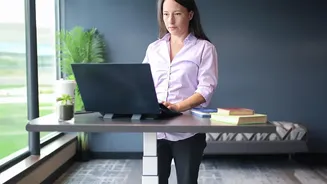
The key to counteracting the effects of a desk job is not necessarily an intense, hour-long workout. Instead, research points to the power of short, consistent 'movement snacks' or micro-breaks. Taking just a few minutes every hour to stand up and move can make a significant difference. These brief interruptions help restart circulation, wake up dormant muscles, and restore lubrication to your joints. Studies show that these breaks can reduce fatigue, improve mood, and increase focus without harming productivity.
For Your Neck and Shoulders
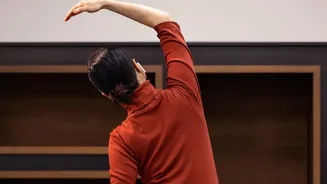
Tension in the neck and shoulders is a classic symptom of 'desk body'. Hunching to look at a screen puts a strain on these muscles. Try these simple moves. First, the Neck Tilt: while sitting tall, gently tilt your head, bringing your right ear toward your right shoulder. Hold for 15-30 seconds, feeling the stretch on the opposite side, and then repeat on the left. Next, Shoulder Rolls: Inhale and lift your shoulders up toward your ears, then exhale and roll them back and down. Repeat this 5-10 times to release upper back tension. Finally, try a Chest Opener: Clasp your hands behind your lower back, roll your shoulders back, and gently squeeze your shoulder blades together to counteract slouching.
To Mobilise Your Spine and Hips
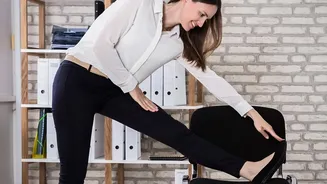
Sitting locks your spine and hips into a fixed position. The Seated Spinal Twist is an excellent way to regain mobility. Sit tall in your chair with your feet flat on the floor. Gently twist your torso to the right, using the back of the chair for a light assist. Hold for a few deep breaths, then repeat on the left side. The most crucial stretch for desk workers is the Hip Flexor Stretch, as sitting keeps these muscles in a shortened state. Stand up and take a step back with your right leg into a shallow lunge. Gently tuck your pelvis and push your hips forward until you feel a stretch at the front of your right hip. Hold for 30 seconds on each side.
For Your Wrists and Ankles
Hours of typing and limited leg movement can lead to stiffness in your extremities. To help your wrists, extend one arm in front of you with the palm facing up. Use your other hand to gently pull your fingers down and back toward your body until you feel a stretch. Hold for 15–30 seconds and switch hands. To improve circulation in your lower legs, perform Ankle Circles. While seated, lift one foot off the floor and rotate your ankle in a circle 10 times in each direction, then switch to the other foot. This simple movement helps reduce stiffness and prevent blood from pooling.
Making Movement a Habit
The hardest part of any new routine is making it stick. Start small by picking just one or two exercises to do every day. A great strategy is to link the movements to an existing habit, such as doing ankle circles every time you finish a phone call or performing a neck stretch before you take your lunch break. You can also set a recurring timer on your phone or computer to remind you to stand up and move for five minutes every hour. The goal is consistency, not intensity. These small, frequent movements will compound over time, leading to better mobility and less discomfort.