









The Deception of Rain
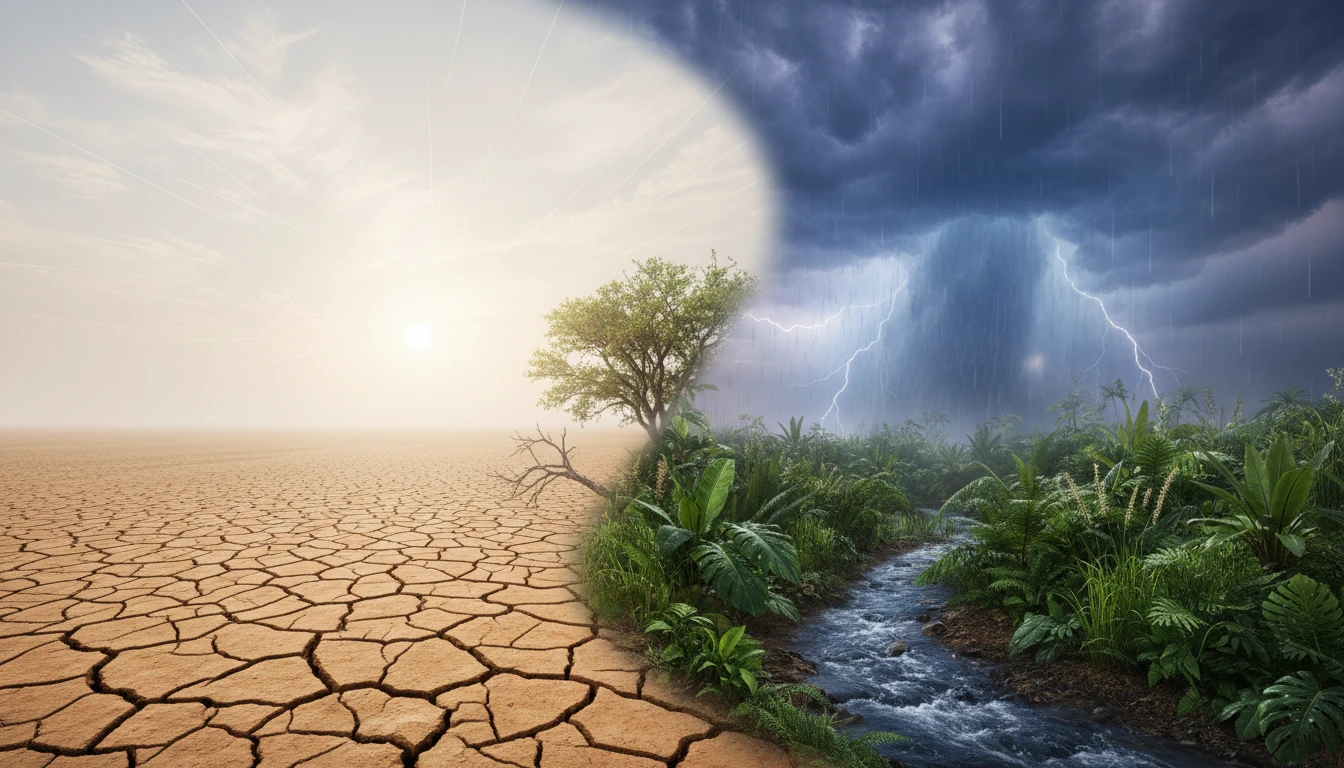
For generations, the arrival of the monsoon has been celebrated as the end of India's grueling summer. While the rains do cause the ambient temperature to drop, this cooldown is often deceptive. The relief is short-lived because the rain introduces a new,
more insidious problem: humidity. As moisture saturates the air, it creates an environment where even moderate temperatures can feel intensely hot and uncomfortable, a condition that meteorologists and health experts are increasingly tracking. Recent studies show that this combination of heat and humidity during the monsoon is becoming a significant threat to public health across the country.
Humidity: The Body's Cooling Enemy
To understand why humid heat feels so oppressive, we need to look at how the human body stays cool. Our primary cooling mechanism is sweating. When sweat evaporates from our skin, it takes heat with it, effectively lowering our body temperature. However, this process only works if the surrounding air can absorb the moisture. During the monsoon, the air is already laden with water vapour, sometimes reaching near 100% relative humidity. This means our sweat has nowhere to go. It clings to the skin instead of evaporating, trapping heat and leaving us feeling sticky, drained, and overheated.
The Science of 'Feels Like' Temperature
This is where the concept of 'wet-bulb temperature' (WBT) becomes crucial. Unlike the standard 'dry-bulb' temperature shown on a thermometer, WBT measures the combined effect of heat and humidity. It is the lowest temperature that can be reached through evaporation and is a much better indicator of how heat actually feels to the human body. When the wet-bulb temperature is high, it signifies that the air is so moist that even constant sweating won't cool you down. This state is what experts call 'uncompensable heat stress'—a dangerous condition where the body's core temperature can continue to rise, leading to serious health risks.
A Growing Climate and Health Challenge
What was once primarily a pre-monsoon summer issue is rapidly becoming a monsoon crisis. Research from institutions like IIT Gandhinagar indicates that the frequency and geographical spread of uncompensable heat stress during the monsoon have increased significantly over the past four decades. Projections show that with continued global warming, large parts of India, particularly the Indo-Gangetic Plain, could face dangerous heat stress during both summer and monsoon seasons. This extended period of risk affects public health, labour productivity in sectors like agriculture and construction, and puts immense pressure on healthcare systems.
Practical Ways to Find Relief
Since the rains won't always cool you down, adapting to humid heat is essential. Staying hydrated is paramount; drink plenty of water throughout the day, even if you don't feel thirsty. Opt for lightweight, loose-fitting, and light-coloured cotton or linen clothing that allows air to circulate. Plan any strenuous outdoor activities for the cooler parts of the day, such as the early morning or late evening. At home, ensuring good ventilation can help, though air conditioning is the most effective way to reduce indoor humidity. Taking cool showers can also provide temporary relief and help regulate body temperature.