





The Final Dress Rehearsals
Before Indian astronauts, or 'Gaganyatris', can journey into space, ISRO must ensure every system is perfect, and that means rigorous testing. The next phase of the Gaganyaan programme involves a series of uncrewed test flights, which are essentially
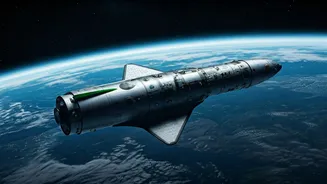
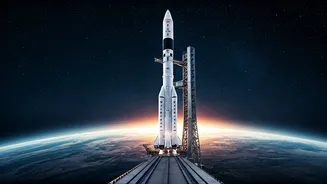
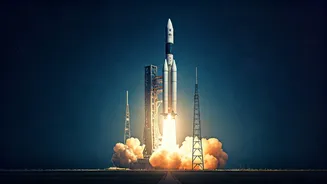
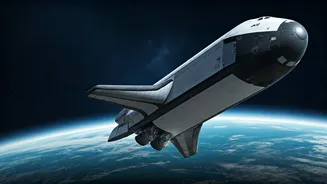
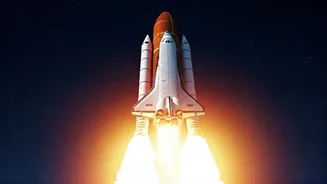
full-dress rehearsals for the main event. [13, 16] The first of these, the G1 mission, is slated for the second half of 2026. [21] These missions will launch the orbital module into its intended orbit, test its performance, and practice the crucial re-entry and recovery operations. [13] Everything from the human-rated LVM3 rocket's performance to the life support systems will be validated, but without putting human lives at risk. [24]
Enter Vyommitra: The Humanoid Pioneer
A key passenger on the first uncrewed flight will be Vyommitra, a sophisticated humanoid robot developed by ISRO. [7, 6] This 'space friend' (from the Sanskrit words 'Vyom' for space and 'Mitra' for friend) will occupy the astronaut's seat. [6] Vyommitra's role is critical: she will simulate human functions, read instrument panels, and interact with the life-support systems. [6, 10] The data gathered from her 'experience' will provide invaluable insights into how the crew module's environment holds up under the harsh conditions of space, ensuring it is safe and stable for the eventual human crew. [10, 15] This makes Vyommitra a true pioneer, testing the waters before humanity follows.
Mastering the Most Dangerous Moment: Re-entry
Getting to space is only half the battle; returning safely is arguably the most challenging part of any human spaceflight mission. The upcoming tests are paramount for perfecting the re-entry and landing sequence. This includes validating the parachute system, which is non-negotiable for crew safety. [22] ISRO has been conducting Integrated Air-Drop Tests (IADT), where a mock crew capsule is dropped from a helicopter to test the complex deployment of the parachute system—from the initial drogue chutes that stabilize the module to the massive main parachutes that slow it for a gentle splashdown in the ocean. [1, 3, 4] Each successful test builds confidence in the system designed to bring the Gaganyatris home safely. [8]
The Unseen Network of Safety
Beyond the rocket and capsule, a vast network of systems must work flawlessly. The upcoming tests will also validate the Crew Escape System (CES), a critical safety feature designed to pull the crew module away from the rocket in case of a launch emergency. [2] Previous tests like the Test Vehicle Abort Mission (TV-D1) have already demonstrated this capability. [4] Furthermore, the Service Module Propulsion System, which controls the spacecraft's movement in orbit and during emergencies, has undergone extensive qualification tests on the ground. [12, 19] These ground and flight tests ensure that every conceivable failure scenario has been anticipated and a safety protocol is in place, reflecting ISRO's commitment to astronaut safety above all else. [22]
Paving the Way for India's Space Future
The success of these tests carries weight far beyond the Gaganyaan mission itself. With each milestone, India inches closer to becoming only the fourth nation with independent human spaceflight capability, after the US, Russia, and China. [2] This achievement will not only be a matter of immense national pride but will also open up new frontiers for science and technology. [17] A successful Gaganyaan programme provides the foundation for more ambitious future projects, including a potential Indian space station (Bharatiya Antariksh Station) by 2035 and interplanetary missions. [21] These tests, therefore, are not just about a single mission; they are about laying the groundwork for India's long-term presence and leadership in space.