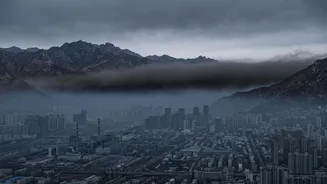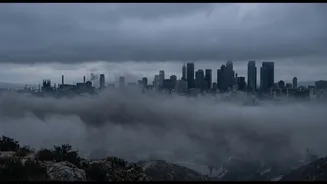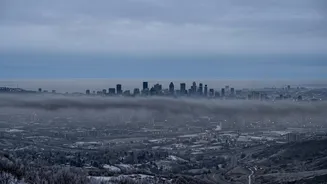





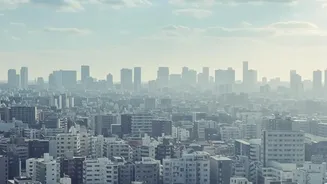
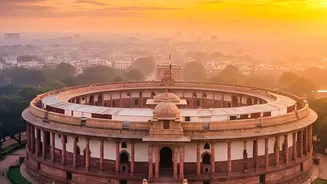
Every winter, a familiar grey haze blankets many Indian cities, making the air feel heavy and visibility poor. This isn't just fog; it's a dense smog trapped by an invisible atmospheric ceiling, a phenomenon known as a temperature inversion.
Understanding Normal Air Circulation
On a typical
day, the air closest to the ground is the warmest because it's heated by the sun-warmed Earth. This warm air is less dense and naturally rises, carrying pollutants from traffic, industry, and dust up and away into the higher atmosphere where they disperse. As you go higher, the air gets progressively cooler. This constant vertical movement is like a natural ventilation system for the planet, continuously cleaning the air we breathe at ground level.
What is a Temperature Inversion?
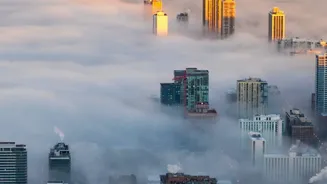
A temperature inversion flips this normal pattern on its head. During this phenomenon, a layer of warmer air forms high above the ground, sitting on top of a layer of cooler, denser air at the surface. This often happens on calm, clear winter nights when the ground radiates heat and cools down rapidly, chilling the air directly above it. The air higher up, however, remains relatively warm. This warm layer then acts like a lid, or a 'cap', because the cooler, heavier air below cannot rise through it.
The 'Lid' That Traps Pollution
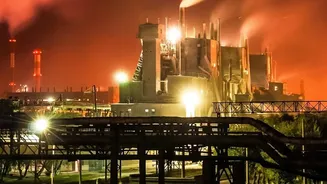
When this atmospheric lid forms over a city, it creates a stagnant bubble of air. All the pollutants emitted at ground level—from vehicle exhaust, construction dust, industrial processes, and the burning of waste or biomass—have nowhere to go. Instead of rising and dispersing, they are trapped in the shallow layer of cold air near the surface. As emissions continue, the concentration of pollutants like particulate matter (PM2.5 and PM10), nitrogen oxides, and other harmful gases steadily increases, creating the thick, visible smog we experience on the worst winter days.
Why Winter Creates the Perfect Storm
Temperature inversions are particularly common and persistent during North India's winter for several reasons. The season's characteristically calm, low winds prevent pollutants from being blown away horizontally. The long, cold nights provide ample time for the ground to cool and for a strong inversion layer to form. This inversion can be so stable that the weak winter sun takes a long time to heat the ground enough to break the 'cap' the next day, sometimes allowing pollution to build up for days on end. The geography of the Indo-Gangetic plains, flanked by the Himalayas, can further inhibit air movement, exacerbating the trapping effect.
The Dangerous Health Consequences
The result of this trapped pollution is a serious public health crisis. Breathing air with extremely high concentrations of PM2.5 and other toxins can have severe immediate and long term effects. It can trigger coughing, shortness of breath, and irritation of the eyes and throat. For children, the elderly, and those with pre existing conditions like asthma or heart disease, exposure can be especially dangerous, leading to severe respiratory infections, worsening of chronic illnesses, and an increased risk of cardiovascular events. Even in healthy individuals, repeated exposure to high pollution levels can lead to a gradual reduction in lung capacity and an increased risk of developing chronic respiratory conditions.