



The Formation of a Natural Dam
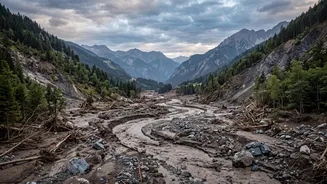
The danger begins when a river's path is obstructed. In India's mountainous regions, especially the Himalayas, this is a common occurrence. The blockage isn't a deliberate, engineered structure; it's a chaotic and unstable natural dam. These dams can
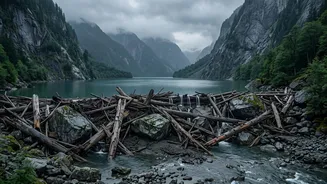
be formed by a variety of events, such as a major landslide sending tons of rock and soil into a narrow valley, a debris flow choking a channel, or even an avalanche of ice. In glacial regions, these blockages are often formed by moraine—the loose rock and sediment left behind by a retreating glacier. These moraine dams are notoriously weak and can impound huge volumes of meltwater, forming what are known as Glacial Lake Outburst Flood (GLOF) risks.
The Lake Behind the Blockage
Once the river is blocked, the water has nowhere to go. It begins to back up, creating a reservoir or lake behind the newly formed, unstable dam. This isn't a slow, gentle process. A large river can fill this makeshift reservoir with astonishing speed, putting immense and ever-increasing pressure on the blockage. The dam itself is often made of loose, unconsolidated material—a jumble of soil, rocks, and uprooted trees—held together only by friction and its own weight. As the water level rises, it starts to seep through the dam, weakening its internal structure from the inside out in a process that is often invisible from the surface.
The Breaking Point
Every natural dam has a breaking point. The failure can be triggered in several ways. The most common cause is overtopping, where the lake fills up completely and water starts to spill over the top of the dam. This cascade quickly erodes the loose material of the blockage, cutting a channel that rapidly widens and deepens. Alternatively, the sheer hydraulic pressure from the deep lake can cause a catastrophic structural failure, essentially blowing the dam out from below. An external trigger, like a fresh landslide into the lake, an earthquake, or even a period of heavy rain, can also be the final straw that destabilises the fragile barrier. Many of these dams fail very quickly after they form; one study found that half of all landslide dams failed within 10 days of their formation.
The Destructive Downstream Surge
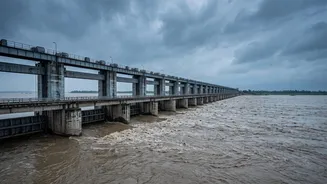
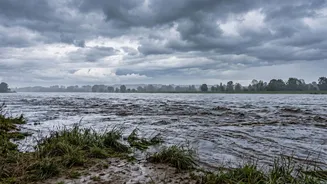
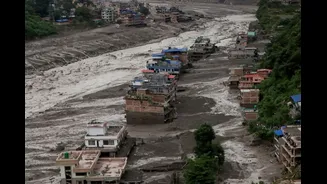
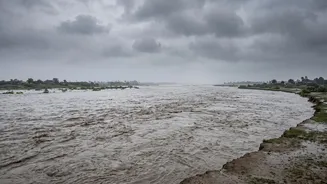
When the dam breaches, it doesn't just release a flood; it unleashes a wall of water. This is the dangerous downstream surge. It's not like a normal river flood that rises over hours or days. This is an outburst flood, a sudden, high-velocity torrent carrying water, sediment, and massive debris like boulders and trees. The peak discharge can be many times greater than a normal rain-fed flood. This destructive wave moves with incredible speed and force, capable of destroying bridges, roads, and entire buildings within minutes. The 2023 Sikkim flash flood, which was caused by a glacial lake outburst, saw the Teesta River rise by 20 feet as it destroyed a major dam downstream. The sheer power erodes the riverbanks, adding even more debris to the flow and increasing its destructive capacity as it travels.
A Growing Threat in the Himalayas
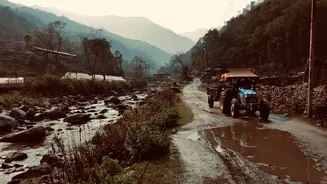
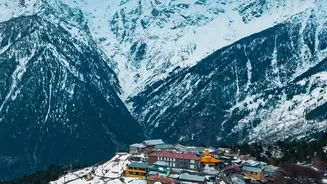
For communities in the Indian Himalayas, this phenomenon is a pressing danger. As climate change accelerates glacier melt, the number and size of glacial lakes are increasing, elevating the risk of GLOFs. The 2013 North India floods and the 2021 Uttarakhand flash flood are tragic reminders of how devastating these events can be, often triggered by a combination of extreme rainfall and unstable geology leading to river blockages. The unpredictable and sudden nature of these surges makes early warning extremely difficult, leaving downstream populations with little to no time to evacuate. This is why monitoring geological and glacial activity in the high mountains is a critical part of disaster management for the entire region.