




What Is a Planetary Alignment?
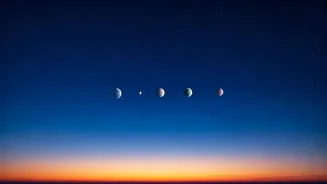
When we talk about a planetary 'alignment,' it's not that the planets are forming a perfect straight line in space—that's an incredibly rare event. Instead, what we're seeing is a beautiful illusion from our vantage point here on Earth. The planets, each
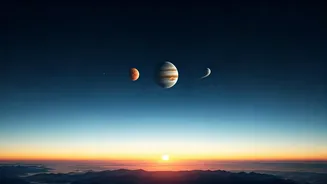
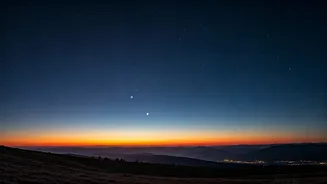
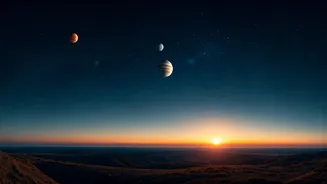
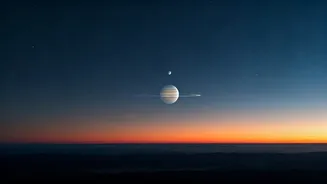
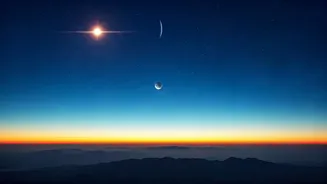
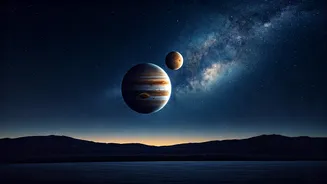
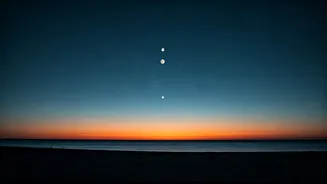
moving in its own vast orbit around the Sun, happen to appear close together in our sky. Tonight's event features bright Venus, giant Jupiter, and elusive Mercury congregating in a small patch of the twilight sky. It’s a spectacular line-of-sight coincidence that offers a fantastic opportunity for stargazers to see multiple worlds at once.
When and Where to Look
This is a blink-and-you'll-miss-it event, so timing is everything. The best window for viewing will be shortly after sunset. Aim to be ready about 30 to 45 minutes after the sun dips below the horizon. You need to look towards the west—the same direction where the sun just set. The planets will be very low on the horizon, so a viewing spot with an unobstructed view, free of tall buildings or trees, is crucial. The entire spectacle will be short-lived. As the sky darkens, the planets will sink lower, eventually disappearing below the horizon themselves within about an hour to 90 minutes of sunset. So, don't be late!
Identifying the Planets
Even for a beginner, spotting this trio is straightforward. Venus will be the showstopper. It will be the brightest object in the western sky, an unmistakable, brilliant beacon of light. You simply cannot miss it. Jupiter will be the second brightest of the trio, appearing as a steady, bright star close to Venus. The real challenge, and prize, is Mercury. It is the faintest of the three and will be closest to the horizon. Because it orbits so close to the Sun, we only ever see it in the glow of twilight. Spot Venus first, then look for Jupiter nearby. Scan the area just below them, closer to the horizon, to catch a glimpse of Mercury before it vanishes.
Naked Eye, Binoculars, or Telescope?
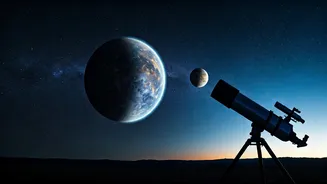
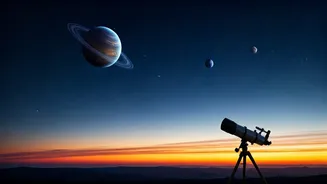
The great news is that you don't need any special equipment to enjoy the main event. The alignment of Venus and Jupiter, and even Mercury if conditions are perfect, is easily visible to the naked eye. However, bringing some gear can dramatically enhance the experience. A simple pair of binoculars will make Mercury much easier to spot against the fading twilight. Binoculars will also resolve Jupiter into a tiny, distinct disc rather than just a point of light. If you have a small telescope, this is the perfect time to use it. By pointing it at Jupiter, you might be able to spot its four largest moons—Io, Europa, Ganymede, and Callisto—appearing as tiny pinpricks of light in a neat line on either side of the planet. This adds an entirely new layer to your viewing.
Tips for the Best View
To maximise your chances of a great viewing experience, follow these simple tips. First, get away from city lights if you can. Light pollution washes out fainter objects, making Mercury especially hard to see. Find a park, a rooftop, or a field with a clear western horizon. Second, give your eyes time to adapt to the dark. It takes about 15-20 minutes for your eyes to become fully sensitive to low light. Avoid looking at your bright phone screen while you wait. If you need a light, use a red torch, as red light doesn't spoil your night vision. Finally, consider using a stargazing app on your phone (like Stellarium or SkyView) beforehand to know exactly where to look. Just be sure to put the phone away when it’s time to actually watch.