





What Exactly Are Plasma Thrusters?
Imagine a car engine that barely sips fuel but can run for years. That’s the basic idea behind plasma thrusters. Unlike traditional satellite thrusters that work like miniature rockets burning chemical fuel, plasma thrusters use electricity. They take
a small amount of gas, usually an inert gas like xenon, and use electric and magnetic fields to turn it into plasma—the fourth state of matter. This electrically charged gas is then accelerated and shot out at extremely high speeds, creating a gentle but incredibly efficient thrust that pushes the satellite forward. While the push is much weaker than a chemical rocket's blast, it's continuous and requires very little fuel, making it perfect for long-term operations in space.
The Secret to Lighter Satellites
The single biggest advantage of this technology is its phenomenal fuel efficiency. A key performance metric for any rocket engine is its 'specific impulse,' which is like the mileage of a car. ISRO's new plasma thrusters have a specific impulse that is at least six times higher than conventional chemical propulsion systems. This means a satellite needs to carry significantly less propellant to perform its duties in orbit. A huge portion of a typical satellite's weight at launch is just fuel for station-keeping and orbital adjustments. By slashing the amount of fuel needed, ISRO can drastically reduce the total launch weight of the satellite. According to ISRO officials, this could bring down the mass of a 5,000 kg communication satellite to around 3,500 kg.
More Power, More Life, More Value
A lighter satellite doesn't just mean a cheaper launch, although that is a significant benefit. The weight saved on fuel can be reallocated to what really matters: the 'useful payload'. For a communication satellite, this means packing in more transponders, which translates to more broadcasting capacity and higher revenue. For scientific missions, it means more instruments to study the universe. Furthermore, because the fuel lasts so much longer, these satellites can have extended operational lifespans, performing orbital maneuvers for many more years than their chemically propelled counterparts. This increased longevity and capability make each mission far more valuable.
ISRO's Journey to Electric Propulsion
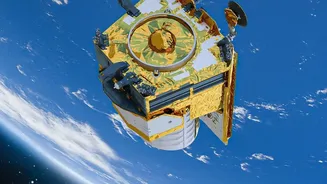
This shift isn't happening overnight. ISRO has been methodically developing this technology for years. While an earlier satellite, GSAT-9, used an electric thruster in 2017, the key components were imported. The current systems are indigenously developed, marking a major step in self-reliance. Recently, ISRO achieved a critical milestone by successfully completing a 1,000-hour endurance test on its Stationary Plasma Thruster. This long-duration test, conducted in a vacuum chamber simulating space, proved the thruster's reliability and durability, which is essential before it can be trusted on a multi-crore satellite mission. The next step is to test the system in space aboard the upcoming Technology Demonstration Satellite (TDS-01).
The Future is Electric
While plasma thrusters produce too little thrust to blast a rocket off Earth, they are the future for everything that happens once a satellite is in orbit. ISRO's goal is to eventually replace chemical systems entirely for orbit-raising (the slow process of moving a satellite to its final high orbit) and station-keeping (the small adjustments needed to keep it in place). This technology not only makes India's commercial satellite launches more competitive globally but also opens doors for more ambitious, long-duration scientific and interplanetary missions that would be impossible with fuel-guzzling chemical engines. It's a quiet revolution, happening thousands of kilometres above our heads, ensuring India's next generation of satellites are smarter, stronger, and more efficient.