
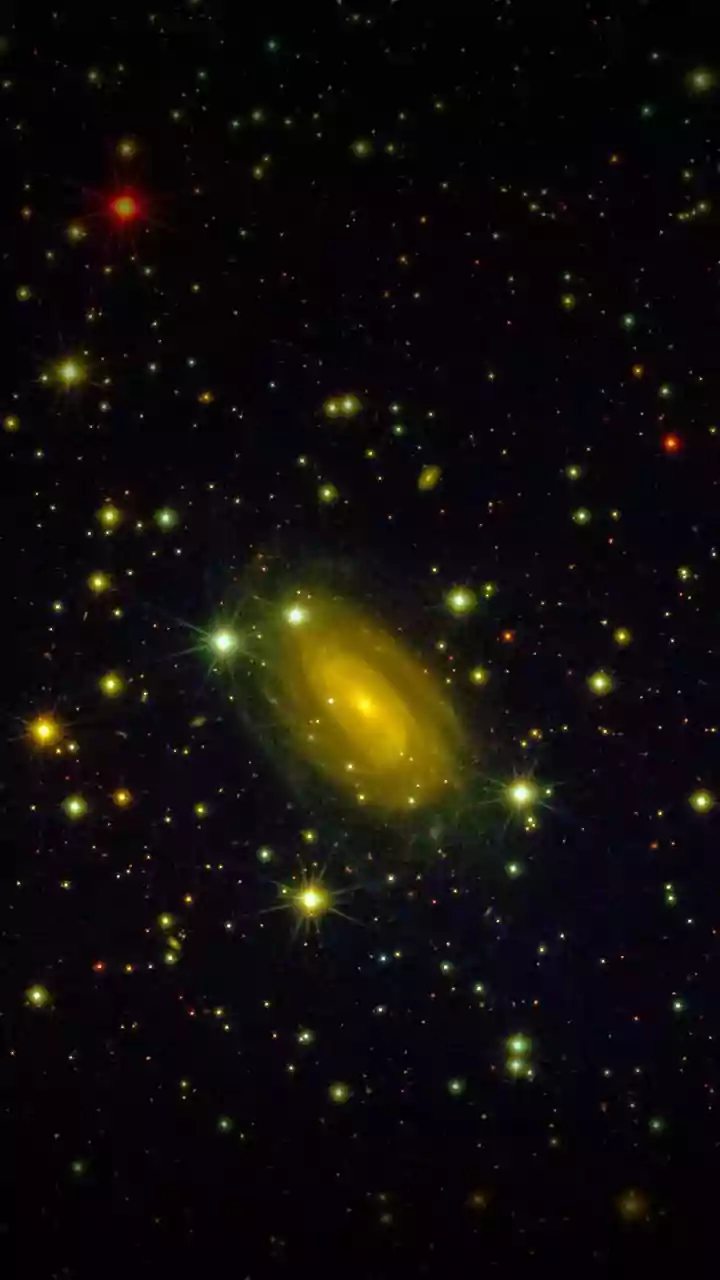
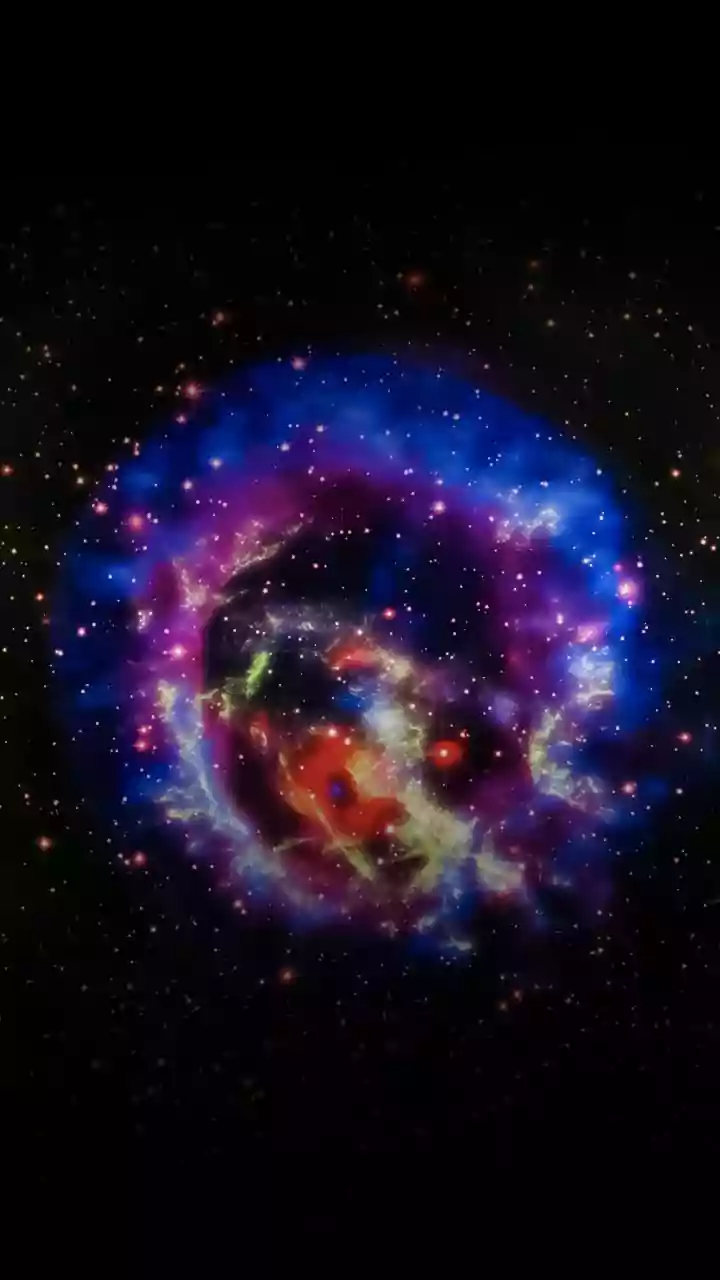



More Than Meets the Eye
Our eyes are incredible, but they are tuned to a very narrow sliver of reality called visible light. This is just one part of a vast energy continuum known as the electromagnetic spectrum, which also includes everything from X-rays and ultraviolet light to infrared
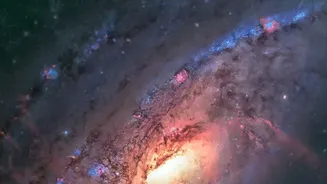
and radio waves. While optical telescopes capture the familiar starlight from galaxies, this light is often blocked by enormous clouds of cosmic dust and gas. These clouds, which can hide entire star-forming nurseries or the chaotic centres of galaxies, are like curtains drawn over the most interesting cosmic events. To peek behind these curtains, astronomers need a different kind of vision. This is where radio astronomy comes in, offering a completely new way to observe the cosmos by detecting the long, low-energy wavelengths that pass right through the dust and gas that obscures visible light.
The Universe in a New Light
So, what does the universe look like in radio waves? Instead of the twinkle of stars, radio telescopes detect phenomena that are often cool, ancient, or incredibly energetic in ways that don't produce much visible light. This includes cold hydrogen gas, the raw fuel for future stars, allowing scientists to map where new stars will eventually be born. But radio waves also reveal the universe's most violent processes. When high-energy particles are whipped around by powerful magnetic fields, they release a signature glow known as synchrotron radiation. This radio emission acts as a tracer, allowing astronomers to map invisible magnetic fields and see the lingering ghosts of past cosmic events, like jets fired from supermassive black holes millions of years ago. By tuning into these signals, we can study the life cycle of galaxies, from their fuel reserves to the scars of their most dramatic encounters.
A Cosmic Collision Revealed
One of the most stunning examples of radio astronomy's power involves a colossal cosmic collision. Recently, astronomers using an international array of telescopes, including India's own Giant Metrewave Radio Telescope (GMRT) located near Pune, discovered something extraordinary. They observed a distant galaxy cluster and found two enormous, glowing arcs of radio energy flanking it like giant parentheses. These features, called 'radio relics', are the aftermath of a truly epic event: the collision of two entire galaxy clusters. The shockwaves from this smash-up, travelling through the hot gas between the galaxies, accelerated particles and made them shine in radio light. These glowing relics, stretching over a distance 100 times the span of our entire Milky Way, were completely invisible to optical telescopes but were vividly captured in radio waves. This discovery provides a direct look at the powerful forces that shape the largest structures in the universe.
The Tools of a Cosmic Detective
Discoveries like these are made possible by a new generation of incredibly sensitive radio observatories. Besides India's GMRT, the MeerKAT telescope in South Africa has been a game-changer. In just a few hours of observation, MeerKAT once discovered 49 previously unknown gas-rich galaxies that were hidden from other surveys. In another project, it mapped the faint radio 'smog' between galaxies in clusters, finding dozens of structures related to cosmic mergers that had never been seen before. These telescopes often work as interferometers, where multiple dishes are linked together to function as one giant eye on the sky. By combining their signals, they achieve the resolution needed to image these faint and distant features. It’s a testament to how modern technology is expanding our senses, allowing us to perceive a universe that has been hidden in plain sight all along.