




First, A Quick Posture Check
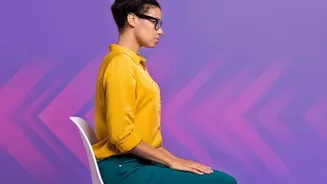
Before you stretch, let's get your setup right. An ergonomic workspace is your first line of defense against neck strain. Position your monitor so the top of the screen is at or just below eye level, about an arm's length away. Your feet should be flat
on the floor with your knees at a 90-degree angle. Sit with your back against your chair, ensuring your head is in a neutral position where your ears are aligned over your shoulders. Becoming aware of poor postural habits is the first step to correcting them. These small adjustments reduce the daily load on your neck muscles.
Seated Cat-Cow (Marjaryasana-Bitilasana)
This classic yoga pose is easily adapted for your chair and is excellent for waking up the spine and relieving tension in the neck and shoulders. Place your hands on your knees and your feet flat on the floor. As you inhale, gently arch your back, push your chest forward, and look up towards the ceiling (Cow). As you exhale, round your spine, drop your chin to your chest, and let your shoulders and head come forward (Cat). Repeat this fluid movement for 5-8 breaths to improve spinal mobility and ease stiffness.
Gentle Neck Tilts (Side Stretch)
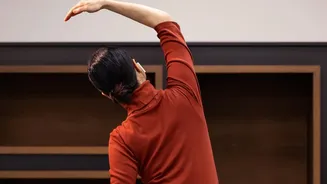
This is a simple yet profound stretch for the muscles along the sides of your neck, which often get tight. Sit tall and gently drop your right ear toward your right shoulder, being careful not to raise your shoulder to meet your ear. Hold for 15-30 seconds, breathing deeply. You should feel a gentle stretch along the left side of your neck. For a deeper stretch, you can place your right hand on the left side of your head and apply very light pressure. Slowly return to the center and repeat on the other side.
Chin Tucks for Posture
Chin tucks are a powerful exercise to counteract the forward-head posture that comes from staring at screens. Sit up straight, looking directly ahead. Gently draw your chin and head straight back, as if you are trying to make a double chin, without tilting your head up or down. You should feel a stretch at the back of your neck. Hold this position for 5 seconds and then relax. Repeat this 10 times. This movement helps strengthen the deep neck muscles that are crucial for maintaining good posture.
Slow and Mindful Neck Rolls
Neck rolls can help improve flexibility and release accumulated tension, but they must be done slowly and gently. Start by sitting tall and lowering your chin to your chest. Slowly roll your right ear over to your right shoulder, then gently move your head back, and finally roll your left ear to your left shoulder before returning to the start. Move with your breath and never force the movement. Complete 3-5 rolls in one direction and then reverse. If you have any neck injuries, it is better to do half-circles, from shoulder to shoulder, instead of full rolls.
Seated Spinal Twist (Ardha Matsyendrasana variation)
A twist can do wonders for your entire back and neck, improving mobility and releasing tension. Sit sideways in your chair or on the edge with your feet firmly on the floor. As you exhale, gently twist your upper body towards the back of the chair, using your hands on the chair's back or armrests to deepen the stretch. Keep your spine long and turn your head last to look over your shoulder. Hold for a few breaths, feeling the stretch through your spine. Return to the center and repeat on the other side.