




From Pioneer to Enabler
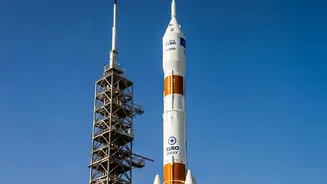
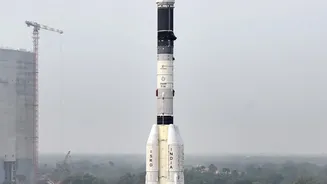
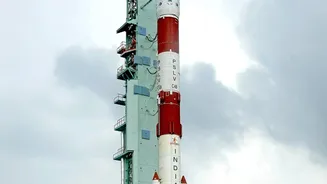
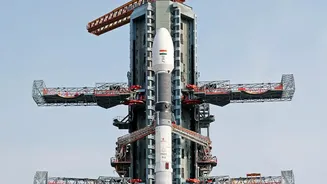
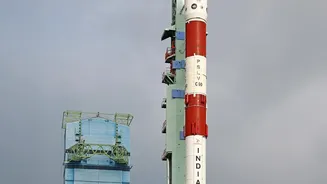
For decades, ISRO was the sole custodian of India's space dreams. From launching its first rocket from a fishing village to missions to the Moon and Mars, the state-run agency built a legacy of cost-effective and complex achievements. This journey not
only placed India among the world's leading space powers but also quietly cultivated a domestic supply chain of over 500 component suppliers. However, the global space economy, projected to reach $1.8 trillion by 2035, demanded a new approach. Recognising this, ISRO has strategically pivoted from being the sole operator to becoming a guiding force for a new generation of entrepreneurs. The vision is no longer just about national prestige, but about building a robust, multi-billion-dollar commercial space economy.
Policy Reforms Unlocking the Sector
The year 2020 marked a watershed moment with the opening of the space sector to private participation. This was formalised by the Indian Space Policy of 2023, which laid out a clear roadmap for the future. The policy’s core strategy is to foster a flourishing commercial presence in space by encouraging private companies to take the lead in building end-to-end space systems. To facilitate this, the government established the Indian National Space Promotion and Authorisation Centre (IN-SPACe). Acting as a single-window agency, IN-SPACe is tasked with authorising, promoting, and supervising the activities of non-governmental entities, ensuring they have access to ISRO's state-of-the-art facilities and expertise. Further reforms in 2024 relaxed Foreign Direct Investment (FDI) norms, making it easier to attract global capital and technology into the sector.
A Symbiotic Ecosystem in Action
The relationship between ISRO and private firms is designed to be symbiotic. ISRO's role is shifting towards research and development, deep space exploration, and national security missions, leaving routine manufacturing and commercial launches to the private sector. This is most evident in the transfer of technology. Through its commercial arm, NewSpace India Limited (NSIL), and IN-SPACe, ISRO has been actively transferring its technologies to Indian companies. These transfers cover everything from adhesives for solar panels to rocket engine components, enabling private firms to build upon decades of public research and reduce reliance on imports. In return, companies like Skyroot Aerospace and Agnikul Cosmos are developing their own launch vehicles, which will alleviate the bottleneck for satellite operators and allow ISRO to focus on more ambitious projects like the Gaganyaan human spaceflight programme and a future Indian space station.
The New Constellation of Startups
This supportive framework has led to an explosion of entrepreneurial activity, with over 400 private space startups now operating in India. Companies like Skyroot Aerospace have made history with successful orbital launches, demonstrating that the private sector can turn ISRO's foundational work into commercial capability. Agnikul Cosmos is pioneering 3D-printed rocket engines, while Pixxel is building a constellation of Earth-observation satellites. These startups are not just building rockets; they are creating a diverse ecosystem covering everything from satellite manufacturing and propulsion systems to downstream data analytics. This diversification is crucial for capturing a larger share of the global market, with India's space economy projected to grow from around $8.4 billion today to $44 billion by 2033.